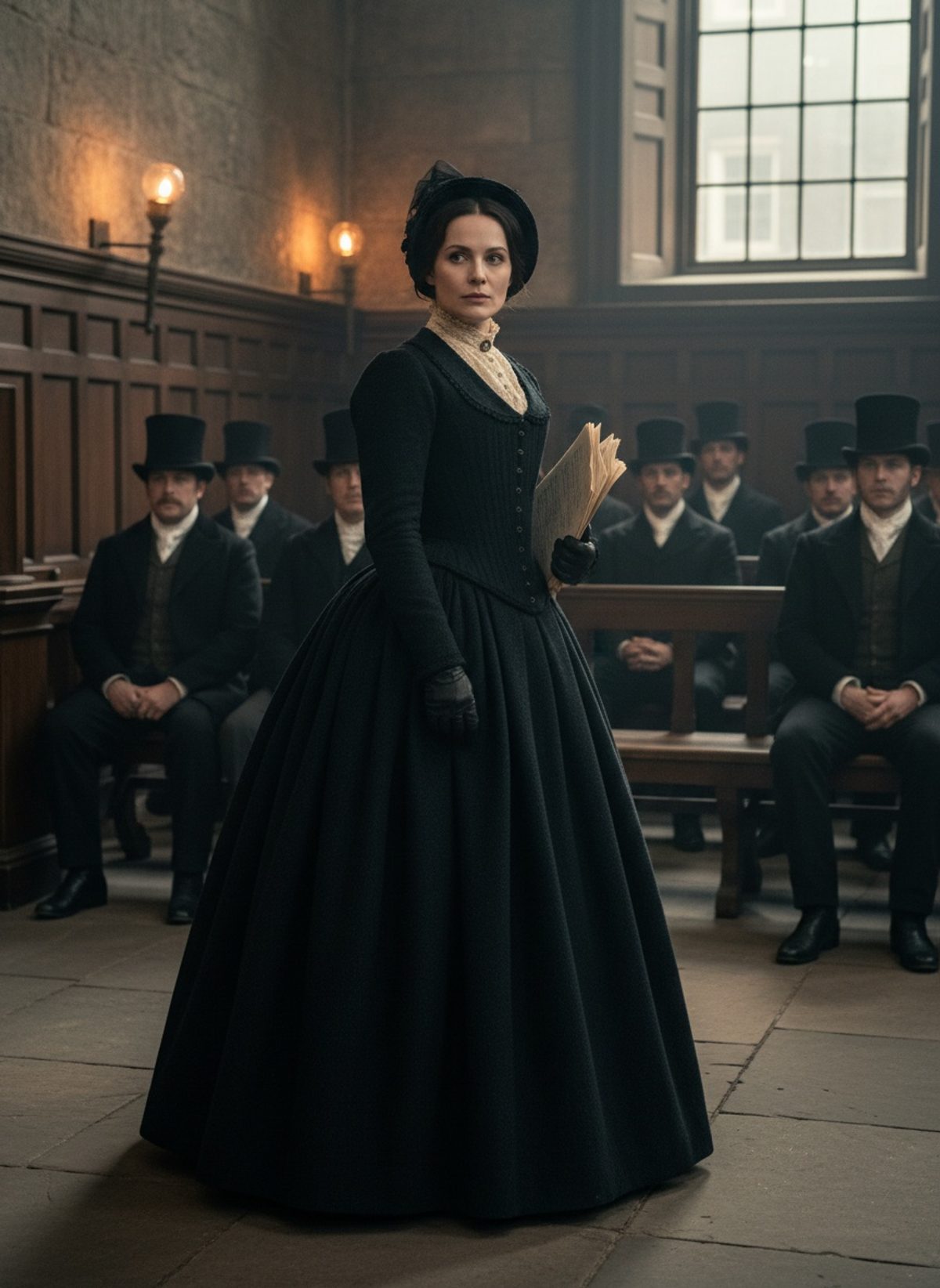
The room was filled with quiet anticipation, the only sounds were the gentle scrape of fingers over paper, and the rustle of clothing as men shifted in their chairs. Thomas Rhodes Armitage barely noticed the soft patter of rain against the windows of his modest London townhouse. At the table sat five blind men, their faces a patchwork of concentration and unspoken determination. They probed each tactile script laid out before them, trying to discern meaning from the tiny bumps and ridges that were supposed to transform their lives. As they worked, a realization began to dawn on Armitage: here, in this hushed room in 1868, they were on the brink of unlocking the world for countless others condemned to live in the shadows of a sighted society.
For Armitage, losing his vision was not just a personal struggle; it was a call to arms. A wealthy London physician, Armitage was intimately acquainted with the cruel indifference of a world designed for the sighted. His own gradual descent into blindness spurred him to action. He refused the demands of well-meaning doctors who advised rest and retreat. Instead, he sought out those who shared his plight, driven by a singular purpose: to find the means by which blind people could read, learn, and live independently.
At that time, the blind in Britain lived in profound isolation, excluded from education and meaningful employment, their societal contributions largely ignored. The various systems of raised type—embossed and tactile alphabets—offered little more than limited promise, their adoption a patchwork affair restricted to individual institutions. Armitage refused to leave this to chance or caprice. He gathered a committee of knowledgeable blind individuals to thoroughly investigate and evaluate every tactile reading system in existence, intent on finding a common language for education and communication.
Though the assembly of five blind men welcomed innovation, skepticism shadowed their efforts. Many raised-letter systems promised much but delivered little in practical use. Armitage and his committee methodically tried and tested each one, their fingers tracing paths over embossed letters that resembled the roman alphabet, dot codes that morphed into enigmatic shapes. It was not until they encountered the code developed by Louis Braille—a young Frenchman whose work had largely been dismissed by British schools—that hope whispered in their minds.
Read next: The Day a Victorian Nurse Walked Into Parliament and Won
Braille's system was revolutionary. Unlike its predecessors, it wasn't an attempt to recreate visual letters in tactile form. Instead, it utilized a series of six raised dots, arranged in a two-by-three grid, to represent each letter, number, and even musical notes. The elegance of its design meant it could be quickly learned, easily produced, and, most importantly, it could convey complex language in a form that could be swiftly read by a fingertip sweeping across the page. The scepticism that had dogged previous methods disappeared as the blind men around the table found coherence in this code with simple dot patterns under their fingertips.
Armitage's belief in the transformative power of Braille was unwavering. However, the challenge remained: blind education systems in Britain were wedded to their traditional methods, resistant to change. This inertia was a daunting adversary. Armitage knew he had to do more than just spread knowledge; he had to create a standard, a rallying point for advocacy. His resolve solidified into action that would mold the future of blind education, not just in Britain, but worldwide.
The task ahead involved a delicate balance of persuasion and perseverance. Armitage worked tirelessly, leveraging his societal connections, networking with philanthropists, educators, and other influential figures. He founded the British and Foreign Society for Improving the Embossed Literature of the Blind, an organization dedicated to advocating and disseminating Braille's system. From the confines of a small room in London, Armitage began influencing the direction of blind literacy on a global scale.
Despite his determination, obstacles loomed large. Stringent opposition and skepticism abounded from established educational bodies wary of change and financial investment. However, Armitage managed to gradually tilt the scales, his cause picking up momentum as more blind individuals accessed learning and consequently, gained a semblance of independence. Braille literacy spread like wildfire through the nation's schools for the blind, fueled by the growing recognition of its efficacy.
While Armitage and his committee provided invaluable insight into the efficacy of Braille, it was the voices of those newly empowered students and adults who spoke loudest. Testimonials of lives transformed by the dots of Braille began to circulate within educational circles and society at large. It was a slow, arduous process, yet Armitage remained unwavering, his vision steadily coming into focus despite his loss of sight.
In retrospect, the work of Thomas Rhodes Armitage and his blind committee was an audacious step towards creating a truly inclusive society. His defiance of medical advice, refusal to accept inferiority, and his unyielding determination exemplified the potential of what could be achieved through perseverance and solidarity. Today, Braille is recognized and used globally—a tangible testament to Armitage's vision and the cooperative spirit of that clandestine meeting in 1868.
The day a blind schoolmaster taught Victorian England—and soon, the world—to read was more than just a milestone in blind education. It was a powerful reminder of humanity's ability to adapt, innovate, and overcome. Armitage's tenacity and the simple, brilliant code of Braille cut through barriers of silence and darkness, crafting pathways to light and learning. In the echoes of forgotten classrooms and whispered conversations around a table in London, one can still hear the universal promise that knowledge holds: the chance for everyone to read their own world anew.