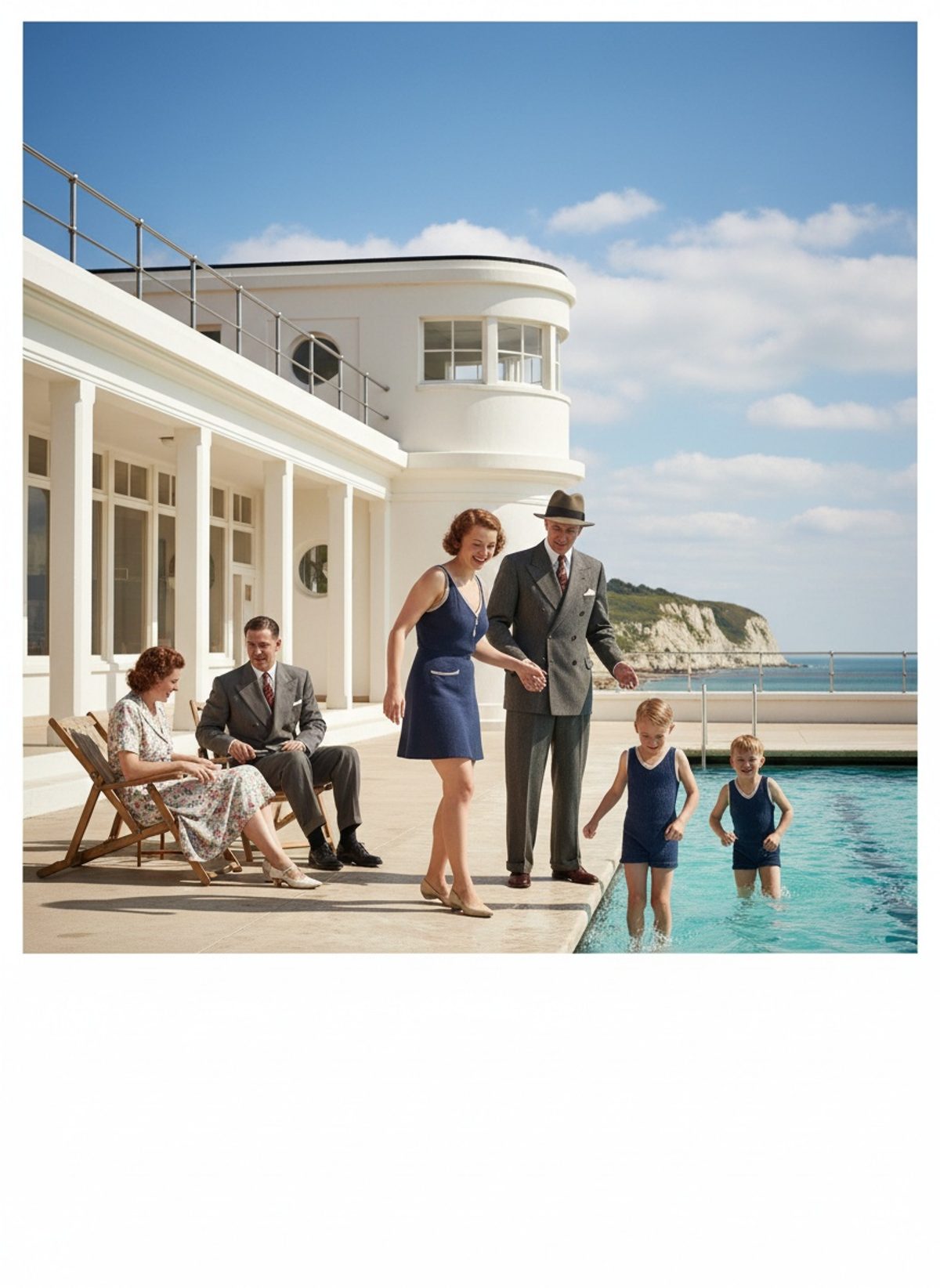
Saltdean was a sleepy village. Until it wasn't.
The Birth of an Idea
In 1938, as Britain's cities grappled with the shadows of the Great Depression and the clouds of war loomed, seaside towns sought ways to rejuvenate weary spirits. Saltdean, perched on the coast of Sussex, was one such place. It wasn't a glamorous spot like Brighton or a posh retreat like nearby Lewes. It was ordinary, yet it dared to dream beyond its means.
The inspiration came from areas far more exotic. The French Riviera, with its azure waters and luxurious lifestyle, drew the European elite. But Richard Jones, a visionary architect, believed that such joys shouldn't be reserved for the wealthy alone. He envisioned a unique escape, a place where the ordinary folks of Brighton and beyond could find solace and joy. With that vision, the Saltdean Lido began to take shape.
The Concrete and Chrome Revolution
The construction of Saltdean Lido represented more than just bricks and mortar. It was a beacon of hope and a marvel of modern design.
Read next: The Day a Yorkshire Surgeon Proved Doctors Were Killing Their Patients
Richard Jones infused the structure with the sleek lines of Streamline Moderne, a popular architectural style that celebrated curves and horizontal lines, reminiscent of the ocean liners which transported the 1930s affluent to exotic locations. Built entirely from concrete and chrome, the lido exuded an air of sophistication and strength, embodying the resilience of a community determined to seek joy despite adversity.
Its design was meticulous. The curvilinear form of the buildings hugged a crescent-shaped pool, mirroring the natural contours of the surrounding landscape. Decked walkways flanked its length, while a central tower with a clock rose above the skyline, both a literal and figurative beacon for those seeking leisure and escape. When the sun shone down, the reflections off the chrome and the water intertwined, creating a dazzling spectacle that seemed to transport onlookers to the French Riviera.
A Haven for the People
The Saltdean Lido was more than an architectural masterpiece; it was a social movement. This oasis welcomed families, workers, and children to experience a slice of the good life, without tickets to Cannes or Nice. Its doors opened with the promise of sun-drenched days and carefree splashes.
Swimming in the large pool felt luxurious, not unlike an escape to the Mediterranean, while sunbathers lounged alongside. Its cafés offered simple pleasures: ice-cold refreshments and a place for laughter and relaxation. This concoction of leisure and delight was a necessary distraction from the harsh economic realities that plagued the nation.
Read next: The Day a Docklands Girl Stopped London's Most Powerful Men
The lido was beloved and cherished for the freedom it provided. Visiting Saltdean became a tradition for many families, woven into the fabric of their lives. And as Europe crept ever closer to war, these moments of tranquility and joy became all the more precious.
A Legacy of Resilience
Though the world has changed immeasurably since the summer of 1938, Saltdean Lido remains a cherished landmark. It is testament not only to a moment of architectural genius but to the indomitable spirit of community. In 1999, it was rightfully designated a Grade II* listed building, a recognition of its cultural and historical significance.
Today, the lido acts as a bridge between those years marked by hardship and the present, where it stands as a reminder of a community's hope and resilience. Saltdean's legacy urges us to remember the possibilities born from vision and determination, even in the face of seemingly insurmountable odds. This story of a village and its revolutionary lido matters more than ever, reminding us to dream big, cherish togetherness, and find joy against all odds.