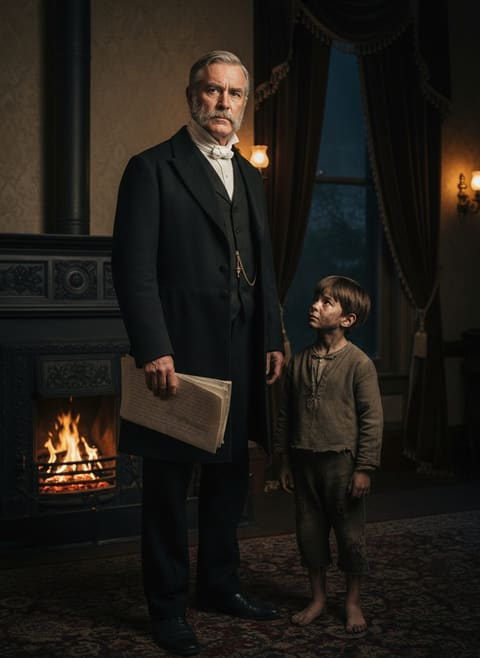
April 11, 1868. A chill wind whispered through the cobblestone streets of Spitalfields. In the shadow of London's spires, beneath a steel-grey sky, the world of poverty and hope intermingled in a seemingly perpetual waltz. It was here, amid the cacophony of vendors calling out their wares and the clatter of horse-drawn carts, that Samuel Wilderspin, a man on the brink of eternity, stalked through the crowd. His eyes, clouded not by blindness but by the weight of his fading years, flickered with the last embers of a resolute mission. His life was waning, yet his legacy shimmered brightly in the fragile minds of countless children who could now dream of brighter possibilities.
In the early years of the Victorian era, the prospect of education for the poorest seemed as ephemeral as the morning mist. The industrial revolution had wrought both marvels and miseries; prosperity for some, destitution for many. Samuel Wilderspin emerged from this milieu as a beacon of unwavering belief—that even the barest poppet and tousled-headed cherub from the slums deserved a chance to learn. The gnarled alleys of Spitalfields, where the miasma of neglect intertwined with the relentless flow of human will, first sparked in him a searing ambition. He found young souls forgotten in the relentless tide of survival, left to fester in squalor and ignorance—until he decided to make a map of their minds.
Wilderspin envisioned a sanctuary against indifference, a place where the raw clay of youth could be sculpted into the pillars of knowledge. With scant resources but overflowing imagination, he began to forge the modern concept of infant schools. These were not just any schools; they were revolutionary spaces where children as young as two years matured through structured play and nurturing guidance. Samuel's fervor was not merely for rote learning; he advocated a paradigm that honored the boundless capacity for wonder within every child, no matter their social station.
In 1819, the foundation stone was laid for what would become his magnum opus: an infant school in New Lanark, Scotland. The setting, idealistic yet practical, became a proving ground for his theories and tenacity. It was a crucible where the offspring of mill workers found their burgeoning minds irrigated with new seeds of thought. Under Wilderspin's watchful eye, education blossomed as the sole tangible escape from the labyrinth of poverty.
Read next: The Day a Pit Boy Dragged a Law Through Parliament
While the nation hobbled under the inertia of class prejudice, Wilderspin was weaving a tapestry of pedagogy that transcended barriers. His groundbreaking approach married childcare with education, imbuing the children’s environment with color and creativity. Schools were no longer barren halls of judgment; they were vibrant arenas where every child was both scholar and discoverer. He expressed the belief that children learned best through play, a radical notion in an era dominated by severe discipline and memorization.
Word of Wilderspin’s success spread like a quiet revolt across Britain. He was a one-man crusade, armed with nothing more than conviction and experience. Throughout the 1820s, the landscape of British education shifted imperceptibly under his direction, as city by city, the reluctant embraced the inevitable. By 1830, the tide was turning in favor of his vision, and his methods began to find traction in even the most conservative boroughs. As Wilderspin traveled the nation, he was not merely imparting lessons; he was vocally declaring war on systemic ignorance.
Samuel Wilderspin’s influence was hands-on; he didn’t just build structures. He built people—both the young and those who would later instruct them. Training teachers was an unending labor; his most passionate advocacy was directed toward empowering instructors with the empathy and creativity required to nurture young minds. Each educator he mentored extended his reach ever further, a thousand ripples of influence unfurling from a single stone cast into the waters.
Wilderspin's tireless lectures, delivered with the vigor of a prophet, were pivotal. His audience, a conglomeration of skeptics and philanthropists, came to perceive education not as a privilege, but rather a duty owed to the nation's progeny. His pamphlets, meticulously detailed, offered both practical insights and the persuasive force of moral compulsion. Step by step, he was infusing the national conscience with the imperative of enlightenment.
Read next: The Day a Surgeon's Son Chose Death Over Silence
Yet, his journey was marked by struggle. For every infant school he planted in fertile soil, others faced bitter winds of opposition—from those entrenched in tradition and threatened by change. There was a persistent battle against a society grappling with its caste predispositions. But Samuel Wilderspin was undeterred; he saw not the arduous campaign but the joyful faces of children set free from the shackles of ignorance.
In the twilight of his years, Wilderspin bore witness to the fruit of his labors—a nation awakening to the power of education. He understood deeply that the adventure of learning required courage and persistence. As he traversed the fading days of his life, Samuel saw schools flourish across Britain, a living testament to his lifelong quest. In the flurry of accolades and reflections, he remained humble, knowing the true measure of his legacy lay in the hearts of children who now knew more than the darkness of their inherited station.
On April 11, 1868, as the twilight drew its final curtain for Samuel Wilderspin, the streets of Spitalfields barely whispered of his passing. But in every undaunted child who harnessed the power of knowledge, there was the echo of his defiance against despair. With an audacious spirit and a gentle heart, Samuel mapped not just the outward lands but the inner horizons of the mind, forever transforming them into territories of possibility. He showed a skeptical world that to teach is to touch a life forever, and with his strides into the slums, Wilderspin charted a course that resonated far beyond his years.