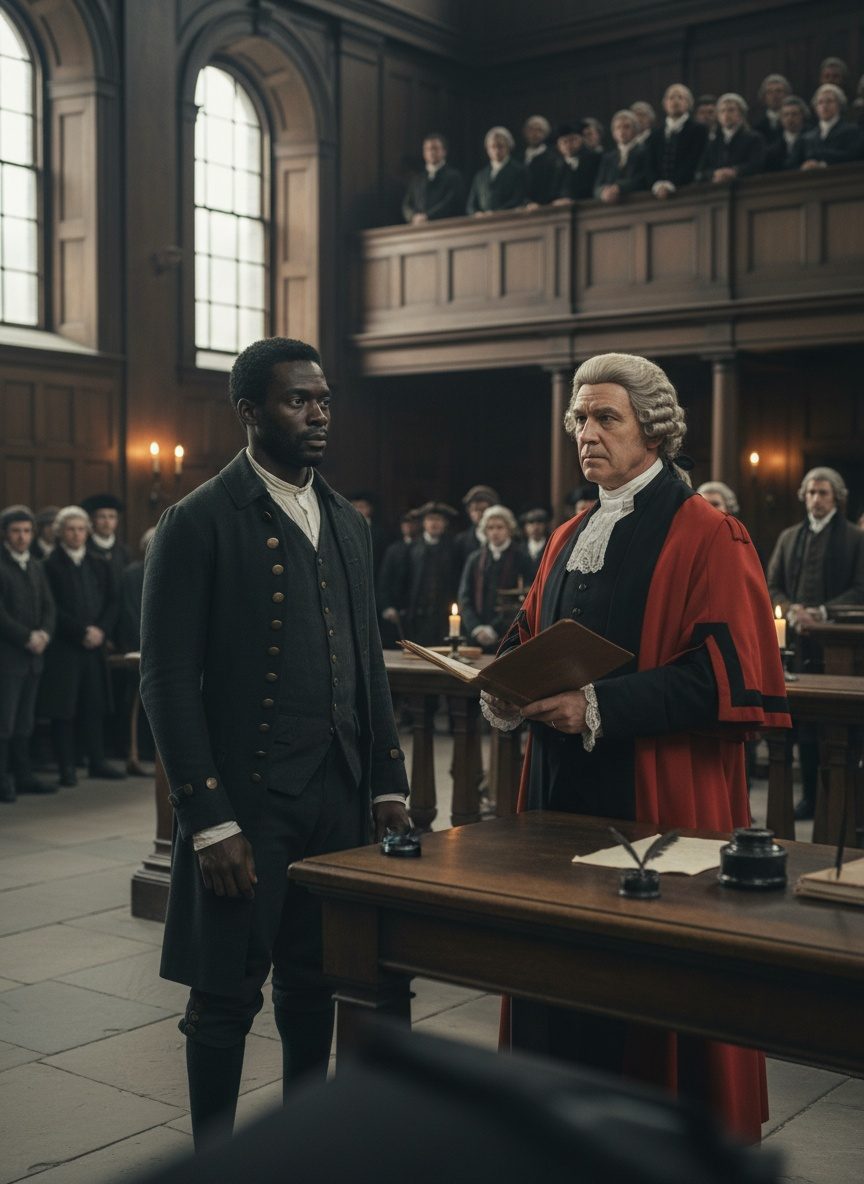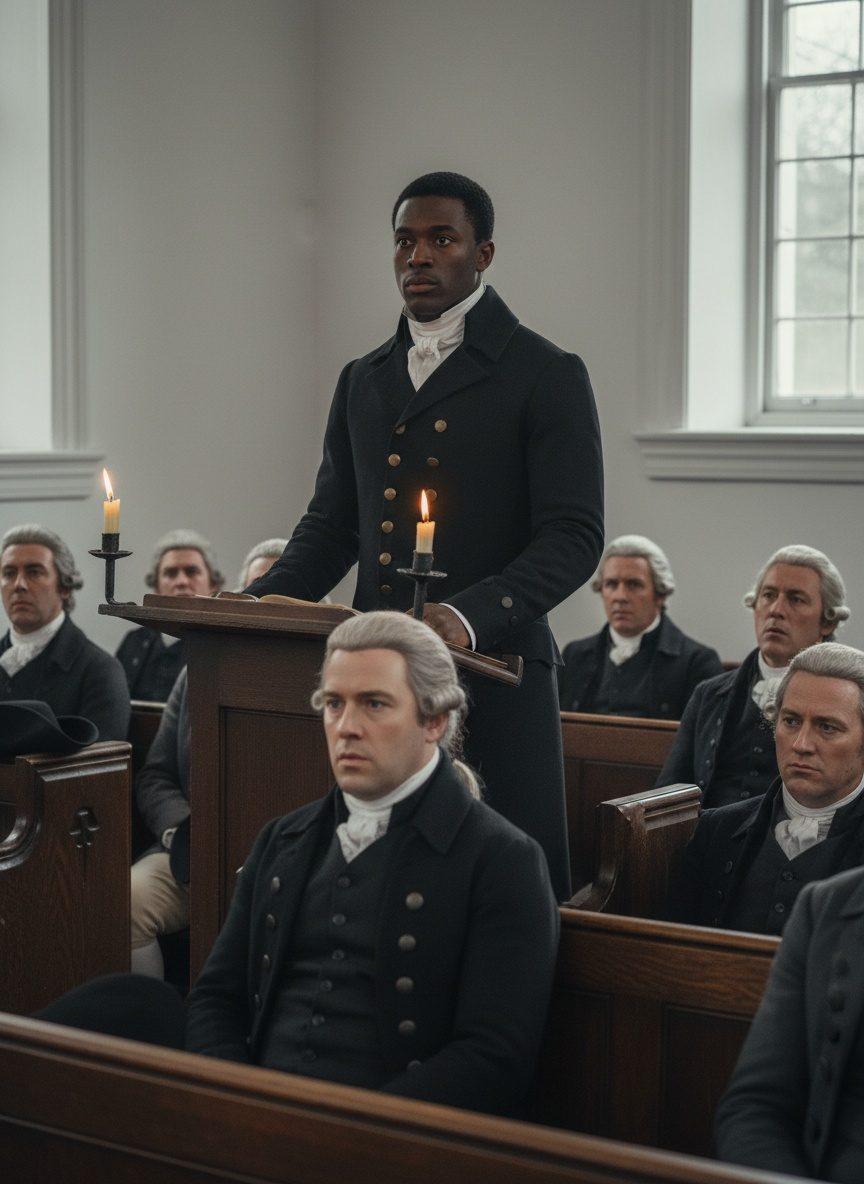
November 14, 1787. The air in the church was as still as the expectant crowd.
The Path from Bondage
In an era marked by the relentless cruelty of the transatlantic slave trade, John Marrant’s story is a remarkable narrative of resilience and redemption. Marrant was born free in New York in 1755, yet his journey soon took him through the harrowing depths of enslavement. Captured and shipped to the plantations, he tasted the bitterness of life as a commodity, experiencing chains that cut deep into the soul as well as the flesh. That he would one day stand in a Bristol pulpit, as a beacon of hope and redemption, seems almost unfathomable given his past.
Marrant's path to that pulpit was paved with challenges that would crush many a weaker spirit. He was not merely a survivor; he was a testament to the human will to overcome and believe. Despite the seemingly insurmountable obstacles, Marrant found a path to freedom, navigating a world that sought to strip him of humanity and dignity. His eventual ordination in London in 1785 came after years spent studying and learning, against the backdrop of a society that often saw him as less than human.
The ceremony was not just a religious act but a powerful statement against the injustices of the time. The heart of London was still coming to grips with the changing thoughts on slavery and race. Here was a man who had once been oppressed, now asserting his voice in the very bastion of British religious tradition. The reverberations of his ordination were felt far and wide, as it challenged perceptions and called into question the accepted norms of racial hierarchy.
Read next: The Day a Surgeon Walked Into a Prison and Freed a Madman
Echoes in the Sanctuary
The doors of the Georgian church in Bristol opened to a congregation carrying with them the weight of disbelief. They were about to witness something extraordinary. A black minister, once shackled in the chains of slavery, was about to deliver a sermon. For many in attendance, it was an event worth retelling to their descendants—a moment when history shifted in a small but significant way.
Marrant's appearance was striking. His eyes, they said, held an intensity that seemed almost to pierce the soul. As he ascended the pulpit, his movements were measured yet purposeful, each step a testament to hard-won triumph. His opening words were delivered in a voice that resonated powerfully through the chamber, leaving an indelible mark on all who heard.
While the content of Marrant’s sermon on that day remains largely undocumented, the impact was profound. It was recorded that his words moved even the hardest of hearts in the congregation. Hardened men, who perhaps once partook or even profited from the system that enslaved Marrant, were seen wiping tears from their eyes. His message of hope, faith, and redemption penetrated the deeply-entrenched prejudices of the time, challenging the very ideology of racial superiority that underpinned much of society.
His preaching did more than inspire; it prompted reflection and, for some, a change of heart. Stories proliferated about individuals who, inspired by Marrant’s words, began to support the burgeoning abolitionist movement, enjoining others to see in all humans, regardless of their race, the light of divinity.
Why It Still Matters
What unfolded in the heart of Bristol in that memorable service transcends the bounds of mere historical curiosity. John Marrant’s sermon was more than a singular event in a lone church; it was a clarion call in a landscape still steeped in the inequities of the slave trade. It signaled a shift, however small, towards a more equitable vision of humanity.
Marrant’s story is not simply about overcoming adversity. It forces a difficult examination of the narratives we tell about society, power, and race. As Marrant stood in that pulpit, his very presence defied an entrenched social order; with each word, he carved out more space for voices that had long been suppressed. It also serves as a reminder that voices can rise up even in the darkest of times, and that change can come from the most unexpected quarters.
Today, John Marrant’s sermon continues to echo, urging us to rethink how we engage with history and how stories once left out of textbooks are vital to understanding both the past and present realities. His tale is one of empowerment and muted glory but underscored by the undeniable truth of resilience. It beckons today’s world to listen closely to the murmurs of the past, to hear the challenge and promise contained within those church walls, and to carry forward the vision of a world where everyone can fill any pulpit, irrespective of their origin.