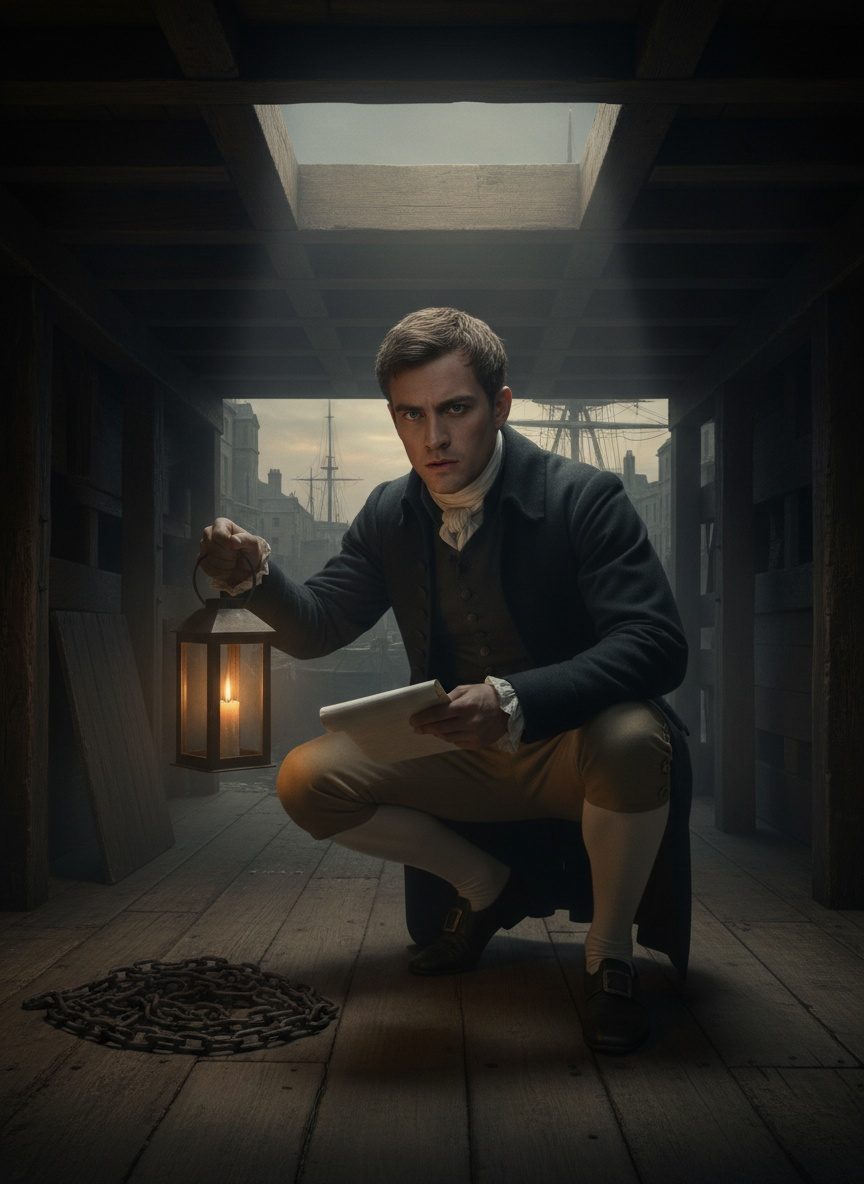
Thomas Clarkson may not be a household name today. Yet his solitary act of public service in 1787 shook the foundations of the British Empire.
The Moment That Sparked a Movement
The year was 1787, a time when the British economy flourished on the backs of enslaved people, a brutal reality often obscured behind layers of societal convenience and complicity. In Bristol, one of the linchpins of this grim trade triangle, a young Cambridge scholar named Thomas Clarkson undertook a dangerous mission fueled by newfound conviction. After winning an essay competition at Cambridge that scrutinized the moral fiber of the slave trade, Clarkson's path took an unexpected turn into activism. He made his way to the bustling slave ports of Britain, determined to expose the severe realities hidden beneath the surface of British prosperity.
It was a hot summer day when Clarkson stepped aboard a slave ship moored in Bristol's harbor. The vessel loomed ominously, a floating prison that had crossed the vast Atlantic. As he ascended its gangplank, the air was thick with a stench that stories could barely capture—a potent reminder of human misery. But Clarkson was armed not with weapons or political power, but with something far simpler: a measuring tape and a notebook.
Measuring the Inhumanity
Inside the ship's dark and cramped holds, Clarkson moved with grim purpose. He meticulously measured every chain, every narrow gap that served as a space where human beings were stored like cargo. This was no abstract enumeration; each figure represented real human suffering. Some chains were scarcely 6 feet in length—barely enough to hold a grown man, let alone allow movement. The spaces allocated for human beings were hauntingly small, trapping them like sardines destined for the broiling sun and howling storms of the Atlantic passage.
Read next: The Day a Black Sailor Walked Into Court and Freed Himself
Clarkson's sketches were not artistic renderings but forensic drawings, drafted with precision to cut through the dispassionate narratives that had long shielded public conscience. This was evidence, cold and bare, enabling the British public to glimpse the true face of the slave trade for the first time.
A Diag ram of Unimaginable Worlds
The diagrams and notes Clarkson produced captured the attention of the newly formed Committee for the Abolition of the Slave Trade. This group, operating in London, included notable figures like William Wilberforce and Granville Sharp. They recognized the potent clarity of Clarkson's work and distributed it widely across British society. Clarkson's drawings became iconic almost overnight, depicting in black and white the harrowing voyage shared by thousands of enslaved Africans.
The image was more than just a collection of figures and lines. It was a diagram of unimaginable worlds contained within the rusting confines of a slave ship, a space otherwise concealed from the public eye. These diagrams became a rallying point for abolitionists and a damning indictment against those who continued to defend the institution of slavery.
The Echo Across the Empire
The impact was both immediate and long-lasting. People who had never given a second thought to the moral implications of the slave trade were suddenly forced to confront its brutal reality. The diagrams circulated not just in coffee houses and private parlors but also in pamphlets and newspapers that reached every corner of the British Isles. Clarkson's work catalyzed a change in the collective consciousness, inspiring speeches, debates, and even parliamentary action.
Read next: The Day a London Clerk Walked Into Court for a Dying Slave
Thomas Clarkson’s painstaking measures led to the British Abolition Act in 1807, which formally ended Britain's legal participation in the slave trade. It was not the end of slavery, far from it, but it was a crucial step in a long journey towards emancipation.
A Lesson in Moral Courage
Why does this story of a lone shipboard encounter resonate today? It reminds us of the extraordinary impact one individual can have on the world. At a time when many chose complicity or ignorance, Clarkson opted for courage. He reshaped indifference into outrage, turning the tide of public opinion with nothing more than a diagram and a will to uncover the truth.
In an era rife with geopolitical upheavals and moral conundrums, Clarkson’s venture into a slave ship offers a timeless message: sometimes, the most effective tools of change are not swords or laws but simple, unblemished truth. As the chains of oppression take new forms in contemporary society, Clarkson's journey serves as a potent reminder of the difference that determined individuals can make when they are unwilling to turn away from injustice.