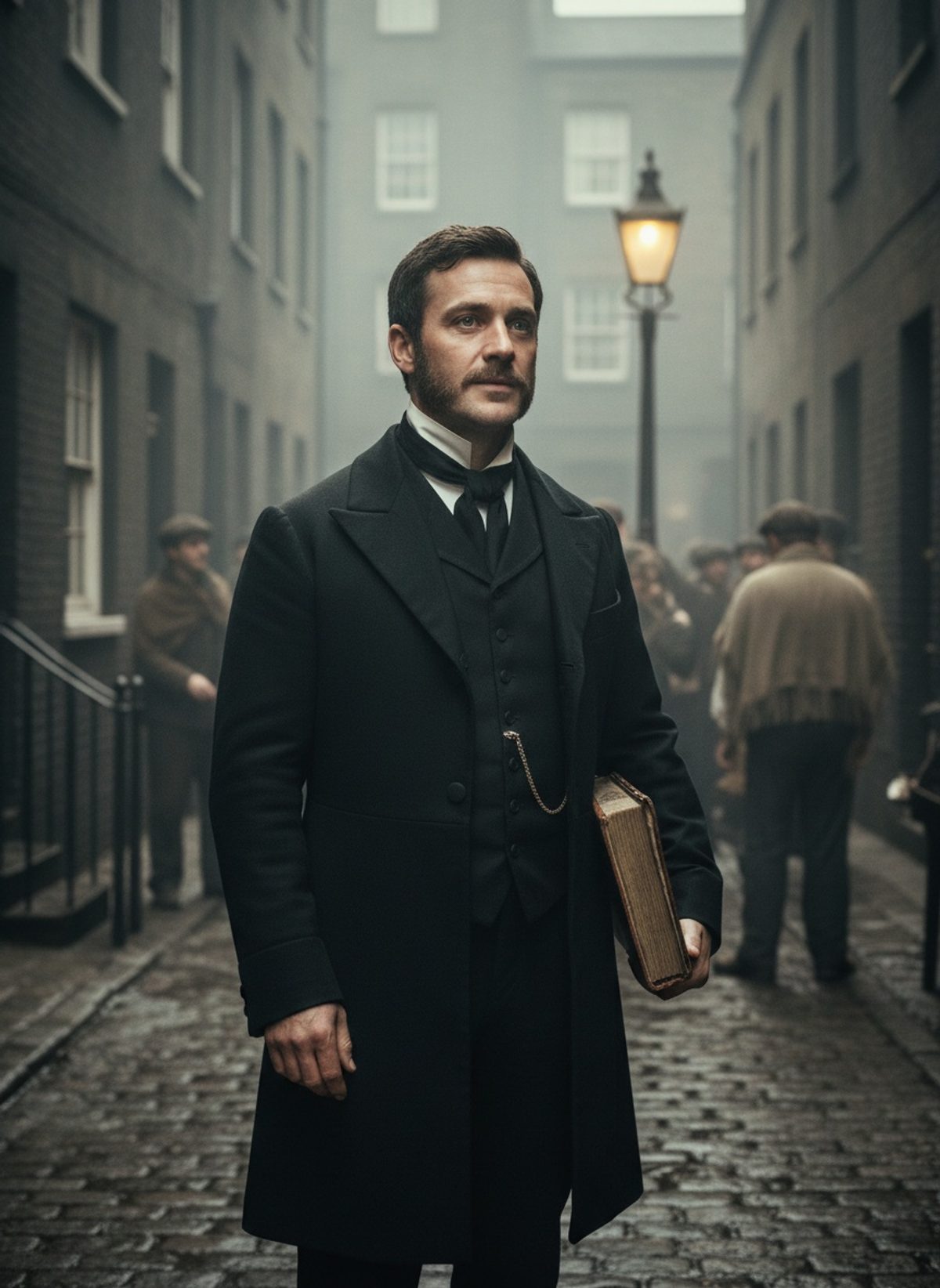
The thick, oppressive fog lay heavy over London, veiling the city like the troubled thoughts that weighed down its inhabitants. In the heart of this miasma stood the rookeries and courts, labyrinthine slums where life clung on desperately. They echoed with the distant cries of hunger and resignation, a cacophony telling tales of illness woven into every filthy cobble. This was 1832, and these overcrowded corners were not just living quarters but hives of disease — the unseen armies of cholera, typhus, and smallpox launched their assault from here, laying siege to the heart of London.
The Surgeon Who Walked Among the Plague
Amid this shadowy urban battlefield strode a figure with a purposeful gaze and quite literally a mission to map death and, contrary to all expectations, stop it — John Simon, the visionary surgeon. In 1848, Simon accepted the weighty mantle of the first Medical Officer of Health for the mighty City of London, perhaps ironically at a time when the city seemed incapable of caring for many of its own.
Simon was not one to pace comfortably behind thick walls of bureaucracy. Instead, he wielded evidence as his sword, defying the uncaring tide that had long swept away so many. With steady steps, he ventured into the bleak heart of the city’s poorest quarters, a realm few dared to enter unless driven by dire necessity or grim fortunes. These walks into the morass of human suffering enlightened him, revealing lethal secrets hidden away in cramped, airless hovels.
Mapping Death in the Labyrinth
Squalid shadows twist and confound those who wander through them. Yet, John Simon meticulously captured glimpses of death's intricate threads; each visit was like untying a knot in a web that ensnared the city. Simon transformed death into data, committing himself to a grim arithmetic of mortality — the calculation of how filth had made the city's veins its domain.
Read next: The Day a Docklands Girl Stopped London's Most Powerful Men
As he dissected the problem with the precision of a surgeon, he laid bare the city's sick anatomy, layering maps over maps. They told stories etched by death where ten people might inhabit a single room, breathing as much hope as unfiltered death. By casting light onto these maps, Simon sparked a debate about public health long neglected by all too many. It was a fierce discourse through which he skillfully directed attention from his deep readings into London's clandestine peril.
Not Just a Report, but a Battle Plan
Simon's approach was radical: he didn't just diagnose problems; he crafted solutions that were as direct as his methods. His advocacy was as revolutionary as it was practical. He pushed for something Britain's governing machinations struggled with — the conviction to act, and quickly.
He proposed what many considered audacious interventions at the time: improved sanitation facilities, networks that would carry away disease rather than nurture it, and clean drinking water not befouled by the city. These ideas, though formidable to implement, were not insurmountable. Simon knew specifics. He understood streets: their smells, the frequent deaths that fascinated rats, and the way cholera soaked into the fabric of life. He spoke of drains like arteries clogged with death, urging that they be the channels of rebirth instead.
The Reluctant Rebirth of a Diseased City
As 1848 turned into the following years, the dusty corridors of government began to echo his insights. Though navigating the complexities of a reform-shy Victorian society was no less a chore than coaxing life back into the city's cavernous spaces, ignorance proved no match for persistence. Soon, the teachings found their way into laws designed to transform the foulest most odorous of city alleys into breathable parts of future London.
Read next: The Day a Chimney Boy Stood Before Parliament and Wept
The Public Health Act of 1848 may not have flagged an instant revolution, but it marked the recognition of a city's responsibility toward its most vulnerable, inspired by Simon's reports. London began its slow cleansing, with pieces of Simon’s vision gradually patching up its welfare fabric. The miasma lifted, if only slightly, its spirits unbowed yet its precedents undeniable.
An Unending Legacy Carved in Courage
The day the surgeon walked through Deptford with the free medicine of resolve, he quietly carved a niche in history that remains often unsung. John Simon became a harbinger — a precursor for those who dare fight against seemingly insurmountable odds for the betterment of humankind. Treading through London's most perilous streets to reveal corrosive neglect ultimately led to a consciousness shift. The slowly building reformation he inspired laid the foundations of an enlightened vision in public health that whispers its influence into modern cities worldwide, unseen yet powerful as his own steps once were.
This unsung testament to the courage of conviction reshaped a city and its history. It draws a line from the smoke-choked streets of the Victorian era to our modern cities that owe their safety to those early steps into the dreaded core of urban ills. John Simon left behind not just cleaner streets, but a legacy of walking through fog towards the light — a call still echoing in parts of the world where shadows need addressing and maps need redrawing.