Mary Queen of Scots was absolute in her rule. But in 1563, power, for once, could not sway a solitary Scots minister.
A Royal Summons in a Time of Turmoil
The echoes of reformation were thunderous throughout Europe, none more resounding than in Scotland. In a world increasingly divided by the spiritual and secular worlds, Mary Queen of Scots reigned with all the poise and authority expected of a ruler of her standing. But in the spiritual battleground of Scotland, her Catholic faith stood at sharp odds with the burgeoning Protestant Reformation, represented most fiercely by John Knox. This clergyman, a figure cut from the sternest of stone, embodied a new religious fervor that was sweeping the land.
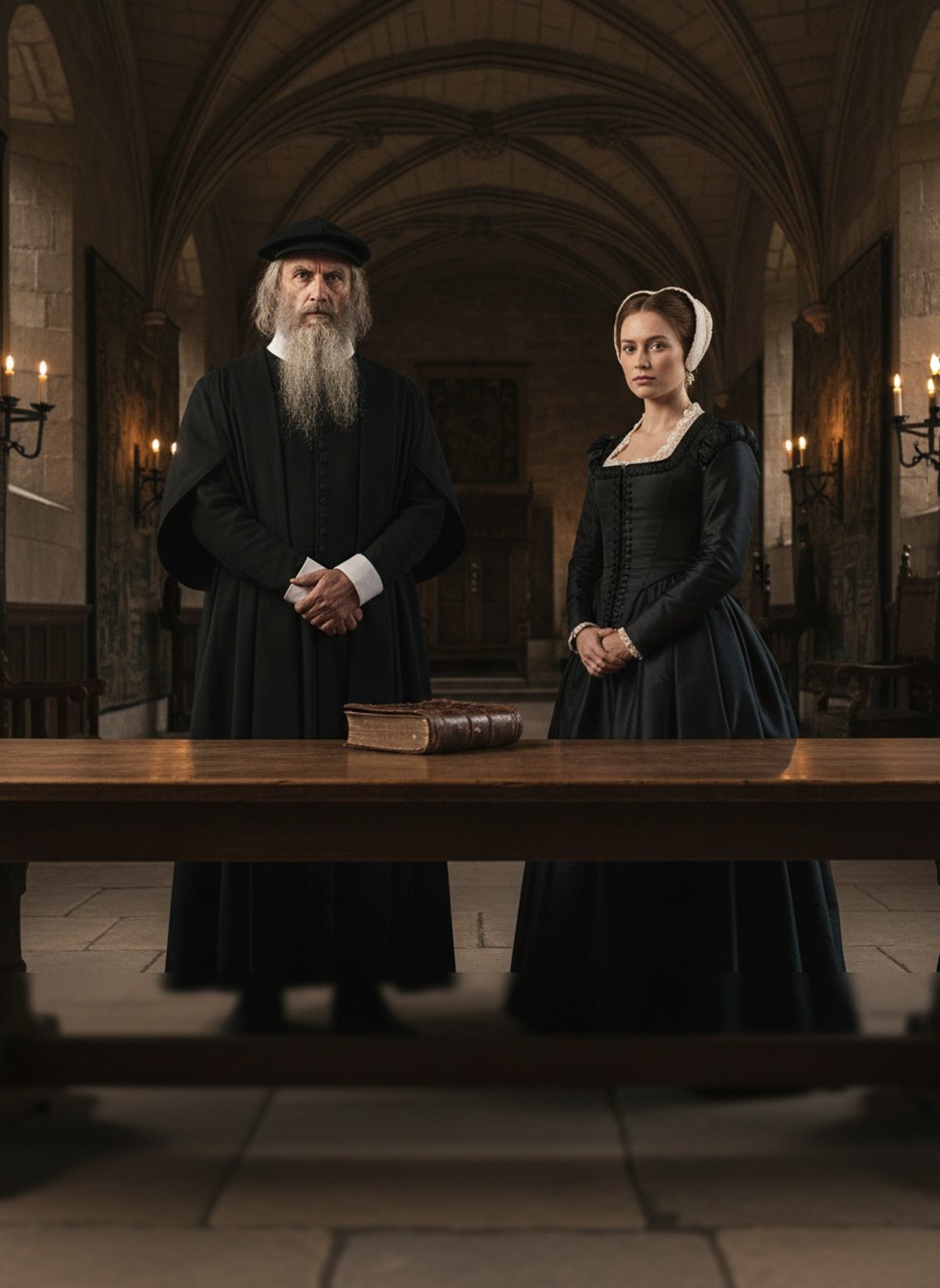
Mary, amidst swirling political and religious tensions, summoned Knox to her court at the sprawling Holyrood Palace. The grand halls, flanked by austere walls draped in the emblems of her lineage, set the perfect stage for what would become a seismic confrontation. With an aura of regality, Mary intended to challenge the source of Protestant volatility in her realm. Yet what she encountered was not simply a man, but a fortified bastion of Protestant belief, unwavering in the face of sovereign command.
The Clash Between Crown and Kirk
Knox, with a resolute countenance, entered the halls that so many trembled in. His reputation preceded him — a man of fiery sermons and uncompromising convictions, one who saw not a queen before him, but another soul in the need of spiritual correction. When he was led to Mary, a stark dichotomy arose: the queen draped in royal finery and the minister severe in his simplicity. Every breath in the room held expectation, hushed in anticipation of the exchange.
Read next: The Son of Brunel Who Built a Bridge at the Edge of the World
Mary, adept in the art of persuasion, used every tool in her arsenal. Her face, a portrait of regal temperance, turned to tears as she implored Knox to temper his revolutionary zeal. But the minister's response was a masterclass in defiance. His words, honed by conviction and unbendable principle, were akin to a sermon delivered from the pulpit. He told her what no courtier dared: that allegiance to God transcended earthly rulers, even those crowned in Holyrood’s hallowed halls. It was a stance of rare audacity, a declaration that one's ultimate faithfulness lies beyond the mortal throne.
Tears of Frustration, Words of Unyielding Faith
Mary's tears flowed, a rare glimpse behind the sovereign mask, perhaps calculated, perhaps genuine. Her frustration, palpable to those present, was matched by Knox's stoic resolve. Around them, courtiers watched in silent shock. No one interfered; none dared. The two were locked in an eternal moment, a metaphorical chess match where neither queen's gambit nor bishop's strategy would budge the outcome.
Read next: The Day a Scots Minister Stood Between a Mob and a King
In this clash, Mary represented the old ways, the long shadows of Catholic dominance. Yet, the charismatic force of Knox was part of a tide that could not be swayed by tears or appeals to loyalty. His belief in a higher cause than kingship or queenliness gave his words an indomitable weight. Inside the cavernous halls, his voice alone echoed — steadfast, grounded as if spoken from a pulpit rather than beneath a canopy of royal authority. This encounter laid bare the fault lines within Scotland's shifting religious landscape, a fissure that would only deepen with time.
A Meeting that Shook the Realm
This singular confrontation between Mary and Knox was more than a mere meeting of minds; it symbolized a tectonic shift that Scotland would not return from. It was not just a rejection of royal persuasion, but an articulation of a greater doctrinal upheaval. Knox left the palace that day with his faith reaffirmed, while Mary faced the sobering truth that her once-unassailable authority was no longer absolute over every subject. The queen's tears were her admission of a reality that even a monarch's might could neither quench nor crush.
Though centuries have since passed, this story resonates within the annals of history as a testament to the unwavering authority of personal conviction against temporal power. Knox stood alone, but he represented a movement, an inevitability born from the souls of the common and uncommon alike who questioned the wayward path of earthly power. In this resolute stand, a precedent was set that has endured, echoing through the halls of history — that the voice of truth, no matter how singular, can gust like a gale against the established order.