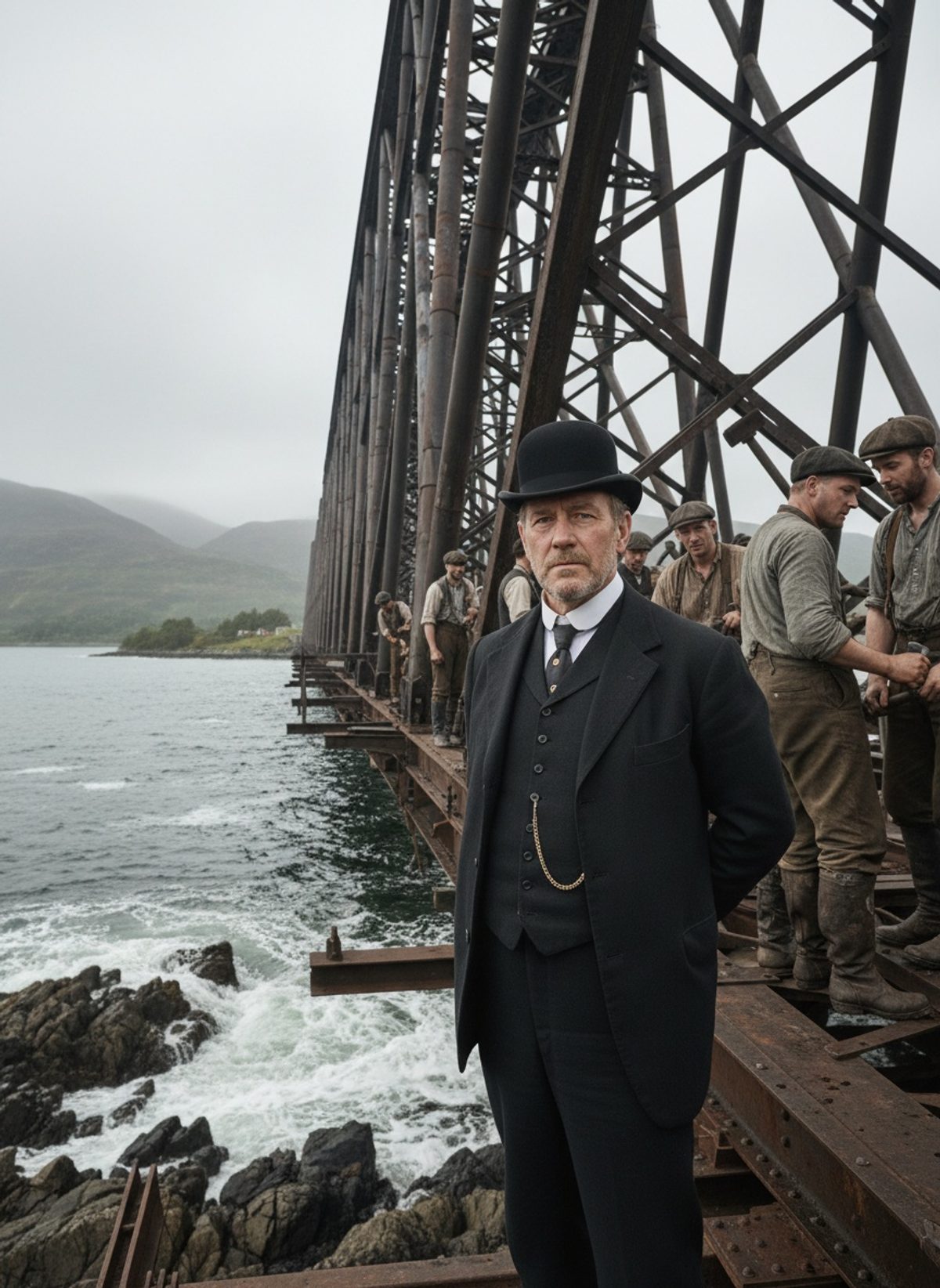
The wind whipped across the Scottish loch, churning the steel-gray water into a white-capped frenzy. There, amidst the roar of the wind and the rhythmic pounding of the surf against the shore, stood Henry Marc Brunel, gaze fixed on the churning passage where the tides through the mouth of the loch ran faster than almost anywhere else in Britain. He wasn’t just battling nature; he was wrestling with the shadows of his own legacy.
Legacies and Shadows: The Brunel Burden
The name Brunel carried a weight all its own. Isambard Kingdom Brunel, Henry’s father, was a man whose engineering feats left indelible marks on British infrastructure: the Great Western Railway, the pioneering steamships, and that audacious suspension bridge threading across the Avon Gorge. But for Henry, the task was never just about stepping into his father’s shoes; it was about finding a path that diverged from those well-trodden trails, cutting through virgin ground in the wilds of Scotland.
His task was set at Connel, where Loch Etive and the open seas grappled in a watery dance. Here, in this remote Scottish community, Henry faced challenges that demanded both innovation and daring. The tides in this part of the world ebbed and flowed with such ferocity that conventional bridge foundations were impossible. Yet, where others foresaw insurmountable challenges, Henry saw an opportunity to craft something extraordinary — a bridge not just as a physical crossing but as a triumph over nature's unpredictable whims.
Innovation on the Edge: The Cantilever Solution
The stakes were high. At the heart of Henry’s design was a cantilever bridge, a vision demanding both confidence and ingenuity. The cantilever bridge concept wasn’t novel, yet in 1898, what Henry proposed at Connel represented a daring leap into the future. Unlike his father’s grand arches and tunnels, this was a spanned stretch wherein each arm of the bridge reached outward, grasping towards the other, relying on a precarious balance of tension and compression.
Read next: The Day a Scots Minister Shielded a Condemned Man From the Mob
This design wasn’t merely about crossing from one side to the other. It was artistry forged in steel, requiring precise calculations and a profound trust in the materials and men wielding them. As the second-largest single cantilever span in Britain upon its completion, what unfolded here at Connel was a bold statement of human tenacity and technical prowess. It was an arena where the raw elements battled the resolve and inventiveness of one man’s engineering genius.
On the Ground: The Builders’ Tale
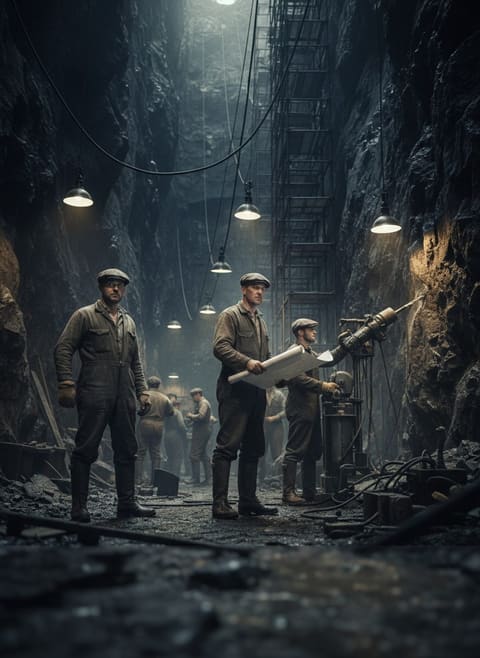
On the rocky shores of Connel, the workforce felt the constant spray of salt and the unwavering gaze of their ambitious leader. These were men who had come to respect Henry Marc Brunel, not merely for his famous name but for the vision and determination he embodied. Long hours were spent laboring under skies that could shift from sunny patches to tempestuous gales in minutes, a testament to the challenge Nature added to their task.
Read next: The Clan That Was Declared Outlaw by Name Alone
The blend of local knowledge and imported expertise was what made the difference for this project. Skilled artisans and rough-hewn laborers from Scotland complemented experienced engineers drawn from other parts of Britain. Each bolt secured, each rivet fastened, was set with a blend of pride and precision borne from knowing they were part of something much greater than themselves. Theirs was a legacy earned as much as inherited, as seen in each monumental beam reaching out across turbulent waters.
A Bridge of Symbolism and Substance
On the day the last piece fell into place and the bridge stood whole and sturdy across the relentless loch, there was more than relief and pride; there was a sense of history being rewritten. Henry Marc Brunel had not just built a bridge; he had forged a new link in the Brunel legacy, one that resonated with his own voice, his own triumph. In that instant, he not only crossed the divide between the loch's banks but also the chasm between his father’s legend and his own burgeoning legacy.
In the tale of the Connel Bridge lies a larger narrative - one that goes beyond the dimensions of steel and stone. It is a narrative about the harmonious melding of tradition and innovation, a reflection of a time when challenges were met with daring and ingenuity. Henry Marc Brunel’s Connel Bridge remains, not just as a marvel of engineering but as an enduring monument to a man's resolve to step out from his father’s shadow and to claim his own place in the annals of history. It is a story of identity and achievement, unfolding in a corner of Scotland where the ceaseless dance of water and wind seems to whisper of the Brunel who defied the tides.