Every year on Remembrance Sunday, unchanging, he lays a wreath at the Cenotaph. Few outside the domain of royal watchers will think of the man behind the persistent ritual. They should.
The Shadow of Loss
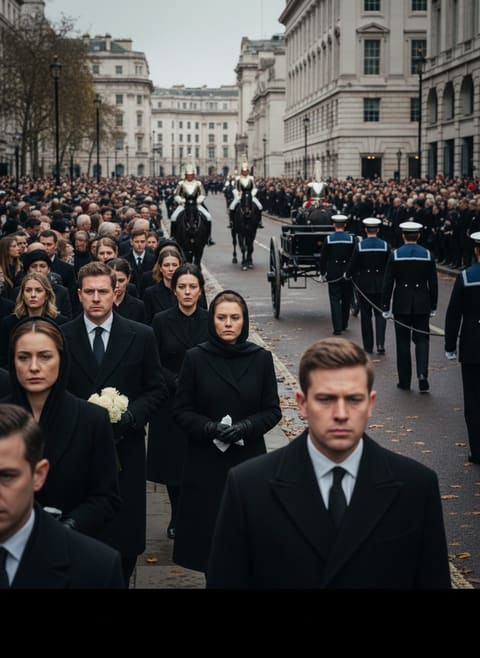
Standing firm among the whirl of scarlet uniforms and subdued ceremonies marking Remembrance Sunday, a tall figure with an air of resolute solemnity emerges. This is Prince Edward, the Duke of Kent, a royal whose life and duty have been so intimately shaped by the conflicts of the 20th century. Since 1967, he has laid a wreath at the Cenotaph almost every year. It is a ritual that speaks to a profoundly personal history intertwined with national remembrance.
The Duke of Kent did not have a conventional introduction to the burdens of monarchy. Born in 1935, Edward lost his father, Prince George, Duke of Kent, in a plane crash while on active service in 1942. Prince George was a significant figure; the first royal to serve as a naval officer and a senior British royal casualty of the Second World War. Edward was only six when he lost his father, an experience that etched its influence on him and has shadowed him into adulthood.
The Duke's sense of duty appears inseparable from this early heartbreak. By laying the wreath, he not only represents the Crown but also honors his father's memory and the shared history of service and sacrifice. In this act, he mirrors the legacy of many British families who paid the ultimate price during the wars. For Edward, remembrance is a deeply personal and continuous dialogue with the past.
Read next: The Day a Boy of Ten Was Crowned King of England
A Life of Quiet Service
Though he might not occupy the front pages as frequently as other royals, the Duke of Kent’s contributions to public life have been substantial. Since inheriting the title in 1942, his life has been a journey of quiet yet persistent service. He served in the armed forces, contributing to Britain's post-war military efforts, and later assumed numerous ceremonial roles, representing the Queen at home and abroad. His roles have spanned presidencies and patronages of dozens of organizations—each reflecting a commitment to public duty that has become his hallmark.
His wreath-laying at the Cenotaph, however, stands out as a marker of consistency and resilience. Despite advancing age and the inevitable decline in mobility, his presence at the ceremony is reliable. What many may not realize is that this act, repeated over decades, is more than mere tradition. It represents a stance against the erosion of memory, a refusal to let the sacrifices of yesterday fade with the passing decades. The Duke serves as a living link between the present and a past marked by profound loss, embodying a bridge to history that demands reflection.
In the broader panorama of royal duties, the Duke's persistent task stands out, not for its visibility, but for its emotional resonance. His presence at the Cenotaph every year echoes the endurance and sacrifice exemplified by the generations that came before—shadows in his family tree whose service was cut short, whose stories remain partly untold.
The Resilient Presence
At the heart of the Duke of Kent's enduring role is a narrative of resilience—an unyielding response to adversity. As the world transformed from post-war recovery into the complexities of the modern era, his commitment never wavered. Each November, as silence engulfs the heart of London, the Duke’s sturdy form at the Cenotaph remains unyielding, a powerful symbol of national continuity.
Read next: The Boy King Who Faced Down a Rebel Army at 14
In a royal family where each face carries a different chapter of Britain's story, the Duke of Kent's chapter is woven with threads of loss, duty, and remembrance. While others were thrust into the limelight of crisis or fame, Edward has remained steadfast, embodying an understated grace and resilience that sometimes escapes the stark lights of royal scrutiny.
This story matters because it is about the perpetuity of memory in the face of forgetfulness. As worldwide conflicts recede into distant history and their firsthand witnesses vanish, individuals like the Duke of Kent serve as tangible reminders of sacrifice. In this singular act of laying a wreath, we are compelled not only to remember the cost of war but to acknowledge the passage of legacy through silent gestures that reverberate with meaning beyond words.
In every step toward the Cenotaph, every careful placement of those flowers, the Duke tells a resonant story of inherited duty born of personal loss and national pride—a chapter in Britain's untold legends, whispered through history’s echoing corridors, that time cannot silence.