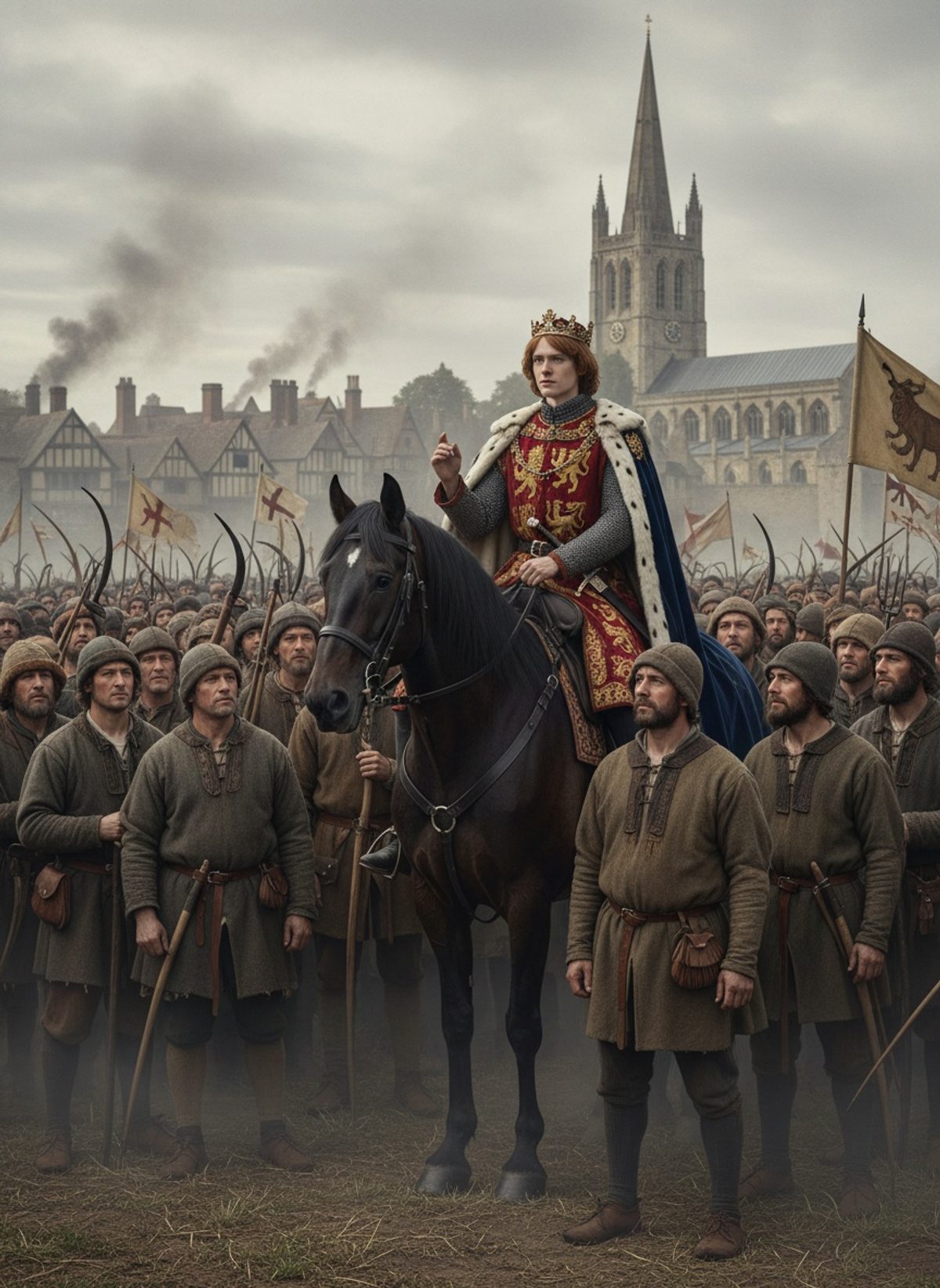
The air was thick with smoke and the acrid taste of rebellion. Hooves clattered against the cobblestones, each step echoing the weight of what was at stake. Ahead, a sea of faces—angry, desperate, and determined—spilled across the field like a restless tide. Richard II, barely more than a boy and yet a king, felt the world’s gaze bearing down upon him. As he approached the throng of 60,000 insurgents gathered at Smithfield, the silence among them was deafening, a tangible force ready to erupt at the slightest provocation.
London, a city teetering on the edge of chaos, was in flames. The pulse of revolt had traveled through the country like wildfire, igniting a cauldron of discontent. The Peasants' Revolt, as it became known, was no mere insurrection. It was a symphony of grievances—tithes, taxes, and tyranny. People of disparate walks had banded together, unified by a common cry for justice. The capital, the throbbing heart of England, quivered under the threat of rebels who had breached its gates, leaving the city's most powerful cowering within their fortified walls.
Into this boiling cauldron of unrest rode Richard. He was just fourteen, a mere shepherd of kingship thrust too early onto the throne after his grandfather's passing. Yet here, alone amidst sixty thousand defiant souls, he seemed to transform. His youthful face bore no shadow of a beard, but it bore an expression of uncanny resoluteness. His advisors had scattered like leaves in a gale, leaving him to face the storm alone. Whether driven by bravery, naivety, or a simple understanding of what power truly meant, he did what few expected: he rode to confront, not with sword in hand, but perhaps something even more formidable—his voice.
As his horse drew closer, the ocean of rebels parted, their weapons held at the ready, yet frozen in anticipation of what this royal child would dare to say. Banners that had fluttered defiantly in the smoky haze of the afternoon sun now drooped, as if trying to catch his words. Each movement, each breath, rustled through the multitude like electricity. The very atmosphere seemed poised on the edge of violence, waiting patiently for the spark or the solution a single speech might bring.
Read next: The Day a King Walked to His Own Death With a Steady Hand
But this was no ordinary gathering. The cries and demands that rang through the capital were underlined by the promise of change, irrespective of the cost. Tales of misrule, exploitation, and servitude fueled the communal heart of the rebellion. Yet, amidst the clamor and clashing wills, Richard's solitary silhouette on the horizon became a fulcrum, upon which balance trembled precariously.
What made Richard II stand defiantly at Smithfield wasn’t legendary speeches nor rehearsed rhetoric. Instead, it was strategic simplicity that he offered. He promised to address grievances, to consider and mediate the genuine injustices suffered by the common folk. It was a promise to listen—a simple notion, yet radical when wielded by a monarch over a subjugated people. The tension broke like dawn over the darkest night; weapons were lowered, voices softened, and for a moment in history, the impending chaos stilled.
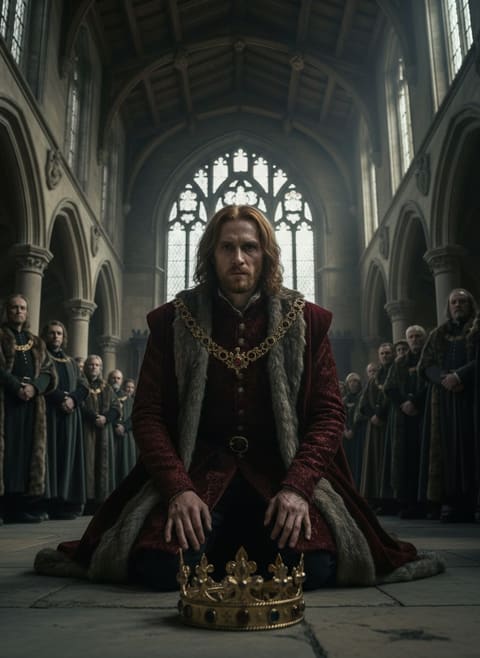
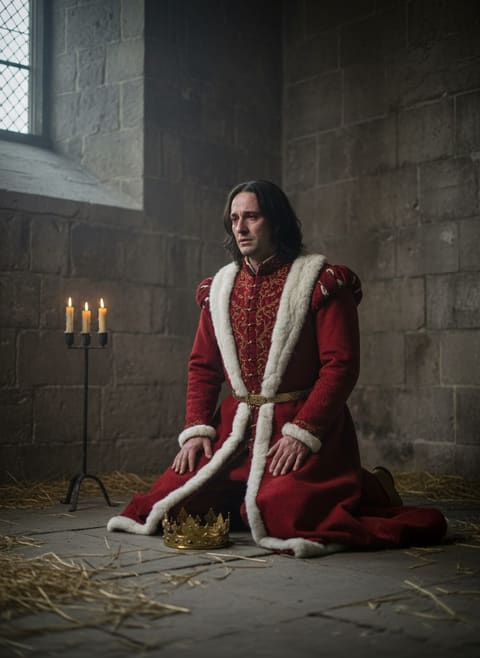
Read next: The Day a King Knelt and Begged Forgiveness From His People
The events at Smithfield in that fateful June marked a unique counterpoint in the history of rebellion. Violence did not quell the uprising, nor did bloodshed scribble the revolt’s last chapter; it was the power of negotiation and the recognition of suffering that offered a temporary reprieve from pandemonium. That young king's calm took hold of the brimming fury and held it in place, if only for a tenuous moment. Never before—and rarely since—had England seen such a dramatic halt to cataclysmic uprising at the bidding of one so young.
In the days and weeks that followed, compromise would be fleeting, and the roads to real reform would wither under the weight of bureaucracy and betrayal. Yet Richard’s act, that audacious stand in the heart of London, left a mark. It was a gesture that seared itself into the tapestry of English legend—a testament to vulnerability and strength intertwined in a singular moment of potential metamorphosis.
This moment in history matters not because it ended social upheaval, nor because it solved the inequities of its time, but because it illustrated the dual faces of power: authority that commands and the wisdom that persuades. Richard II’s fearless engagement with the masses underscores a principle that resonates through centuries—a lesson that rulers of any age might heed. As London rebuilt from its ruins and the fires abated, the embers of that day at Smithfield smoldered with the promise that, perhaps, dialogue can be a shield as formidable as any constructed of steel.