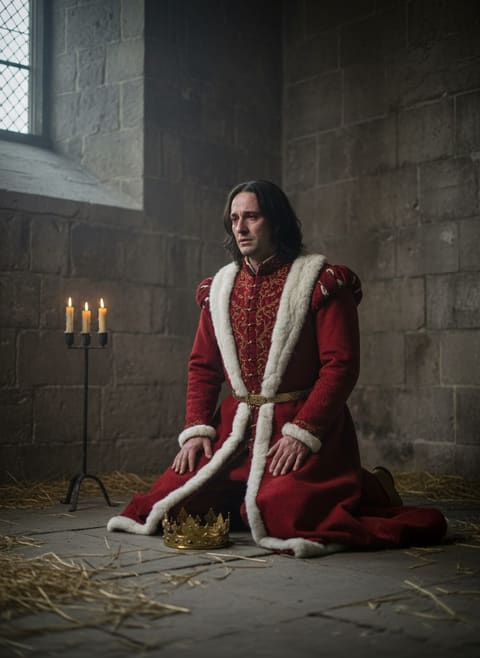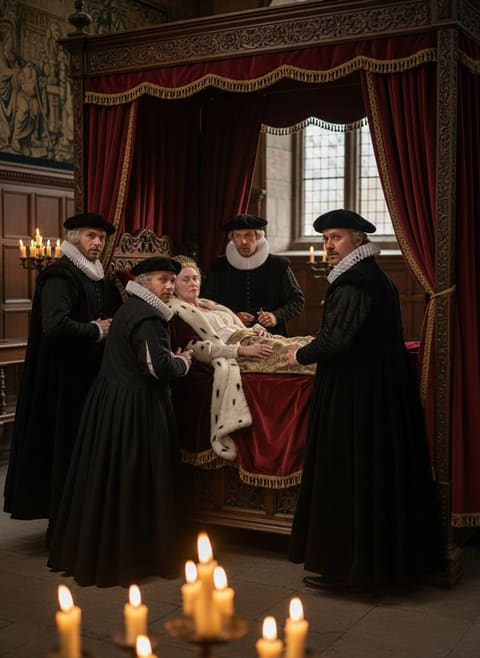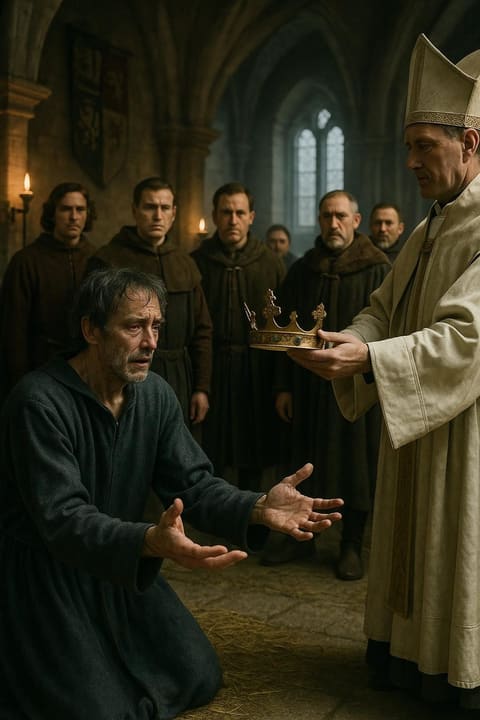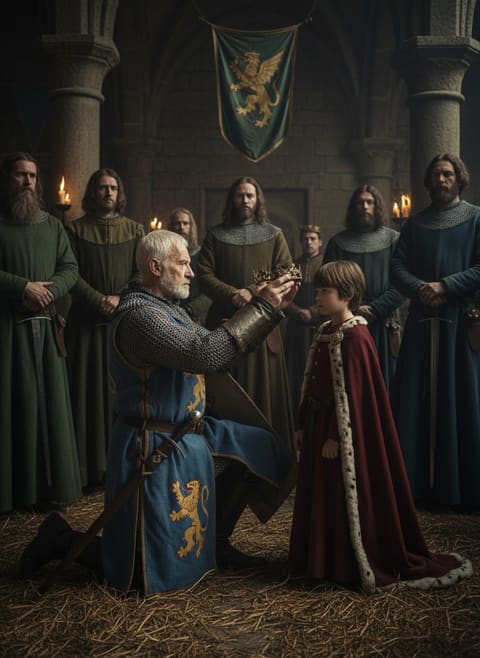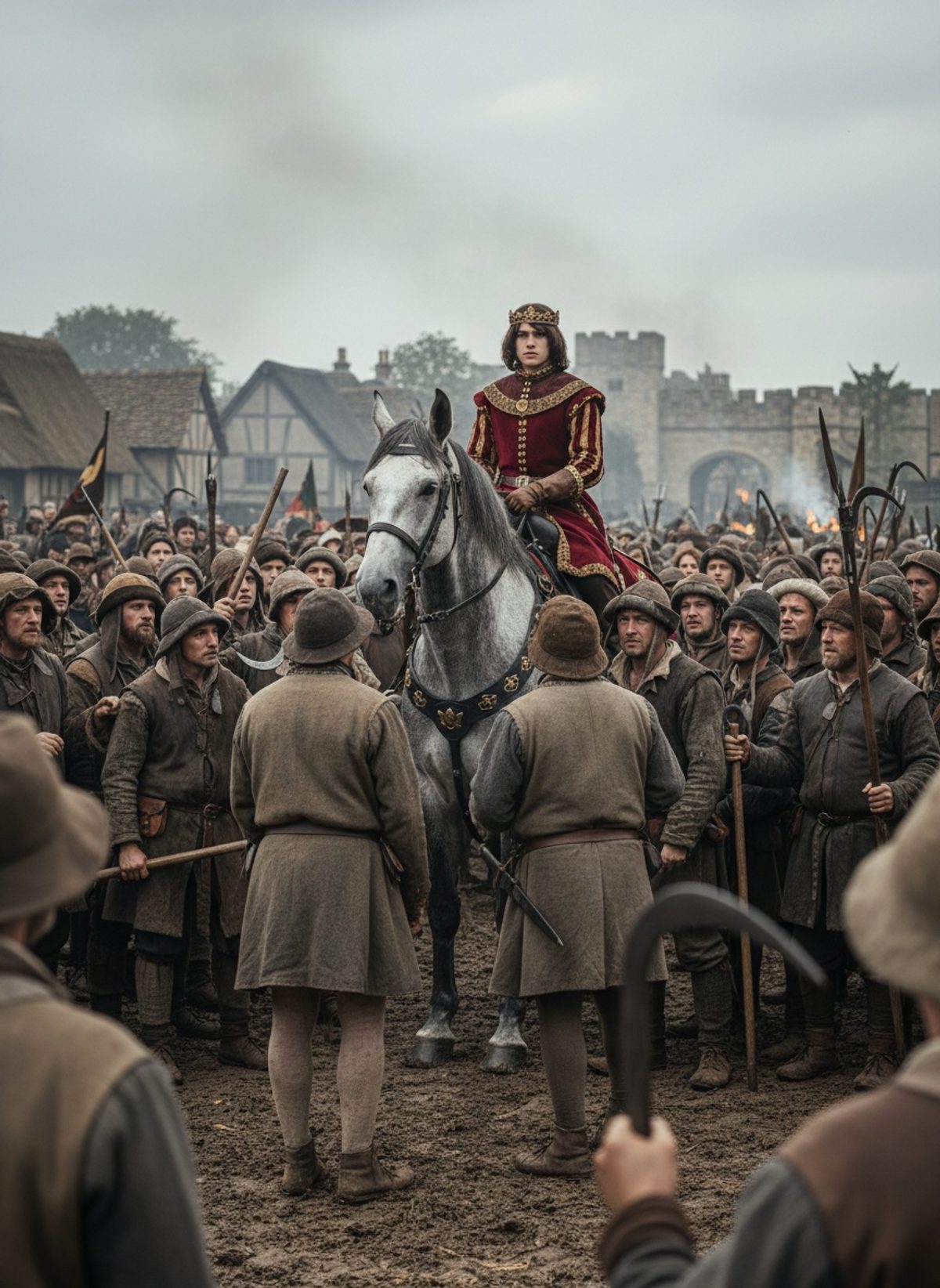
He was only fourteen years old. Yet on a sweltering June day in 1381, Richard II faced down an enraged army of his own people, virtually alone and unarmed. The audacity of this child-king confronting the raw power of sixty thousand furious rebels without the trusted entourage of his advisors reveals not the absence of fear, but an extraordinary resolve and self-possessed courage that would forever mark his reign. What drove him was not the wisdom of experience, but the fiery spirit of youthful defiance.
The Summer of Discontent
The tale of the Peasants' Revolt is a simmering cauldron of social discontent, economic distress, and burgeoning defiance against the perceived injustices of feudal rule. By June 1381, England was an uneasy kingdom under the shadow of King Richard II’s young tenure. The Poll Tax, a grievous financial burden imposed repeatedly by the Crown, was the spark that ignited the greater conflagration of unrest. The common folks, harried by taxes and resentment, rose in unison from Kent and Essex, painting a grim picture of solidarity against their monarch.
These were not simple rabble rousers. Amongst the ranks marched artisans, villeins, and even some minor gentry, each seething with grievances that smoldered after decades of systemic disparity. As news of their advance swelled like a relentless tide, the capital city of London steeled itself for impact. The royal court, unprepared for such virulent insurrection, threw accusations and doubts upon each other, writhing in fear as the rebels laid claim to Southwark and demolished symbols of the state's oppression like the Marshalsea Prison.
What’s striking is the scene at Mile End, where Richard convened with rebel leaders such as the impassioned Wat Tyler. Here the promise was made; Richard, either in sincerity or shrewd calculation, conceded to abolish serfdom and pardon the insubordination. Yet history holds dearly to the memory that these words, which carried the hope of a people, withered as quickly as they were uttered when the rebellion’s immediate threat receded. The young king’s insouciant duplicity may have later undermined his kingdom, but it momentarily staved off the swelling tide of rebellion.
Read next: The Day a King Wept and Gave His Crown to His People
The Encounter at Smithfield
Smithfield was destined to be the volatile heart where this unfolding drama met its crescendo. The day bled heavier with heat as the air rippled with a palpable electric tension. The rebels had swarmed into the city, their numbers formidable and their intent as yet unfulfilled. Within this crucible, the young monarch cast himself willingly into the forge of fate, establishing through sheer will what his advisors preached prudence against. It was there, amidst the dust and chaos, that Richard’s horse halted before the insurgents, his voice striving above the expectant murmurs.
Descriptions paint Richard’s youthful tension as the only armor he bore against the seasoned ire of Wat Tyler and his roused followers. Tyler, emboldened and brazen beside his assembled force, delivered demands that were sharp and unyielding—absolution, freedom, and demands that tested the very leonine pride of the monarchy. Henry Knighton, a chronicler of these turbulent times, later penned accounts of altercation and the gritty theatrics on this patch of history-laden ground.
This pivotal meeting between boy king and rebel concluded not with treaty but tumult, the legend whispered in fiery breaths by contemporaries. Tyler is said to have reached for either parley or impiety against the king, an action that triggered his sudden downfall by the sword of the cavalryman William Walworth. The crowd’s furor swelled ominously at this eruption of violence, yet it was Richard’s youthful audacity that quelled what could have become massacre. “I will be your captain,” he declared, a fealty forged in fleeting desperation yet weighed with historical consequence.
Read next: The Scots Girl Who Became Britain's Most Loved Queen
The Aftermath and Unkept Promises
In the shivering aftermath of that harrowing confrontation, the architects of the Peasants' Revolt found their structures dismantling as swiftly and resolutely as the uprising had burgeoned. Richard returned to his court, buoyed if not bruised, his pulse surely echoing the urgency of the moment. Historians later debated the sincerity behind his promises; perhaps they were chimeras woven by desperation or strategic delay. Still, even within those hollow pledges lay the echoes of ambitions that would fester and flame anew in the hearts of England’s disillusioned populace.
How hollow indeed were these promises? By the king’s order or at his behest, the perpetrators would find their reprieves rescinded, their leaders hunted, tried, and dispatched toward untimely ends as ragged justice deemed necessary. John Ball and Jack Straw, accused architects of the revolt’s fervor, met grim endings. The promised freedoms dissolved into whispers of the past, solidifying mistrust amidst the yeomanry and minor gentry who had dared to dream of unshackled futures.
Richard II’s encounter at Smithfield remains etched into the annals of England’s tumultuous history—a spectral illustration of a monarch’s trial amidst the raw tumult of social revolution. More than a mere anecdote of youthful defiance, it embodies the intricate dance between promise and peril, august rule and grassroots rebellion. In this unlikely theatre, the young king conjured a legacy both maddening and magnificent—highlighting the timeless push-and-pull of power and people, a narrative too potent to be quietly contained within the parchment of old tomes.