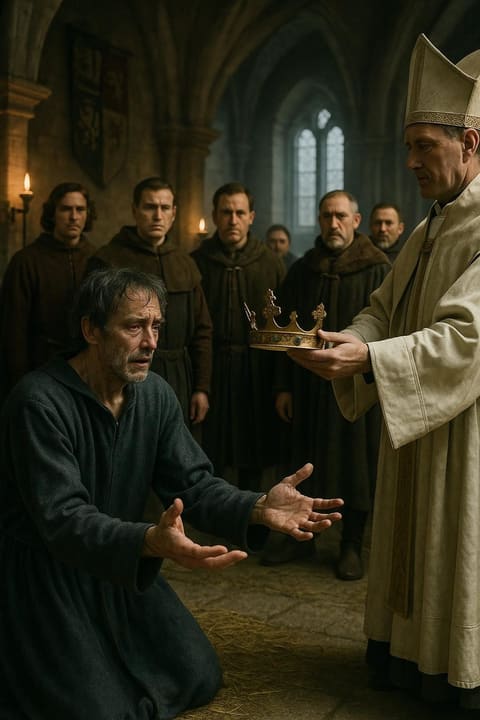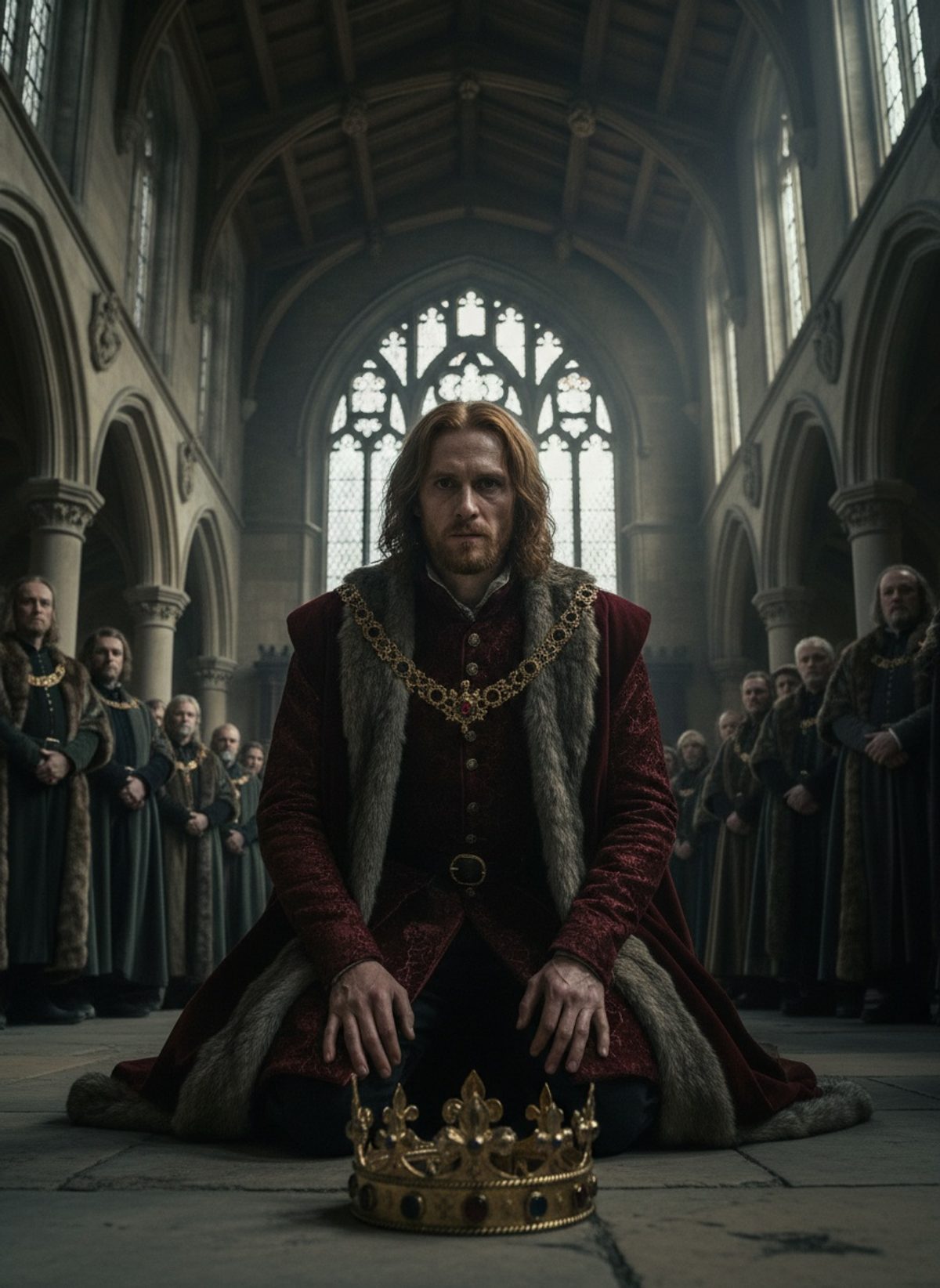
September 1399. The hammer of silence filled Westminster Hall, a vast expanse shadowed beneath a high wooden roof, its grandeur muted by the moment unfolding beneath it. Amidst the chill of anticipation, Richard II sat solitary and silent. His crown, once glittering with the divine promise of sovereignty, now shone with a dull ache on the stone before him.
For twenty-two years, Richard II had carried the weight of the English crown, anointed under the solemn gaze of ecclesiastical witnesses, blessed as ruler by divine right. Like a fate-touched artifact from a bygone age, his kingship was wrapped in ceremony and steeped in the belief of an unassailable authority. Yet here, against the backdrop of September’s sobering skies, something unprecedented was about to transpire—a king would voluntarily place his own authority on the ground.
He entered that hall not as a sovereign burdened with pomp and power, but as a man adrift within the tides of political tides that had grown taller and louder. His was a Kingship defined by youthful ambition and later, perhaps, marred by misjudgments and tempests he could not foresee or master. Westminster Hall, a place of history and revelation, would now be etched with the echoes of his unexpected abdication—a renouncement that few, if any, had ever seen.
The Plantagenet era, with its vivid tapestry of intrigue and struggle, found itself, on this September day, at the precipice of change. Richard’s reign had its share of accomplishments, innovations in English governance and the nurturing of a culture rich with artistic flourish. Yet his later years were marked by political discontent, governance by favourites, and episodes that turned the tides of loyalty against him.
Read next: The Day a King Knelt and Wept Over His Own Crown
A power struggle had brewed, one as familiar in the annals of royal history as the reign of kings itself. It was here that Henry Bolingbroke, seizing opportunity forged in familial grievance, returned from his exile in France. With support swelling around him, Bolingbroke did not find a kingdom stiff with resistance; rather, he found many a noble eager to rally beneath a banner promising change.
Richard II, seated now in deliberate resignation, was faced with an insurmountable reality. His attempts to quell dissent had failed, and the murmurs of discontent within England reached a clamor he could no longer ignore or outmaneuver. The Lords and Parliament assembled around him in that grand hall marked not just the urgency of transition, but the swelling winds of a new political era. Here, iron wills clashed without blade or bloodshed.
The hall itself, a place symbolic of the authority and majesty of kingship, seemed to hold its breath as Richard, his regal demeanor never quite lost in the face of his impending loss, wrestled with a serene solemnity that belied the turmoil of his plight. The stone at his feet bore the weight of history, as heavy as the crown he removed in an act fraught with significance—the surrender of divine ordination to the will of men.
No courtier dared cross the threshold to seize it. No noble stepped forward with the brashness to cleave that tether, however frayed, between the divine and the mortal. Instead, they watched as Richard chose the ground—an unembellished testament to the fragility of power. His hand trembled not with fear, but with the finality of a choice he alone could make.
Read next: The Ancient Ceremony Behind Every Royal Gun Salute
He left the crown there, a relic no longer worn by destiny but posed in humble repose. It was, perhaps, the clearest message of stewardship handed back to those whom he once ruled. The chasm between ruler and ruled altered before the Parliament’s eyes, an act that would resonate through corridors of time with a quiet power, whispering of a different kind of legacy.
History would remember Richard II not as the king unable to hold his crown or as a man broken by ambition, but as a monarch who dared the unprecedented—abdicating not with the flourish of submission, but with the dignity of introspection. This act, this laying down of laurels, spoke not just of personal defeat or national transition, but invited contemplation on the meaning of sovereignty itself.
Westminster Hall hummed with the echoes of its past as the assembly moved to the business of selecting a successor. Henry Bolingbroke, who would soon ascend as Henry IV, brought with him the hope of stability, yet alongside the specter of unrest embodied in the deposition. As history unfolded beyond those stone walls, the legacy of that September day endured as a poignant reminder of power’s transient nature.
In Richard’s relinquishment lay the dawning of parliamentary authority—a seed that would grow fragile shoots in the soil of future governance. It is within this quiet revolution that we glimpse the evolution of a kingdom, an England poised on the brink of change. Therein lies the undeniable importance of Richard’s act, the day a king wept silently for all he had gained and lost, choosing to lay his crown in peace upon the earth.