He was not yet twelve years old when he ascended to the throne. Despite his youth, Richard II had been groomed for greatness, destined to rule England with wisdom and vigor. Yet, on that haunting day in September 1399, the air in the great hall of the Tower of London was thick with the severity of a monarch's solitary surrender. The opulence of his surroundings, with their cold stone and shadowed alcoves, could not cushion the reality that lay before him: Richard was about to part with the crown that had both defined and consumed him.
Richard II’s rule over England began under a veil of expectation, following his grandfather King Edward III's long and notable reign. As the son of the Black Prince, Richard's birthright shimmered with the promise of glory and prestige. When his father, the revered Edward of Woodstock, died prematurely, the mantle of future leadership settled on Richard’s young shoulders with heavy insistence. By 1377, England had a child king, and the heart of the nation hoped for the best despite the shadows of doubt that danced behind courtly smiles.
Within the echoing corridors of Westminster, Richard's early years were marked by external influences, as uncles and counselors maneuvered diligently around the boy-king, wielding their own agendas beneath the guise of guidance. In this labyrinth of intrigue, Richard forged his path, frequently aided by his characteristic intensity of emotion and a sometimes obstinate confidence in divine monarchy. These qualities, although crucial during episodes of unrest such as the Peasants' Revolt of 1381, also sowed seeds of discord among his peers who questioned the legitimacy of his rash decisions.
Yet, no rebellion or plot could compare to the flicker of betrayal that culminated in that September morn. Richard’s cousin, Henry Bolingbroke, had returned from exile, shrewdly rallying support and exploiting Richard's perceived weaknesses to stake his own claim to the throne. It was a bid that struck at the very foundation of Richard’s belief in the divine right of kingship, a doctrine he had long championed with fervency that bordered on zeal.
Read next: The Boxer Who Punched an Armed Man to Save a Princess
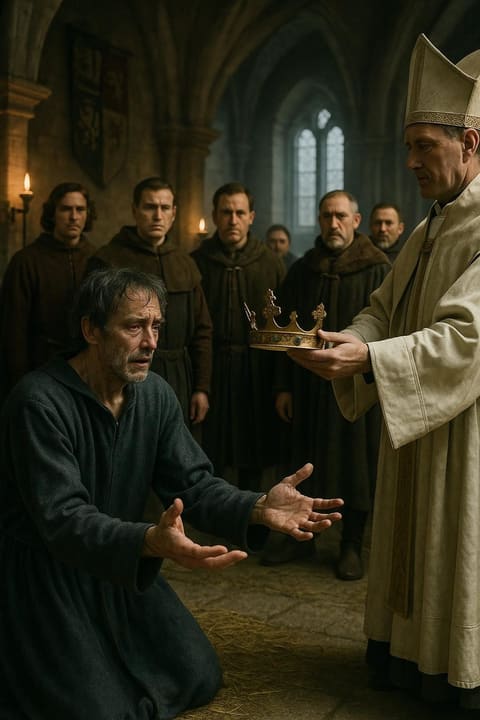
The drama surrounding Richard’s deposition was rich with the kind of tension that history rarely records in complete fidelity. Imagine the Tower of London, its stones echoing with the diminished grandeur of a king brought low not by arms or treason, but by circumstance and time. Richard’s choice to abdicate was profound in both its humility and its defiance. He entered the great hall alone, his footsteps a muted dirge as he positioned himself before that familiar emblem of power — the crown.
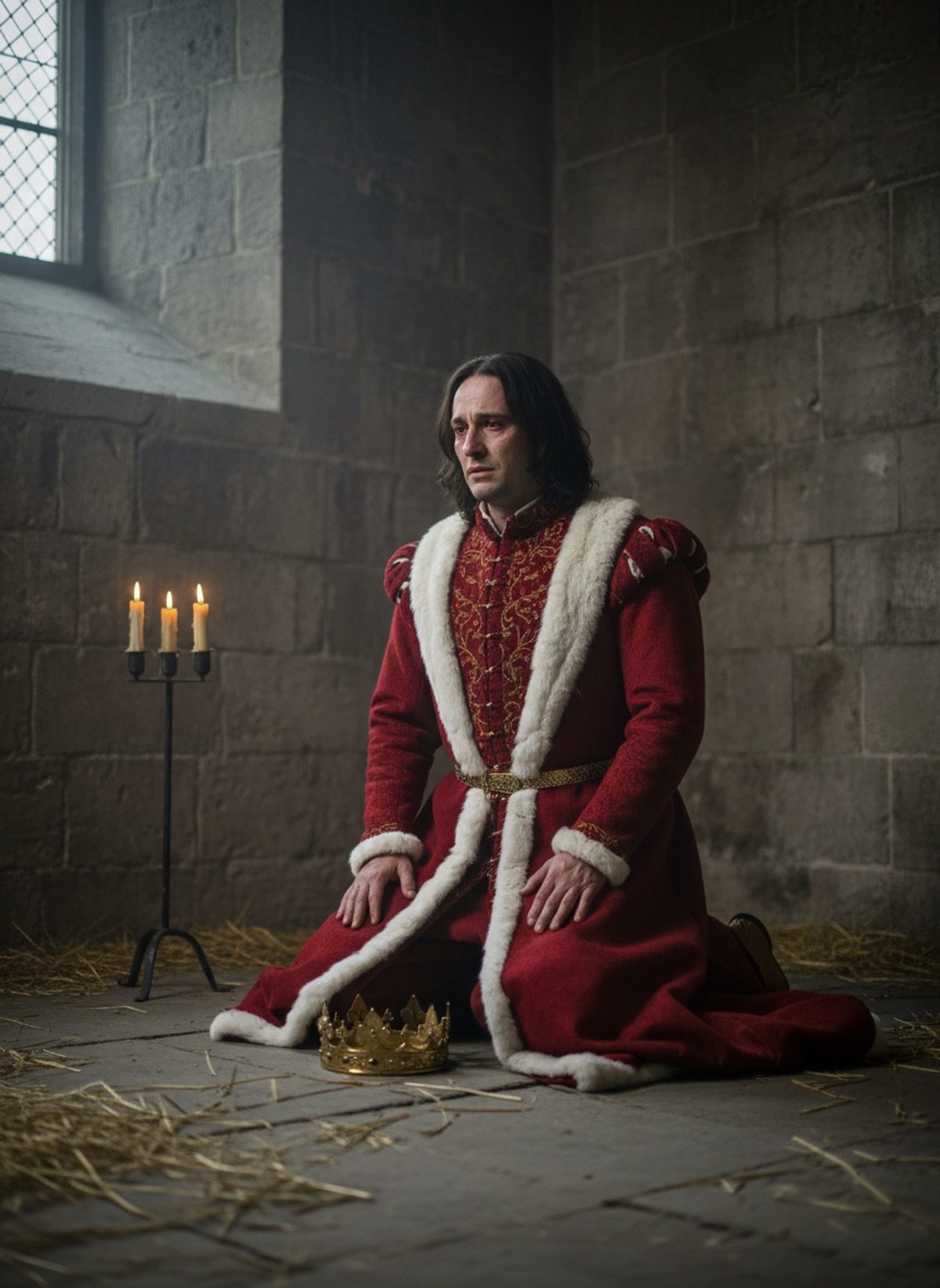
Witnesses to Richard's subsequent act might struggle to describe the poignant simplicity of it. Alone, there under the dim flicker of torchlight, Richard took the crown and placed it upon the cold stone floor. The action symbolized more than resignation; it was an emotional divorce from the trappings that had shaped his identity since boyhood. In those moments, his eyes welled with tears that spoke of more than personal loss; they lamented an era and a dream unfulfilled. Pushing the crown away was both a gesture of relinquishment and a silent protest against the inevitable march of history that now favored Bolingbroke.
Read next: The Day a Dying Queen Refused to Name Her Successor
This ritual of surrender did not, however, mark the end of Richard’s story. His subsequent imprisonment and death remain wrapped in mystery and speculation, a fate befitting a king whose reign was as enigmatic as it was turbulent. Henry Bolingbroke’s ascension as Henry IV was built on both triumph and trepidation, forever shadowed by the contentious manner of his rise and the spectral legacy of his deposed cousin.
The significance of Richard’s abdication resonates beyond the medieval period, echoing in the chambers of time as a moment of profound human vulnerability juxtaposed against the formidable architecture of power. In a world where the divine right of kings had been an unquestioned doctrine, Richard's tearful departure from the throne was an important precursor to the changing notions of monarchy and governance. It laid bare the fragility embedded within the veneer of absolute rule, a poignant reminder that all authority is ultimately transient.
As we reflect on Richard II’s solitary act of laying down his crown, we're compelled to consider the enduring intersection between personal anguish and political transition. The imagery of a king kneeling and weeping before his crown, before pushing it away, invites a deeper contemplation of the personal costs inherent in the exercise of power. Richard’s story is not merely one of loss but also of the universal quest for meaning and identity in the face of inexorable change. For in the end, the crown was simply a heavy circlet of metal, but in Richard’s heart, it was the embodiment of hopes, dreams, and the relentless passage of time. The echoes of that day in the Tower of London remind us that even the most resplendent symbols of authority have their moments of profound humility.