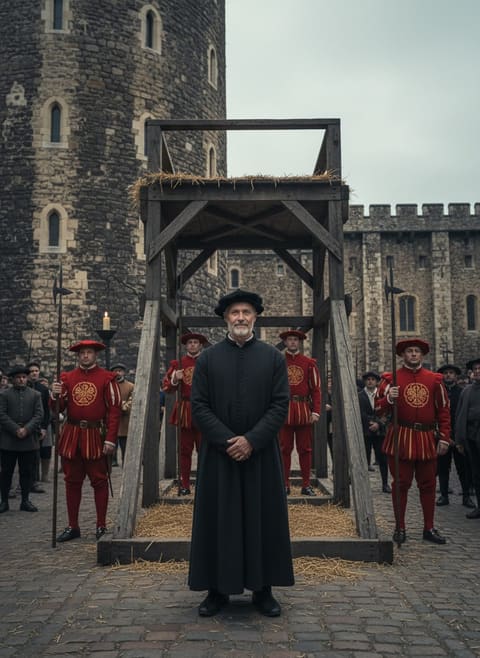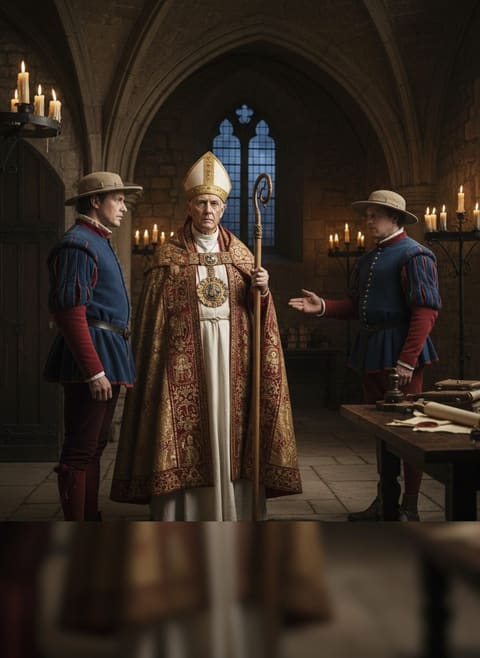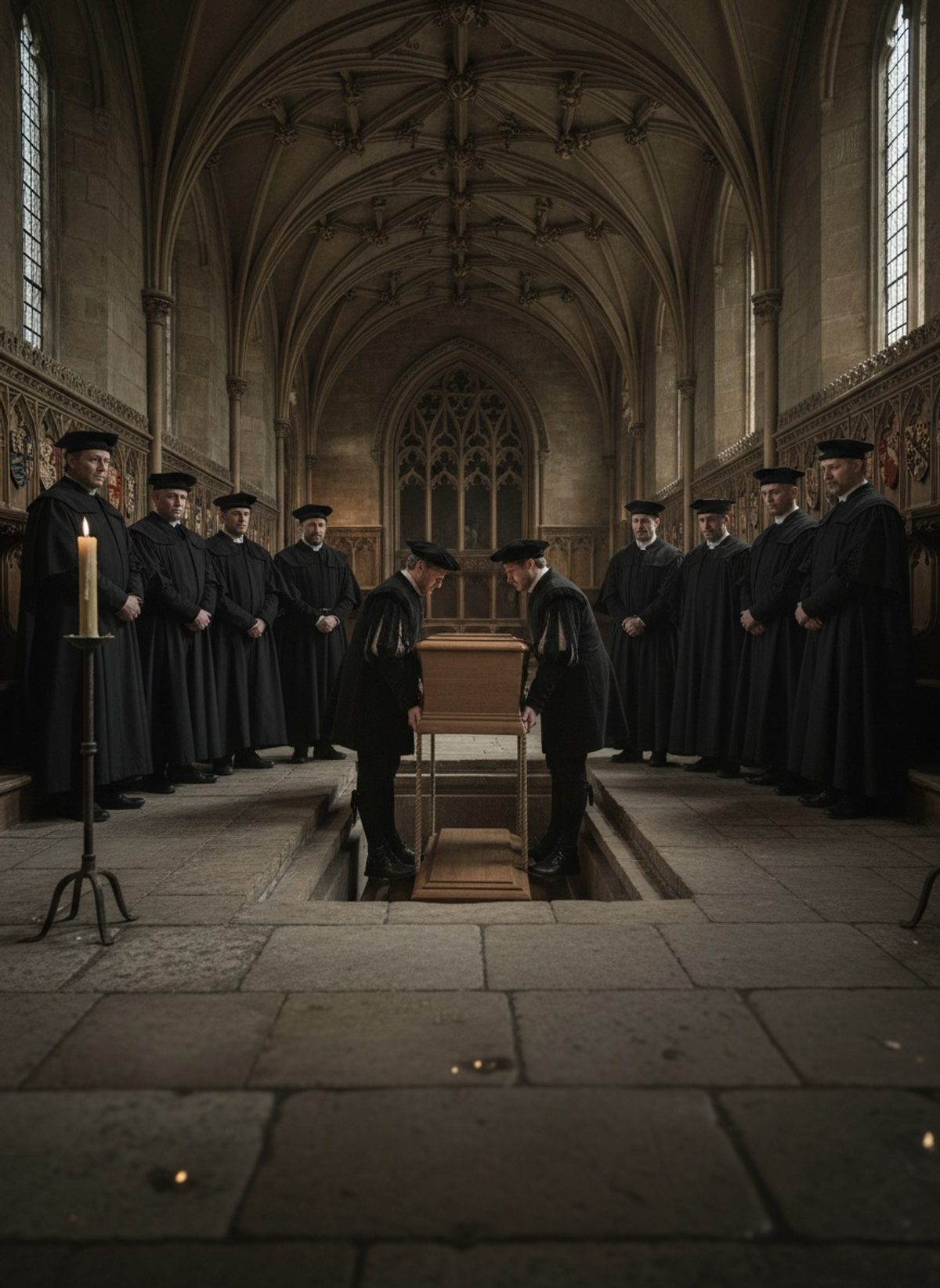
The shovel hit stone, sending a jarring tremor through the gravedigger’s arms. Below him, a final resting place lay shrouded in forgotten grandeur. The air inside St. George’s Chapel at Windsor held the weight of centuries, its echoes telling tales of kings and queens who once danced through the corridors of power. Yet even here, amidst England's most revered, a story lay hidden—a tale of unfulfilled ambition and royal interment.
The King’s Grand Desire
Amidst the echoes of courtly intrigues and lavish celebrations, King Henry VIII—orchestrator of a monumental transformation within the English church—dreamt of immortality beyond his political legacy. Intent on securing not just a place in history books, but a monument that would dominate the landscape of England’s collective memory, Henry commissioned a tomb that would rival the ornamented wonders of Renaissance Europe. It was 1547, and the king who had reshaped England was facing his final days.
He envisioned a masterpiece of bronze, grander than the resting places of Julius Caesar or the Pharaohs, housed in a chantry chapel where mass would be said perpetually for the repose of his soul. Yet, as with many grand Tudor plans, the specter of the unanticipated loomed large. The mighty monarch, who commanded with absolute authority, had forgotten one crucial element—the unpredictable hand of mortality. With his passing, the dream of a colossal sepulchral tribute began to unravel.
A Vault for Two
Henry's ambitions were destined to remain unfulfilled. Instead, his body was laid to rest in a far more modest manner. His coffin was lowered into a vault beneath Windsor, a resting place already occupied by his third wife, Jane Seymour. The beloved queen, dead from childbirth complications, had been buried there years before. It was a burial dictated not by majestic grandeur but by the pressing demands of practicality and the king’s lingering affection for Jane, the mother of his only male heir.
Read next: The Queen Who Died Giving England Its Most Wanted Heir
In the half-light beneath Windsor’s solemn floors lay one of history’s ironies: a man who orchestrated the creation of the Church of England interred in an anonymous vault, adjacent to a woman whose brief reign had crowned him with patriarchal fulfillment. The penumbra of this shared resting place whispers stories of love, legacy, and the inevitability that even kings cannot always crown their existence with their desired grandeur.
The Unfinished Monument
The tomb Henry commissioned was to be adorned with statues and engravings, a tour de force that celebrated his victories and dominion. Yet, for all its intended extravagance, the plans never materialized. The monumental sarcophagus never rose under the tentative strokes of Renaissance sculptors. Budgetary constraints, political shifts, and the king's abrupt death put an indefinite pause on the fruition of his posthumous dream.
The notion of a grand perpetuity was a common aspiration for rulers of Henry’s stature; yet, it often proved elusive. The bronze monument, which was to rival even the grand sepulchers of continental Europe, succumbed to the same fate as unfulfilled promises. In a twist of fate, another king's remains, those of Charles I, were later settled atop Henry's—an unanticipated occupant in a tomb never designated for him.
The Final Resting Place
Visitors to St. George’s Chapel today walk over the unassuming black marble slab that marks this peculiar convergence. It is inscribed with a simple acknowledgment, signifying the resting place of Henry VIII and Charles I, separated by time, yet united in an unforeseen manner. This unpretentious marker belies the grandiosity once envisioned by Henry—a fate rendered by history’s indifference to design and desire.
Read next: The Battle That Left a Dent in the Most Powerful Man in France
The tomb of Jane Seymour, whose son would perpetuate the Tudor line, alongside her husband Henry, seemingly encapsulates in stone the delicate interplay of love, power, and historical contingency. But Jane was not the last to occupy the vault. History saw fit to add Charles I, unexpectedly buried here after the Restoration, thus sealing Henry's final resting place with a story of kings unplanned and unbidden.
The Silent Lessons Beneath Windsor
Beneath the polished stones of Windsor, the remains of Henry VIII lie in a shared sepulcher, unaccompanied by the grand bronze decorations once envisioned. His earthly stature and authority, once formidable, are represented only by the echoes of what might have been—a testament to the relentless march of history and its indifference to personal ambition. The tale serves as a reminder that, for all the monuments and narratives constructed, history retains its own counsel, often subverting human intentions with its unforeseeable resolutions.
The vault beneath Windsor, far from the glory that Henry demanded, urges contemplation on the part of the spectator. It reveals that even through layers of purpose and effort applied by those in power, history remembers the deeds of kings in its own way. In this silent sanctuary beneath the chapel, the unadorned truth remains: all grandeur is temporary, and perhaps it is in the humility of shared resting places that the essence of humanity's legacy truly lies.