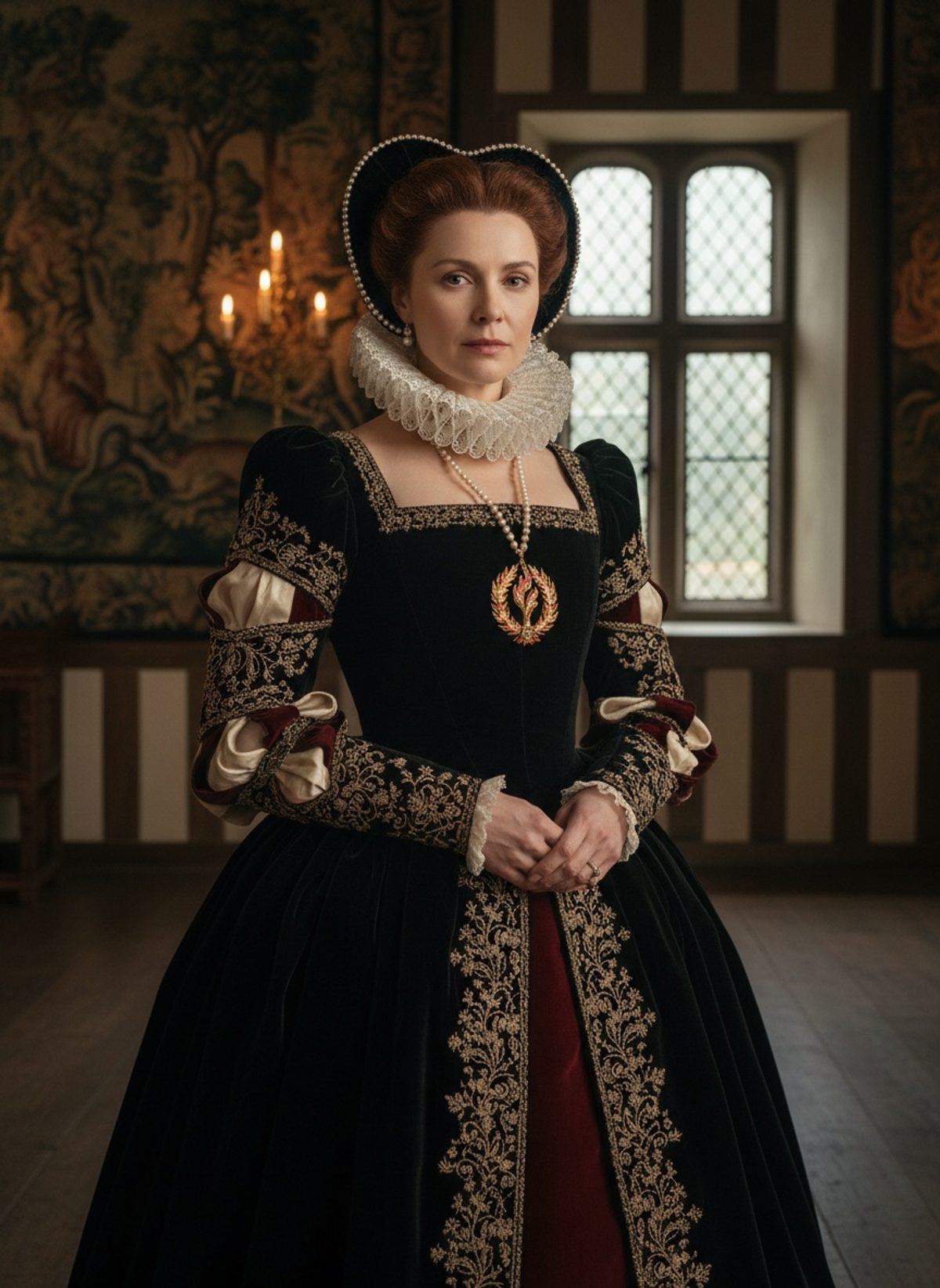
The gray skies of London hung heavy with the promise of rain, the chill of the city creeped through the cobblestone streets, whispering secrets to those who listened closely. In the dim, drafty chamber of a Tudor palace, Nicholas Hilliard lifted his brush, poised to capture more than the image of his sovereign. It was 1575, a year of whispered conspiracies and flickering candlelight. Elizabeth Tudor, Queen of England, was determined to show the world not just her visage, but her unyielding spirit.
The Queen and Her Painter
The quiet clatter of brushes and the muted crackle of the hearth filled the room. Hilliard was an artisan of renown, a man who understood that his work could change perceptions, harden hearts, or soften them. The task before him was both creatively daunting and politically charged: to paint Her Majesty, Elizabeth I, in a way that arrested not just the eye but the imagination and will of her subjects and enemies. A phoenix jewel adorned her breast, shimmering in the firelight, a symbol that would speak louder than any royal decree.
Elizabeth, born in 1533, had lived a life painted with peril. Her father's doubt about the worth of a daughter did not strip her of ambition, nor did her mother’s execution dim her spirit. In Hilliard’s portrait, each stroke of the brush was laden with the tumultuous history of a queen who faced ruin yet rose like the mythical creature pinned to her chest.
Surviving the Flames
In 1562, a winter long past but not forgotten, Elizabeth was struck by smallpox, a violent illness that ravaged the court and nearly carried away the hope of a Tudor lineage. At a time when an heir was everything, the Queen lay feverish, flanked by courtiers more attuned to whispers of power than her fragile breaths. The pall of potential tragedy loomed large across England; a country without a clear heir teetered on the precipice of chaos.
Read next: The Day a Tudor Queen Knelt and Begged for a Man's Life
This battle with smallpox left Elizabeth physically scarred, though her resolve calcified. Her decision to remain unmarried, a beacon of independence in a patriarchal world, grew stronger with each recovered breath. Her face, a testament to resilience, impressed onto the memory of those who knew her true strength lay not in a crown, but in her will.
The Political Power of Paint
As Hilliard painted, Elizabeth's choice of the phoenix jewel was deliberate, a proclamation in gold and gemstone. The phoenix, a creature reborn from its own ashes, was a fitting metaphor for a queen who, despite the fires of attempted usurpation, emerged unscathed and unyielding. It sent a message that resonated throughout England and beyond: try as they might, her enemies would never see her burn.
In the world of diplomacy and danger that was the 16th-century court, the appearance of a monarch had very real consequences. Unlike mere rhetoric, a symbol worn close to the heart bore weight undeniable. Emblazoned upon her was the story of survival, of ruling with conviction in an age where power was often brokered through nuptials not decrees.
Elizabeth’s Game of Marriage
The royal courts of Europe buzzed with suitors eager to align their fates with that of England's powerful monarch. Kings, princes, and dukes all sought the union that could extend their influence into the expansive canvas that was Elizabeth's England. Yet, she evaded capture in this matrimonial game, eluding all who thought they could reign through her.
Read next: The Queen Who Died Giving England Its Most Wanted Heir
Marriage, for Elizabeth, would have meant a shared crown, and perhaps worse, a shared bed — an entanglement she deftly avoided. England was her partner; the alliance was to her people and their prosperity. As proposals came and went, Elizabeth graciously, but firmly, denied them all. It was a gesture defending not just her sovereignty, but the independence of her realm.
A Jewel’s Unspoken Promise
The final touches of Hilliard’s work dried slowly upon the canvas, but the bold message had already been cast across continents. For Elizabeth, the portrait was more than mere vanity. It was a declaration of intent — she was not a fragile monarch nor a quiet consort but a phoenix, a queen reborn and unforgettable.
Amidst plots that whispered of usurpation, Elizabeth's own defiance was a specter haunting those who would undo her. As history continued to unfurl in all its colorful complexity, her image in oil, with its emblematic jewel shining bright, remains a reminder. Not just a testament to a queen’s strength, but a conversation that ruled an era and tipped the balance of power in favor of a woman who refused to be broken by the trials of her time, whose story, like the phoenix, would rise beyond its ashes to shape the legacy of a nation.