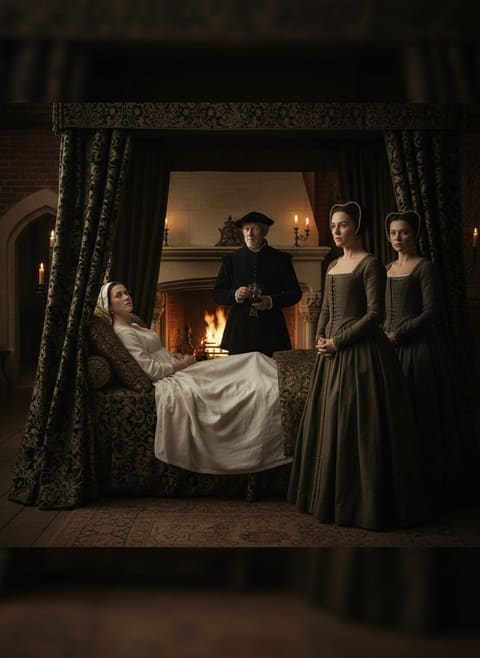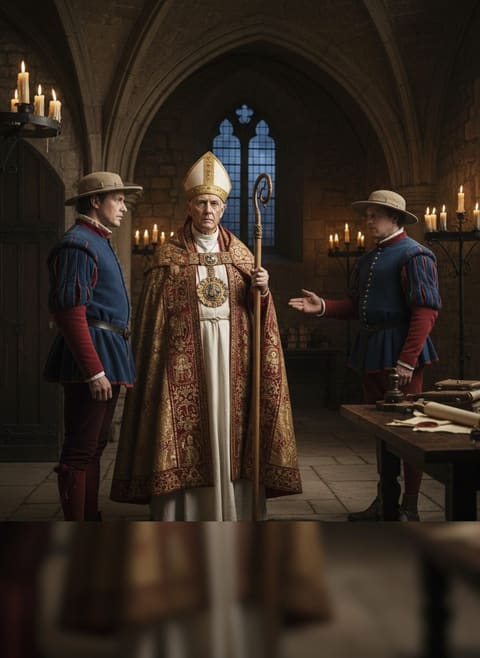
The air crackled with tension inside the chilly stone chamber as parchment rustled across the long oak table. The heavy silence was punctuated by the solitary scratch of quills signing away a life. Sir William Davison, standing apart from his fellow councillors, could feel the weight of the moment pressing down like the fog that clung to London's cobblestoned streets. He glanced around at the faces of men who had already succumbed to the will of political expediency, their expressions grim and resolved.
The Queen's Dilemma
For months, a question had loomed over the Elizabethan court like an unbanishable specter: what to do with Mary, Queen of Scots? The former queen had been a prisoner in England for nearly two decades, a Catholic figurehead for plots against the Protestant Elizabeth I. Yet, executing a fellow sovereign was no small matter. It was a perilous path that Elizabeth hesitated to tread, fearing the moral, political, and spiritual implications of such an act.
Elizabeth, ever the astute monarch, had understood the gravity of executing Mary. It was not just the end of a rival but a potential ignition point for international outrage. France and Spain watched with hawkish eyes, ready to leap upon any English misstep. In this dangerous game of thrones, Elizabeth's own judgments oscillated wildly, indicative of the inner turmoil she faced. Acknowledging this uncertainty, Elizabeth had yet to offer unequivocal consent to the warrant of execution.
Aman Unmoved
And yet, the machine of state moved inexorably forward. The orders were clear: speed, convict, conclude. On that cold February day in 1587, when the warrant demanding Mary's life was brought before the Queen’s principal ministers, none hesitated to give their sanction—none except Sir William Davison. As Elizabeth's Secretary of State, Davison held a unique vantage point. He was privy to the Queen's restless vacillation and knew this action could be a point of no return. Despite the pressure to conform, his integrity prompted him to walk a different path.
Read next: The Vault Beneath Windsor That Henry VIII Never Finished
Sir William Davison's refusal was not a mere act of defiance; it was an act of conscience. Born into a family of merchants and having risen to a place of power and influence, he was also deeply aware of the incendiary consequences of signing. Remaining resolute, Davison sought to inform Elizabeth of the excess zeal that had coursed through her councillors—a zeal that might have eclipsed her orders. In Davison, the Queen found not only a trusted secretary but also a safeguard against what she might later see as a hasty decision.
Betrayal and Sacrifice
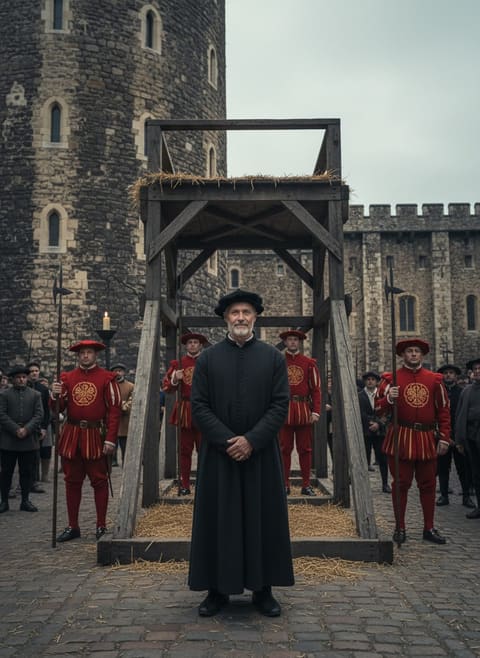
Upon learning of the warrant's dispatch without her more explicit command, Elizabeth's fury was cold and fierce. Davison, who had dared present her with the truth of the matter, found himself the target of her wrath. Charged with exercising authority he had not, Davison's honesty and sense of duty led him to the Tower of London, where he was imprisoned. His colleagues in the matter saw no such repercussions; indeed, many advanced their careers amidst the chaos.
Read next: The Day a Tudor Queen Knelt and Begged for a Man's Life
In accepting the mantle of honesty, William Davison had unwittingly embraced the role of scapegoat, a part he bore with dignity. Unlike those who sought the favor of the crown through complicity, Davison held fast to a moral compass that valued truth over transient power. While imprisoned, he contemplated the price of his integrity and the solitude it brought him, yet he never wavered in his belief that he had acted rightly.
A Legacy Unwritten
Eventually, Davison's imprisonment concluded without severe penalty, but his career was tarnished. The pall of Mary's execution loomed like a shadow over Elizabeth's reign, tainting the tapestry of her otherwise lauded leadership. Yet, history tends to remember pivotal figures only in broad brushstrokes, often omitting those who quietly shaped the canvas from the edges.
This tale of a man's steadfastness offers a lens through which we might scrutinize ambition, power, and ethics. Sir William Davison's unsung stand is not simply a footnote in the annals of Tudor governance but a stark reminder that, even amidst political machinations, individual integrity can illuminate the darkness. In a world still grappling with moral complexity, Davison's story beckons us to question: What price would we pay for truth?