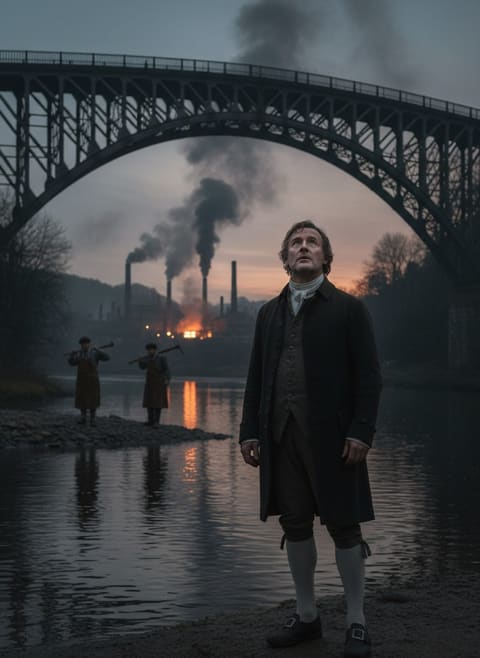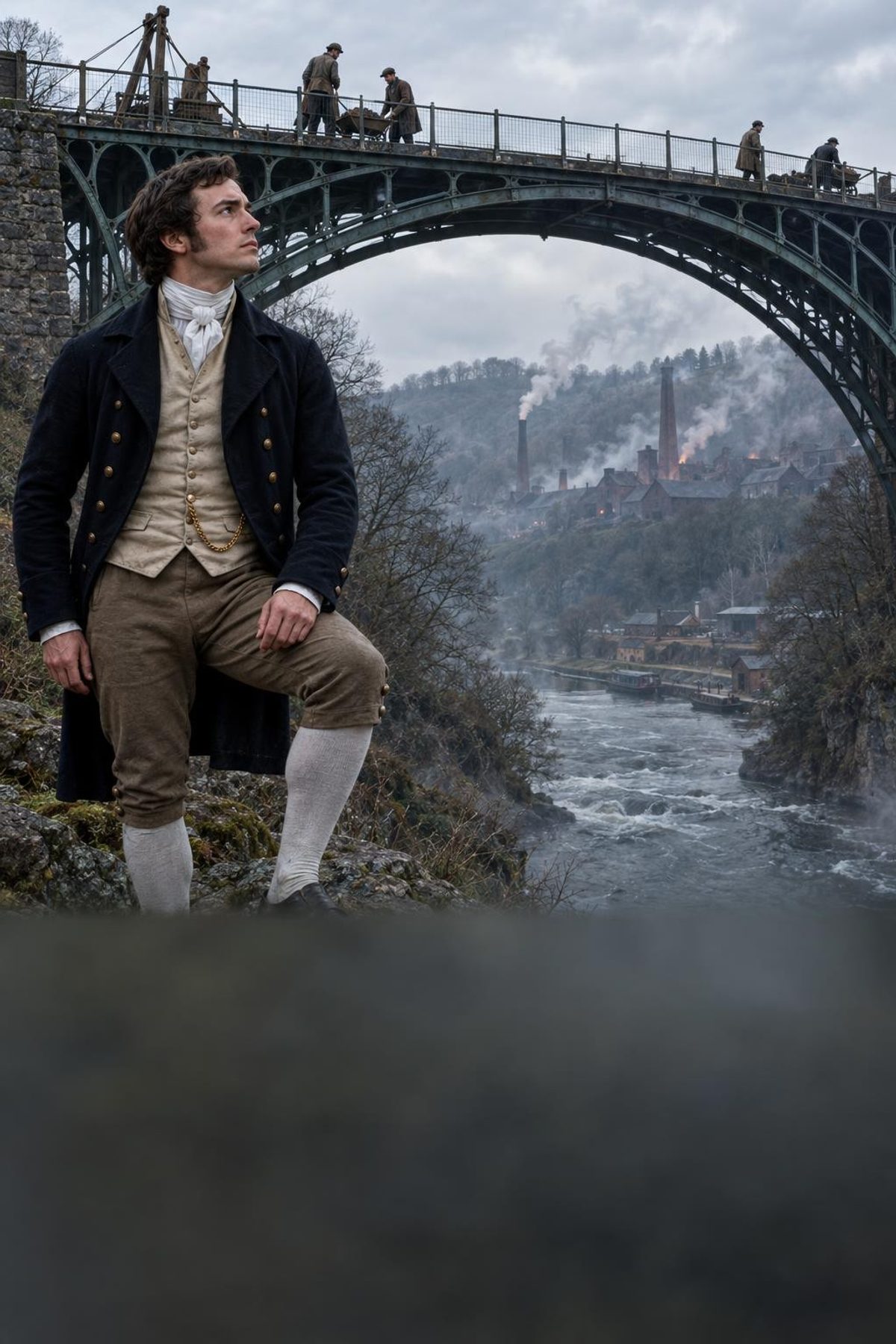
The wind bit sharply through the Shropshire gorge as Abraham Darby III stood resolutely atop the provisional wooden scaffolding that edged over the River Severn. The cacophony of hammers striking iron echoed through the crisp morning air, a symphony of industry orchestrated by the youthful ironmaster. Nearby, the muddy waters gurgled below, seemingly taunting the audacity of the young man contemplating his improbable vision. Skeptics had muttered it couldn’t be done; an iron bridge simply wasn’t feasible. Yet, here he was, defying doubt with every thud of metal on metal. He could almost taste the tang of iron in the air, stronger than the fragrance of possibility that surrounded him.
The Unlikely Visionary
Abraham Darby III was not new to the world of iron. His family's legacy in the iron industry was well-established, with his grandfather, Abraham Darby I, famously revolutionizing the smelting of iron using coke instead of charcoal decades earlier. Yet, coal-fired furnaces were not enough for Darby the younger; he dreamt of something monumental, a structure that captured the promise of the burgeoning Industrial Revolution. The small village of Coalbrookdale in Shropshire, with its moorland and iron-rich soil, was the perfect birthplace for such ambitions.
The gorge carved by the River Severn was a vital yet treacherous transport route. It was a barrier that sliced through the landscape, challenging any who wished to traverse its depths. Traditional wooden bridges could not withstand the forces of nature nor the increasing industrial demands. In the eyes of many, envisioning a bridge of iron seemed akin to chasing a mirage. The material was seen as too brittle, unsuitable for the weight and stress it would need to bear. Voices of doubt rang louder than those of support, yet behind Darby’s eyes, a fire sparked from a realm where vision and practicality converged.
His proposition was nothing short of ambitious. In 1779, Darby proposed to construct the world's first iron bridge, a feat that experts dismissed as folly. They envisioned catastrophic failure—a collapse into the rushing torrents of the River Severn that would confirm their suspicions. But Darby, undeterred by whispers of doubt, marshaled his resources. Underneath the criticism and doubt lay a solid foundation of knowledge about iron's properties, a knowing that once cast, it could prove stronger than the finest stone the Earth could offer.
Read next: The Day a Mill Owner Stood Up and Paid His Workers Anyway
Forging the Impossible
With a clear design helmed by the acclaimed architect Thomas Pritchard, the plans for the iron bridge began to take shape. The iron was cast methodically, each piece crafted in the glow of the noonday sun at the Coalbrookdale Foundry. Under Darby’s meticulous supervision, the skeletal segments—the ribs of his vision—were ordered into being. As each component emerged from the forge, it carried the weight of innovation and fear of the unknown simultaneously upon its shoulders.
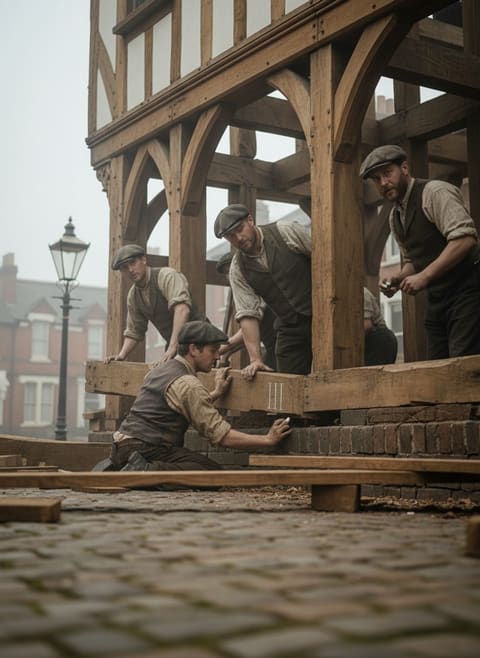
The construction process was an orchestration of human skill and mechanical innovation that drew curious eyes from across the country. Onlookers would gather along the banks, a congregation gazing at the nascent structure with both dread and awe. It was here, amidst the clangor of labor, that the seeds of modern engineering were sown. Every beam was checked, rechecked, and adjusted, ensuring each fit would withstand the environmental pressures poised to test it.
As the days turned into weeks and the skeleton grew robust, the naysayers gradually found silence in the face of progress. The bridge slowly advanced over the gorge, defying gravity and skepticism with unstinting resolve. Such a sight, an iron bridge rising from the earth itself, spoke louder than any words of its visionary creator. The dawn of a new age was being written in iron, one that paved the way for unimaginable advancements in industrial craftsmanship.
Read next: The Day a Collier's Son Stood Between Children and the Pit
In the Shadow of Titans
Finally, on a cold January day, the bridge that had haunted dreams and spent countless hours in painstaking creation stood complete. The intricate latticework of iron arched gracefully over the River Severn, a testament to human ingenuity and determination. Its construction marked a turning point, a prelude to new technologies that the burgeoning industrial era would soon embrace.
The Iron Bridge at Coalbrookdale became not just a means of crossing a geographic divide but a symbol of crossing into a new industrial epoch. It challenged the known limits of engineering, inspiring future generations to reimagine the possibilities with iron and steel. The sight of horse-drawn carriages rolling across the iron span evoked a sense of triumph for those bold enough to envision what had been deemed impossible.
Today, visitors continue to walk across this pioneering structure, its enduring legacy casting reflections in the rippling waters below. The Iron Bridge stands as a symbol not just of industrial prowess but of the courage to dare, to build beyond known limits. That resolute, defining moment by the Severn gorge speaks to all who face seemingly insurmountable odds: forward-thinking can materialize into transformative milestones if pursued with determination and skill. More than two centuries later, the spirit of innovation and defiance that constructed the world's first iron bridge resonates, reminding us that when we bridge the chasms of doubt and invention, we build pathways into futures uncharted yet profoundly intriguing.