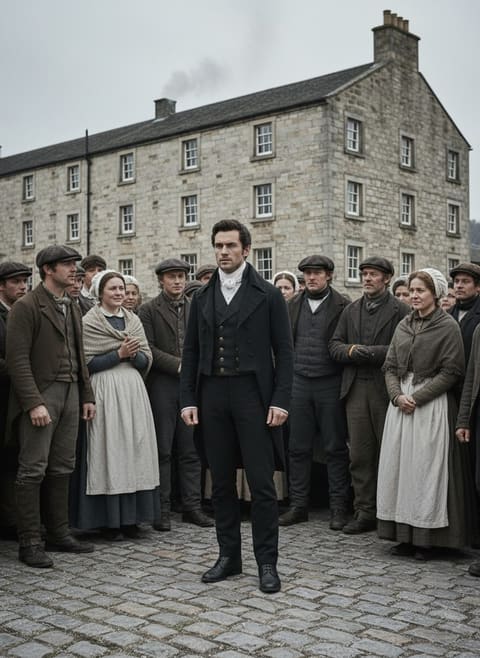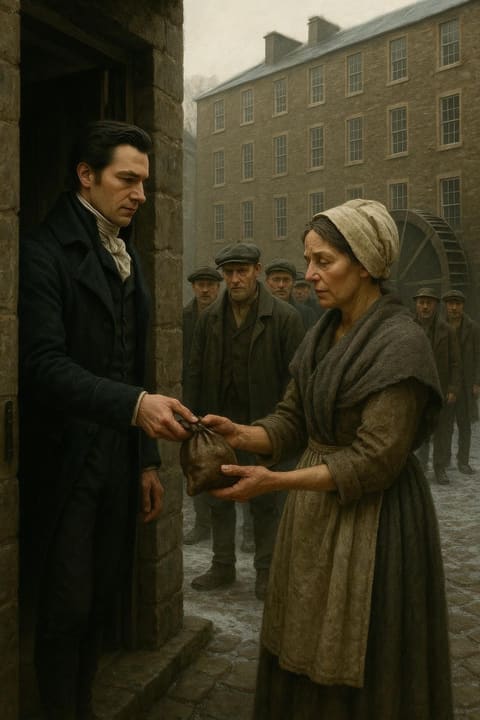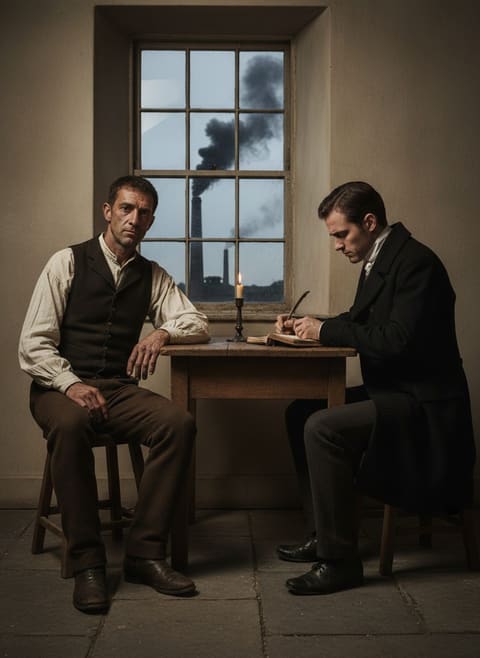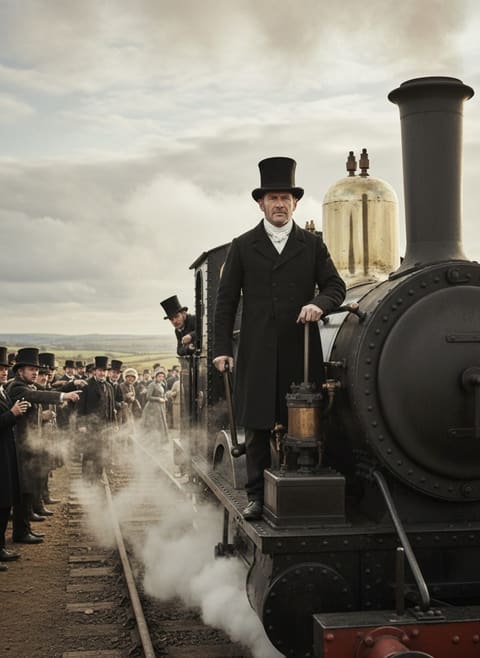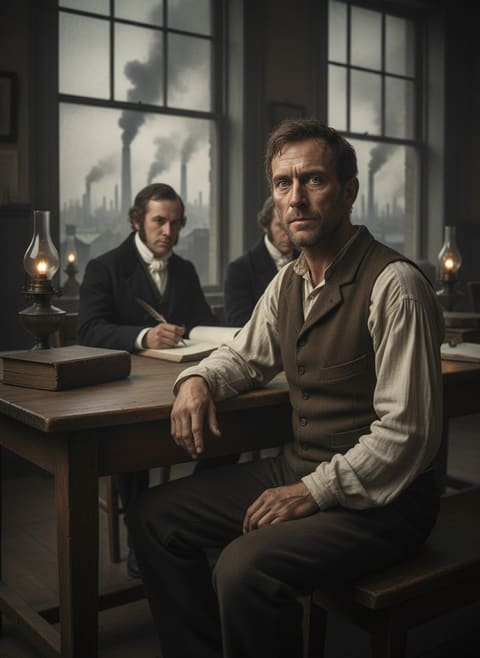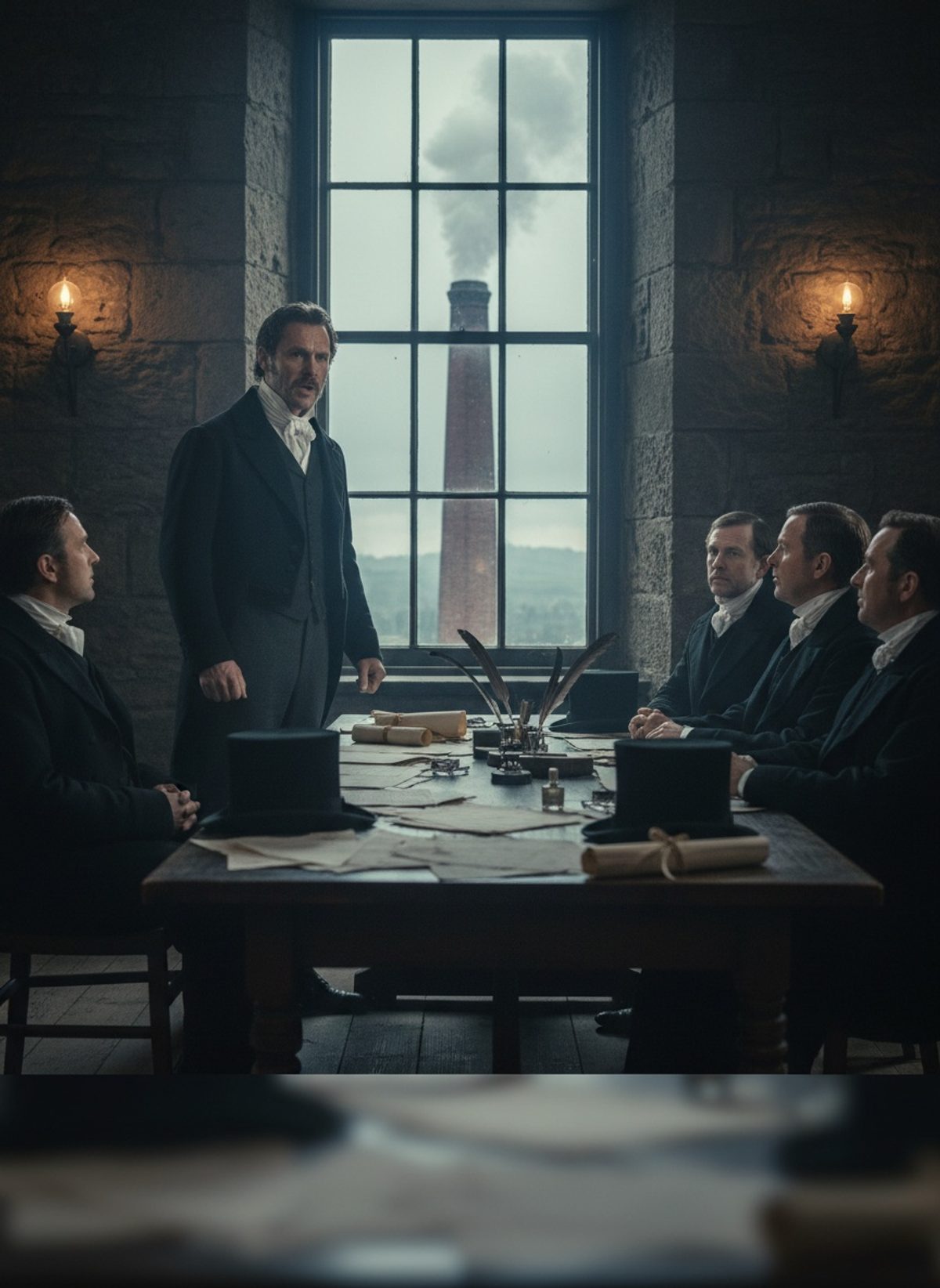
The air in Lancashire that day was thick with the usual murmur of industry, mingled with the musky scent of wet wool and the rhythmic thumping of spinning frames. Dust motes danced in the rays of a rare sunbeam piercing through the factory's murky windows. Outside, the cobbled streets hummed with life, a tangle of traders and clacking wheels. But inside one venerable hall, all eyes were on a sharply dressed man standing before a Royal Commission. His presence commanded the room as much as the accusations he was about to unfurl. This man was Richard Oastler, a mill reformer with a passion that blazed hotter than any forge, and what he was about to say would shatter the placid facade of progress the Industrial Revolution's benefactors cherished.
The Weaver's Son Rises
Born in Yorkshire, Richard Oastler was the son of a humble weaver, raised amongst the looms and the clatter of factory floors. With a keen mind sharpened by the struggles of his kin, Oastler became a voice for the voiceless, an unusual and fiery advocate for the exploited children of Britain's burgeoning industrial powerhouses. His modest beginnings imbued him with an empathy that would echo across the assembly rooms of power.
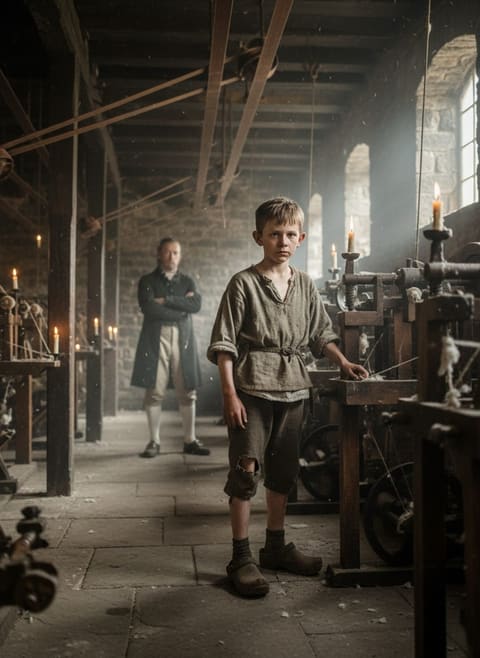
By 1833, the mills of England were throbbing symbols of the era’s unrestrained capitalism. For the working poor, however, this prosperity was built on their backs, with children as young as six enduring gruelling shifts longer than can now be imagined. Oastler’s path to the Royal Commission had been paved with indignation and a damning letter that likened child labour to slavery on English soil, a provocation that rang through society like a tolling bell.
Numbers That Spoke Volumes
As Oastler laid out the statistics with unwavering conviction, the faces of the commissioners viscerally transformed. He shared stories of children working from the break of dawn till twilight, their growth stunted, bright eyes dulled by exhaustion and disease. In that time, ‘short-time’ campaigns had begun to gain traction, yet Oastler’s demands were far from moderate. He named names, called out titans of industry who preferred to profit from the shadows of child exploitation.
Read next: The Day a Cornish Engineer Lit the World's First Steam Locomotive
The numbers were heartrending, revolts against innocence that could no longer be shielded by economical necessity. As Oastler’s words spread like wildfire, it was impossible for the esteemed assembly — nor indeed for the wider public — to retreat into willful ignorance.
Unyielding Amidst the Scrutiny
That morning, the room was charged with more than the usual static of official deliberation; there was an unmistakable tension, a raw undercurrent of societal introspection. Oastler, undeterred by the skepticism and the incredulous looks, bore the glacial stares of industry defenders like a badge of honor. For him, this was about turning whispers into a clamor too loud to ignore, an unwavering conviction that reform was not just overdue but was a moral imperative.
His forthrightness, so rare in dealings of power, inspired the working masses and terrified those whose profits were siphoned directly from the pain of vulnerable children. Silence was shattered that day, with Oastler's piercing voice heralding a new dawn of reform.
A Rippling Change
The ripples of Oastler’s testimony went far beyond the walls of that room, seeping into the very fabric of national discourse. The testimony contributed to the Factory Act of 1833, a legislative milestone that began the long journey of improved working conditions. Although only a beginning, the Act was a vital acknowledgment that children deserved protection, that their labor was not an endless resource to be squandered.
Read next: The Day a Blind Man Gave Yorkshire's Children Their Voice
Oastler's courage galvanized reformers and laid the groundwork for future legislative advocacy. The Act, while imperfect and limited, was a powerful precedent giving weight to the notion that societal progress must not be achieved on the backs of the powerless. Through Oastler’s resolve, the very definition of progress evolved into a frame inclusive of humanity and rights.
Voices Echo Through Time
Today, Richard Oastler’s defiance before the Royal Commission stands as a stark reminder of a turning point. In an epoch where silence was easier and safer, his willingness to disturb the status quo electrified a movement. As the echoes of industrialization still ripple through modern economies, Oastler's fearless stand encourages vigilance against exploitation in all its forms.
The day a weaver’s son gave factory children a voice through the corridors of power was a defining moment when history was shaped by words spoken, not by weapons wielded. In recalling this, we remember the enduring relevance of advocating for the oppressed and the unending pursuit of justice in each era of human progress.