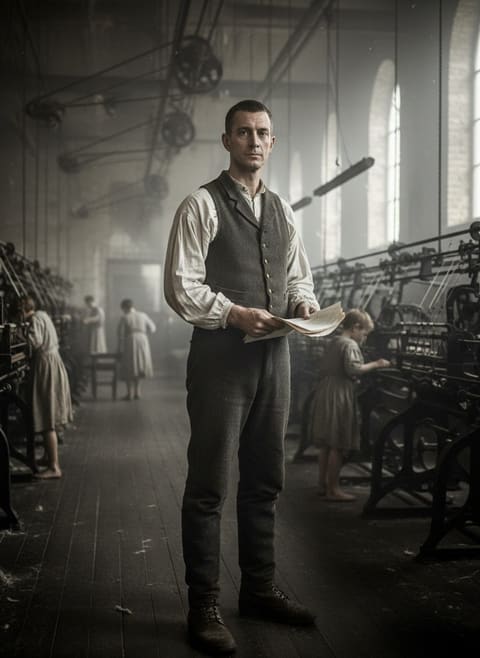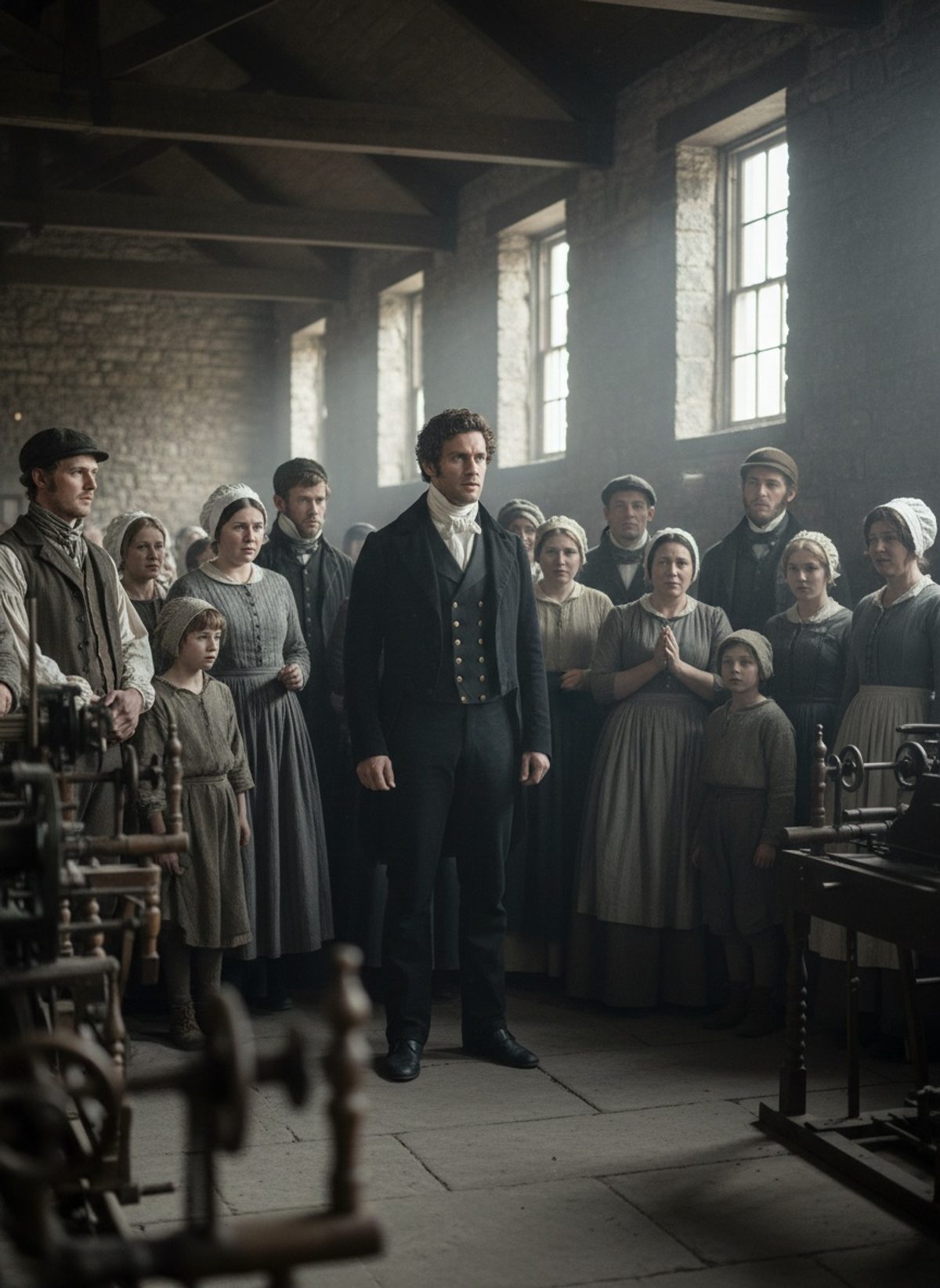
The early morning mist clung to the Clyde River valley as the first light of dawn crept over the Scottish hills. In the village of New Lanark, dew droplets glistened like tiny jewels on the cobblestone streets, a stark contrast to the muted grey of the sky above. This idyllic scene masked the tension that simmered beneath, for the looms within the vast stone confines of the mill were motionless and still. The rhythmic hum of productivity had ceased—silenced by forces far beyond the village. Yet, inside, a startlingly different story unfolded as Robert Owen, the visionary mill owner, defied the economic storm that threatened his business and his workers' livelihoods.
It was 1806, and Britain was caught in the grip of turbulent trade warfare. The fallout from a trade embargo had severed the supply of raw cotton, leaving textile mills stranded, their lifeblood unexpectedly cut off. Profits vanished overnight as machines lay idle, and most mill owners, faced with impending financial ruin, dismissed workers without remorse. At New Lanark, however, the quiet resolve of Robert Owen set him apart from his contemporaries. Rather than succumb to the economic pressures snapping at his heels, he chose a path few dared to tread: Owen continued to pay his workers their full wages, a lifeline strung tight with the kind of radical compassion that history rarely celebrates.
Owen’s pragmatic benevolence was born of his belief in the value and dignity of every worker. New Lanark, by design, was more than just a cluster of buildings engaged in spinning and weaving; it was an experiment in social engineering forged in the heart of the Industrial Revolution. Owen envisioned a community where economic success and human welfare were two sides of the same coin. His willingness to protect his workers in times of scarcity underscored a core belief: that the sustainability of an enterprise relied not solely on profit, but on the mutual respect and support between employer and employee.
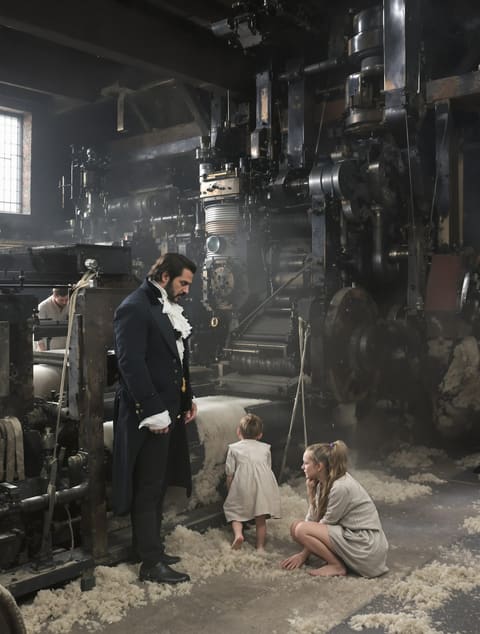
The environment Owen fostered at New Lanark was notably progressive. These were times when child labor and grueling work hours were the grim realities of industrial progress, yet Owen was a pioneer in factory reform. His cotton mill became a beacon of enlightened management, with shorter workdays and an insistence on education for children, a rarity unparalleled by his peers. Such practices were rare, positioned at the crossroads of commerce and ethical responsibility.
Read next: The Man Who Poured Iron Into a River and Changed Everything
As the weeks and months rolled by, the New Lanark mill remained silent, each day a test of endurance and faith. The financial strain bore heavily on Owen, and yet, he found a strength in his unconventional convictions. Throughout this period, he maintained wages from his personal profits, ensuring that his workforce could clothe, feed, and house their families. A tight-knit community, where dereliction of duty could have meant despair, instead experienced solidarity and resilience.
It was not merely a gesture; it was a deliberate dismantling of the harsh employer-employee dichotomy prevalent in those times. Owen’s actions rippled through the fabric of the village, weaving a tapestry of loyalty and mutual respect. While other mill owners plotted economic survival through the minimization of human cost, Owen engineered loyalty with sheer empathy—a most valuable currency.
Despite the crippling embargo, hope flickered in the hearts of Owen's employees. They understood that their livelihood was being sustained not by the relentless thrumming of machines, but by the unparalleled humanity of their employer. It was an era where workers often feared exploitation, yet New Lanark stood as a unique testimony to the power of altruism in commerce. Here, the norms were rewritten with each paid salary in those quiet, mechanized halls.
Read next: The Birmingham Street That Vanished and Came Back Alive
But why did Owen, when faced with financial despair, persist in his generosity? It was the manifestation of an ideal that the soul of a business was its people. He envisioned an industry where moral prosperity could coexist with material wealth. Owen anticipated the tides of social conscience that would eventually shape labor rights long after his time.
The embargo lifted in due time, and the looms of New Lanark were once again set in motion. With renewed vigor, the community that had once stood precariously on the brink of adversity now thrived. The return of the cotton supply signaled not only the recommencement of production but the enduring legacy of one man's belief in a just and humane working environment. Workers long remembered not just the resumption of operations, but how their employer’s standing by them had defined crisis with courage and compassion.
Robert Owen's decision, unprecedented for its time, serves as a powerful narrative that wends its way through the annals of industrial history—a story left untold too often. By intertwining moral integrity with economic practices, he laid a foundation upon which future generations could reimagine the ethos of work and industry. The lesson gleaned from Owen’s stand at New Lanark is one of enduring relevance: the spirit of humanity, when courageously prioritized over profit, creates resilient communities that persist long after the cotton has woven its final thread.