April 1932. A towering silhouette was etched against Manchester's cloudy sky.
The Vision Takes Form: Sunlight House
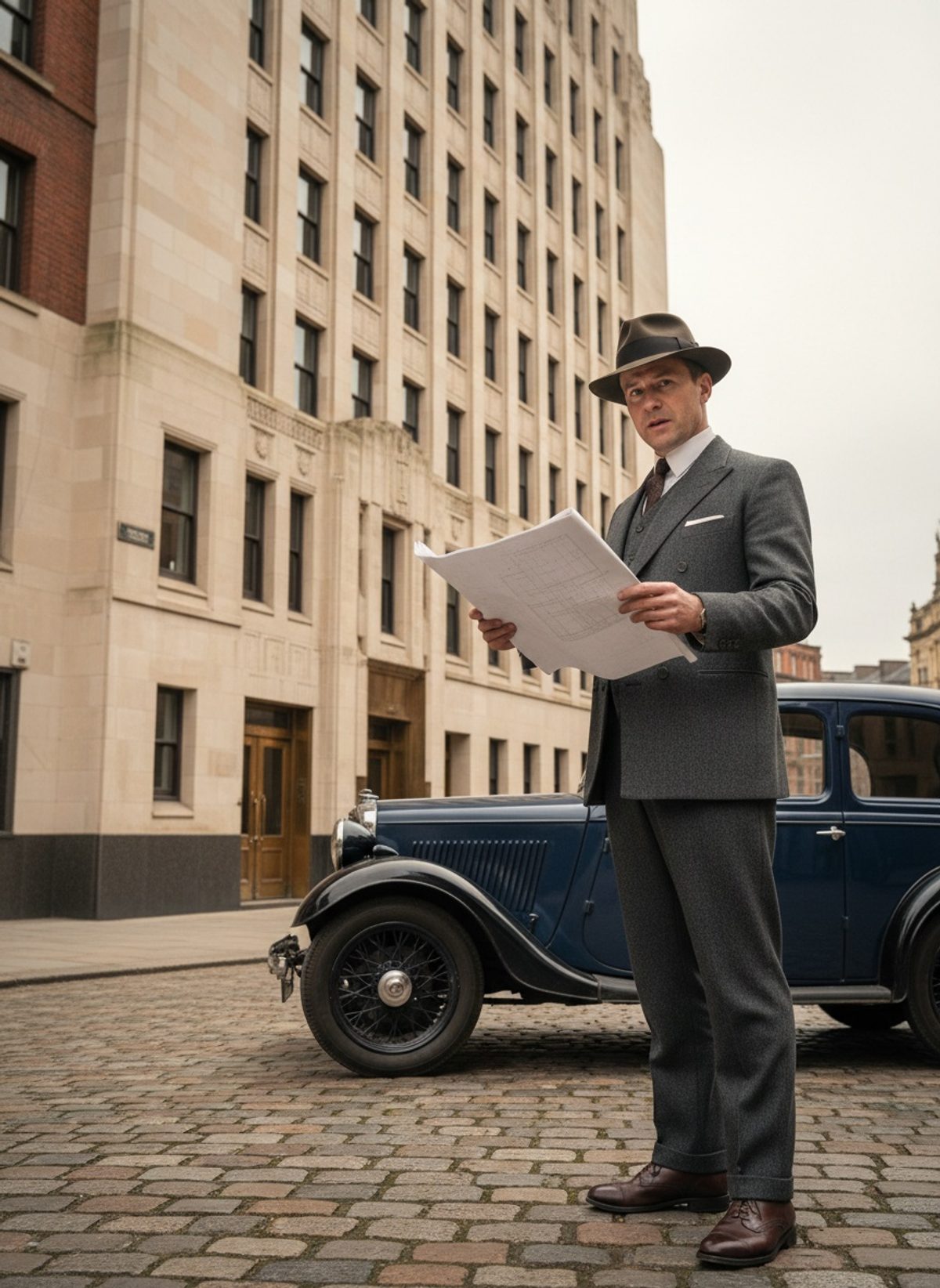
In the midst of Manchester's bustling industrial hub, a new architectural marvel emerged. Fourteen stories of striking Portland stone, Sunlight House was a testament to the audacious ambition of Joseph Sunlight. Known as much for his charisma as his architecture, Sunlight had transformed from a penniless immigrant to a celebrated architect, leaving an indelible mark on the urban landscape of his adopted city. The building, completed in 1932, was unlike anything Manchester had seen—an Art Deco beacon thrusting skyward, simultaneously reflecting the modernist spirit of its creator and the resilient energy of the city.
The design of Sunlight House was steeped in the opulence of the Art Deco movement. Its pristine stone façade and geometric detailing stood in stark contrast to the soot-laden Victorian edifices that defined Manchester’s traditional skyline. Inside, the building boasted all the modern conveniences of the day: high-speed elevators, central heating, even electric lighting that illuminated the structure like a lighthouse in the heart of the city. It was more than a practical office building; it was a bold statement of progress, a vision of the future forged in the aftermath of war and economic turmoil.
From Novogrudok to Manchester: A Journey of Determination
Joseph Sunlight's journey to Manchester was one of perseverance and reinvention. Born in Novogrudok, Belarus, in 1889, Sunlight’s early life was marked by the challenges faced by his Jewish family. With the looming threat of conscription and persecution, the Schimschlavitch family sought refuge in England, settling in Manchester in 1890. It was a city throbbing with industrial might, yet ripe with opportunity for the ambitious and the bold.
Read next: The Day a Collier's Son Stood Between Children and the Pit
Sunlight quickly distinguished himself in his new homeland. By 1904, at the mere age of fifteen, he was apprenticed to an architect in Manchester. Just three years later, he established his own practice in St Ann's Square. His reputation for innovative design and unmatched work ethic drew clients in droves. By 1910, Sunlight had overseen the construction of over one thousand houses in Prestwich, marking the beginning of an illustrious career that would eventually transform the silhouette of Manchester itself.
A Masterpiece Amidst Adversity
Building Sunlight House was no small feat. The global economic downturn of the Great Depression loomed large, casting lengthy shadows over businesses across the country. Yet, Sunlight's vision was unwavering. He saw an opportunity to forge light from darkness, determined to leave a monument that would inspire hope and modernity in the heart of Manchester.
The erection of Sunlight House during the economic trials of the 1930s was both a logistical and symbolic challenge. The towering structure, surging above the traditional cityscape, defied prevailing trends. At a time when technological advancement and architectural innovation could easily become neglected luxuries, Sunlight found a way to propel both forward, marrying practicality and beauty in a symbiotic embrace of stone, glass, and light.
What made Sunlight different was not just his talent, but his resilience and audacity. He proposed an ambitious 40-storey extension for Sunlight House in 1949, an idea rejected by the city council but emblematic of his forward-thinking ethos. Though this vision remained unfulfilled, the original Sunlight House stood testament to his indomitable spirit and craftsmanship.
Read next: The Man Who Poured Iron Into a River and Changed Everything
A Politician with a Blueprint
Sunlight was not just a maverick architect; he was a man of the people, driven to shape the world beyond bricks and mortar. In 1923, he entered the political arena, elected as the Liberal Member of Parliament for Shrewsbury. Here, he introduced a Private Member's Bill advocating the standardisation of bricks, a testament to his visionary understanding of practical aesthetics. Although it narrowly survived an initial vote, it was ultimately lost with Sunlight's electoral defeat in 1924.
This intersection of architecture and politics reflected Sunlight’s multifaceted outlook on life. He saw no boundary between designing buildings and designing legislation; both were avenues for sculpting a better, more cohesive society. Even his passion for horse racing—the favourite pastime to which he devoted much of his personal life—highlighted his love for strategic thinking and calculated risk.
Leaving a Monumental Legacy
Joseph Sunlight's life was a symphony composed of perseverance, ambition, and reinvention. From humble beginnings in Belarus to monumental success in Britain, his story encapsulated the immigrant dream. Though he passed away in 1978 at the age of 89, Sunlight’s legacy lives on. His work did more than reshape Manchester’s skyline; it rewired its spirit, stimulating a dialogue between past grandeur and future aspirations.
Sunlight House stands today as more than a building. It's a beacon of progress, a testament to human resilience through the arc of history. At a time when Manchester was redefining itself in the face of adversity, it embodied a celebration of innovation and the courage to dream beyond one’s immediate surroundings. Sunlight's story is a reminder that architecture is more than physical structures; it is a reflection of the societal norms and opportunities of its creators. In understanding his story, we grasp the indelible influence of visionary spirits in shaping the cities and lives of tomorrow.