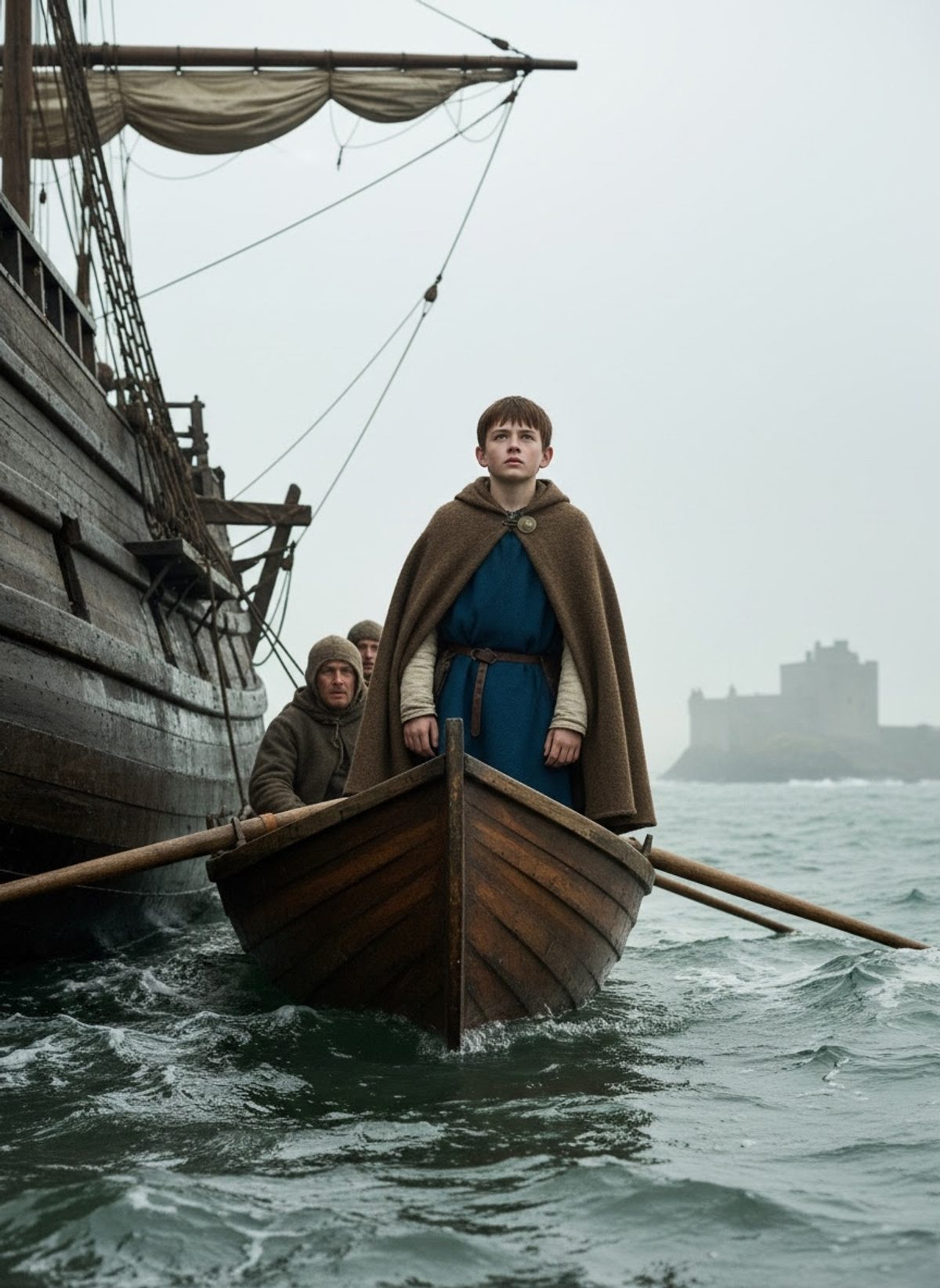
The air was heavy with the scent of salt and the whisper of the wind as it swept across the darkened Firth of Forth. Wisps of mist clung to the water, making the silhouette of the small rowing boat appear ghostly in the moonlight, its oars a quiet rhythm against the waves.
On board, the young James Stewart, barely eleven years old, shivered in the damp chill but kept his gaze upon the looming shadow of the ship that promised deliverance. This crossing was a desperate bid for safety, orchestrated by his father, King Robert III, to escape the lurking threats that haunted his homeland. Yet the ominous swell of the sea carried its own peril—a peril that would alter the course of James’s life and the history of Scotland.
The Theft of a Kingdom
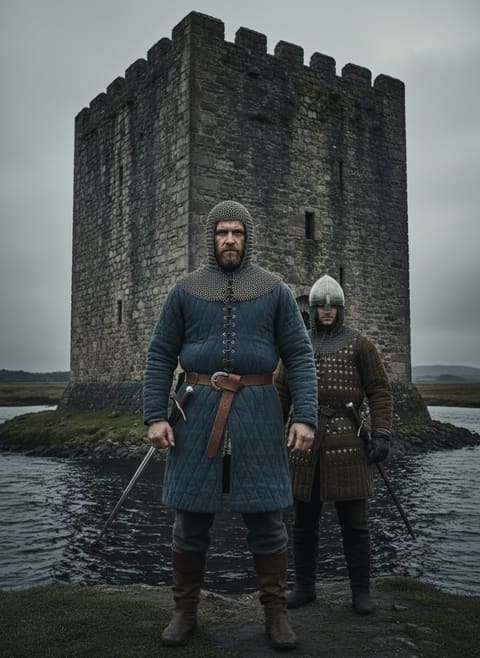
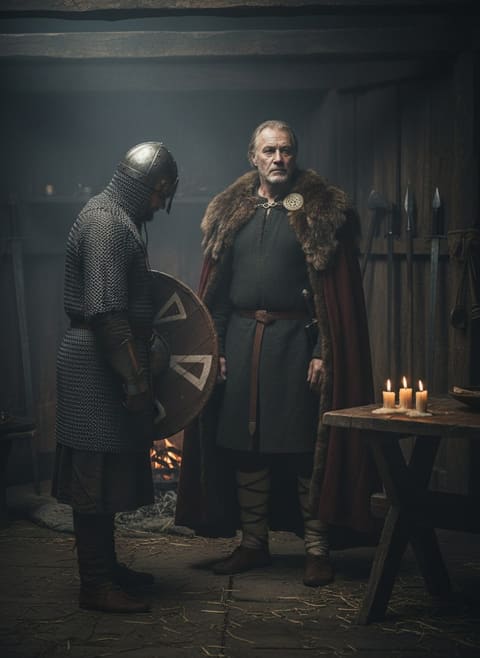
In the bitter first months of 1406, the landscape of Scotland was a tapestry of intrigue and danger. Amidst the frosts of a Scottish winter, the boy king James Stewart was being carefully maneuvered away from the blood-soaked tragedies of his past; an elder brother murdered, enemies circling, and the uncertainty that lay in his lineage. It was a time when castles loomed with an ever-present menace, and noble plots were as common as the echoes in their cavernous halls.
While James's journey was secretive, the reasons were all too public. After the tragic death of his brother David, Duke of Rothesay, under suspicious circumstances, his father, King Robert III, feared for James's safety amidst the ruthless power plays of Scottish nobility. France promised sanctuary from the shadow of treachery that lurked at every corner in Scotland, a promise that must have seemed tangible as the Firth retreated and the sea ahead beckoned.
Read next: The Tool That Fed the Highlands When the Plough Could Not
However, concealed within the folds of the water was England’s waiting game, a naval surveillance encouraged by the fracture between the two nations. English sailors, perhaps privy to whispers carried by the waves or merely opportunistic, captured the vessel, wrenching James from his path of refuge and thrusting him instead into the formidable grasp of King Henry IV.
The capture was not just of a boy, but of the shimmering future of Scottish sovereignty, now confined and bartered across the service halls of the English crown.
Imprisonment and Transformation
What followed was a childhood and adolescence wrapped within the stark fortress walls of England. Far from the mists and moors of his homeland, young James was kept initially at the Tower of London and then at various circuitous castles, enduring a gentle imprisonment reserved for nobility. Eighteen suffocating years stretched ahead of him, years that would carve a monarch out of a captive prince.
While the stone and mortar cradled him in confinement, James was not left to idleness. Among the intricate web of courtly life, he received an education that broadened his horizons beyond what the wild Scottish winds could have imagined.
He was exposed to English politics, the arts, and the strategies of war. The enforced immersion in his captor's culture did not narrow his perspective but expanded it, arguably shaping a ruler more adept than any Scotland might have reared within her own embattled borders.
This period of seclusion also brought an unexpected ally—the pen. James developed a profound appreciation for literature, dabbling in poetry and capturing the delicate nuances of human emotion. It was his artistry with the written word that would later earn him admiration and contribute to the cultural blossoming of his kingdom.
Read next: The General Who Turned a Victory Into a Massacre
The Return of the King
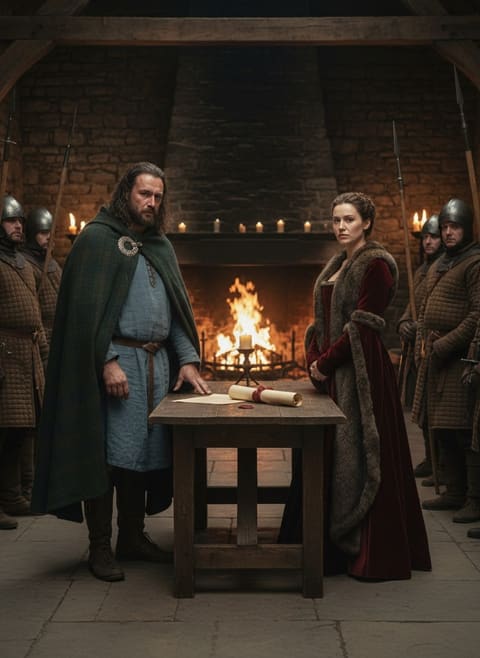
In 1424, the chains of captivity finally loosened, and James Stewart returned to his native soil. His return was not merely a mending of Scotland’s fractured kingship but a renaissance of vision. James came back changed—a man molded by his ordeal yet not broken by it. Eager to reclaim his destiny, he brought with him the insight of diplomacy and governance gleaned from his years in England.
He set upon implementing swift reforms, centralizing power to curb the unruly nobility and establishing stronger fiscal policies to stabilize an economy that had waned under incessant strife. His justice was iron-fisted, curtailing lawlessness with measures that reasserted the crown’s authority. Initially harsh, these actions were viewed by some as necessary to fortify the throne and secure a semblance of peace.
James I of Scotland's reign, inaugurated under such somber beginnings, was marked by a blend of stern governance and cultural enrichment. The arts flourished under his patronage, contributing to a Scottish identity newly reimagined and robust. His legacy was not merely one of a returned captive but a venerated king whose captivity had concocted a medley of wisdom and fortitude.
The tale of James Stewart is one of metamorphosis amidst adversity, a poignant lesson in resilience. For Scotland, his story is more than a historical account; it is an illustration of how destiny, even when intercepted by the enemy, can weave the tools for future strength and unity. The boy who was once snatched from his home grew to become the king who secured it, transforming his personal captivity into national liberation.