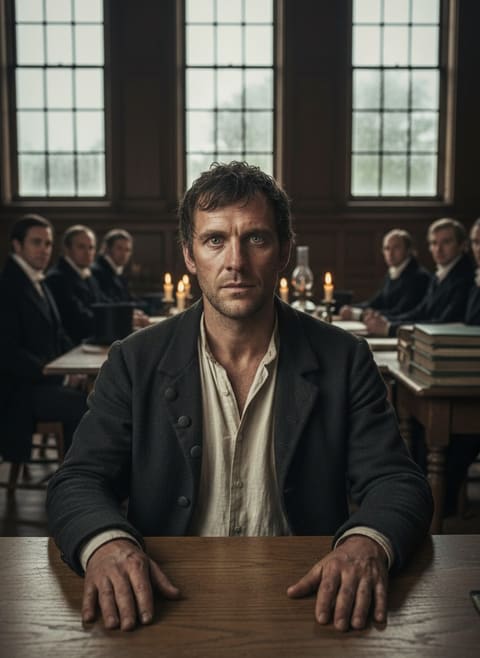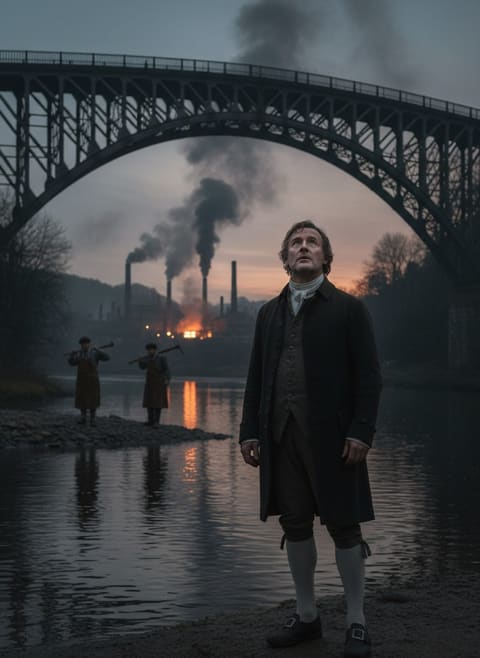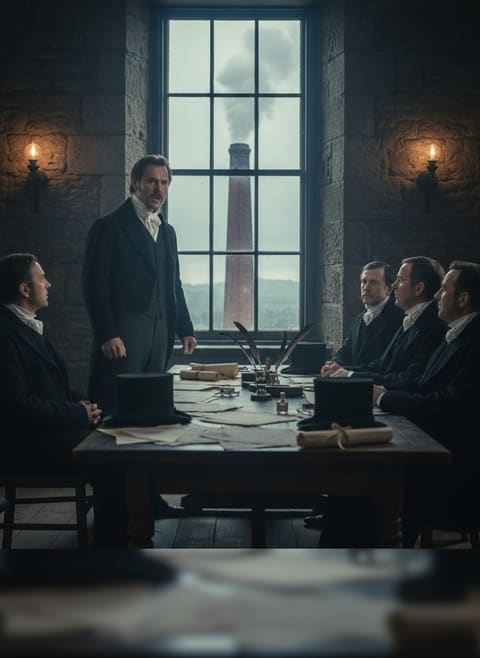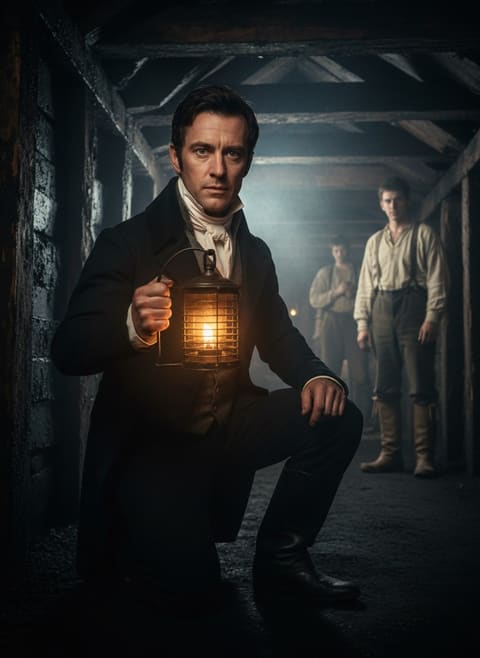
The cold breeze of Glasgow in 1805 whispered through the cobblestoned streets, shadows dancing across the façades of buildings huddled closely against the chill. The city was wrapped in its customary darkness, with only the faint glow of scattered candles flickering from windows and the hazy arcs of lamplighters' torches. Yet on this particular night, the customary blanket of gloom was poised to lift. In the hushed anticipation, William Murdoch, a Scots engineer, stood ready to unveil a magic of modern alchemy — the art of conjuring light from beneath the city itself.
The Ingenious Mind of William Murdoch
William Murdoch was a figure both familiar and mysterious, a pioneer stoutly marching in the footsteps of Scottish ingenuity. Born in the quiet village of Auchinleck in 1754, Murdoch was the kind of man whose understanding of the world was equal parts science and intuition. His life’s work was firmly planted in the fertile soil of the Industrial Revolution, an era marked by innovations that would reshape the landscape of human existence. Murdoch was drawn to the study of steam engines and pneumatics, finding his niche at the Boulton and Watt company — a veritable laboratory of invention.
The notion of lighting cities with gas originated as the germ of an idea among arduous experiments. Murdoch’s fascination with the *illumination of gas* grew from simple bits of coal buried in the hearth. These experiments bore fruit, pushing him towards the idea of channeling this fiery phenomenon into pipes, to carry light not just to homes, but to entire streets. If successful, it would redefine the very notion of night itself.
A Night to Remember
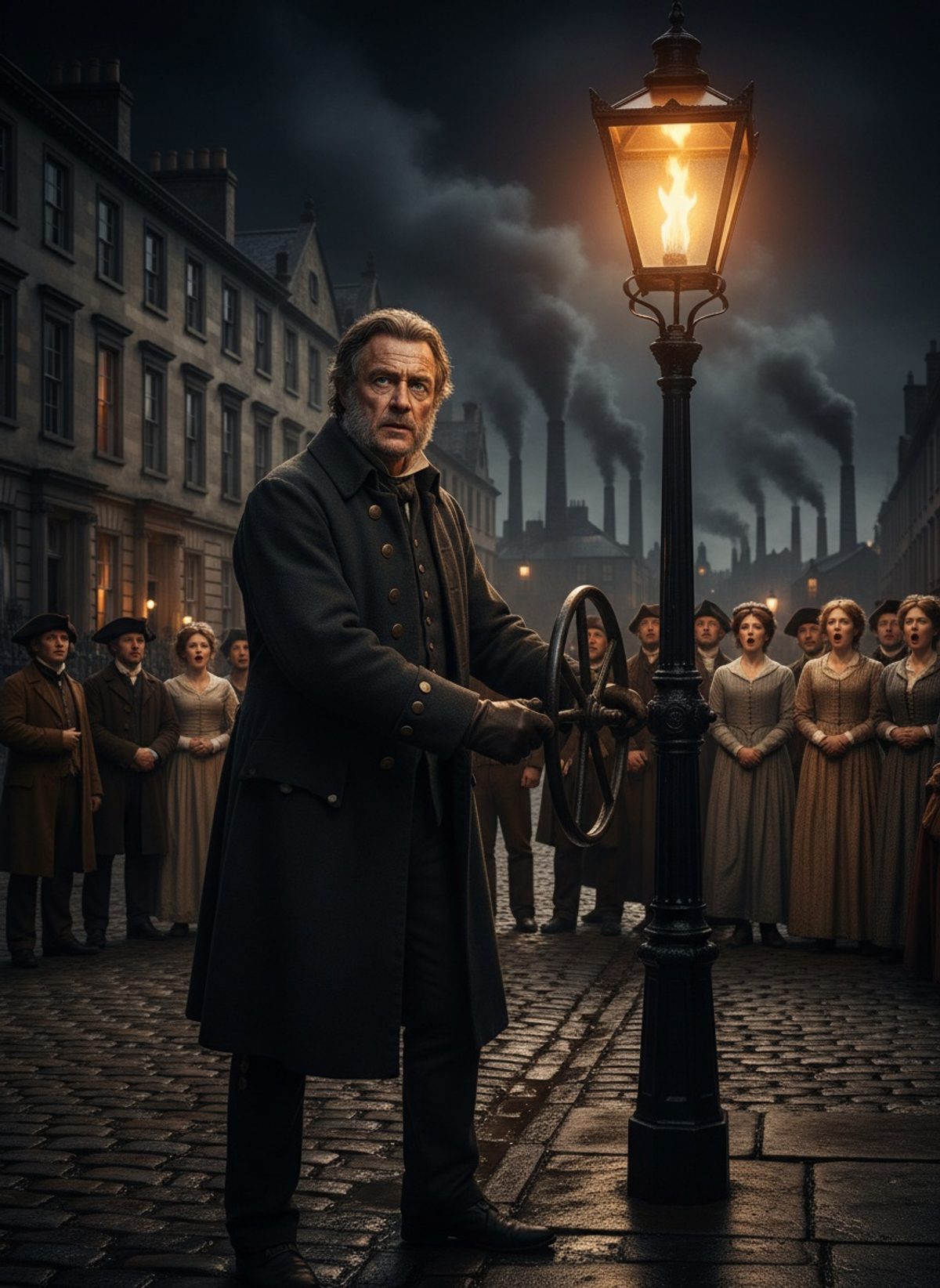
In the heart of Glasgow, the night crackled with electricity as Murdoch prepared to demonstrate his grand vision. Onlookers gathered, their breath suspended in invisible clouds. Iron pipes lay beneath their feet, hidden but potent, coursing with coal gas eagerly waiting to escape into brilliance. As the clock struck the appointed hour with a resonant clang, Murdoch turned a valve nestled in the unassuming street-side mechanics.
Read next: The Architect Who Built Manchester a Skyscraper of Light
A moment of silence, as if the world itself inhaled in unity. And then, as if in response to the whispered incantation from an arcane tome, a flame leapt into existence above. The night burst open with an amber glow, unfurling over the street in a cascade of light. Gas-fed flames crowned lampposts like man-made stars, casting shadows that danced gingerly across the cobbles. For the first time, the city's pulse was visible through more than just the eyes of the few who roamed in the dark.
The Impact Spreads
The scene Murdoch created wasn’t just a marvel; it was a paradigm shift. The success of his experiment sent ripples across the British Isles and beyond to the wider world. This innovation promised security and opportunity, extending the day into the night and with it the potential for productivity. The success of Glasgow's first lit street heralded a future that brimmed with promised luminescence.
Read next: The Day a Mill Owner Stood Up and Paid His Workers Anyway
His work laid down the blueprint for urban lighting — cities could be transformed, economy extended beyond the bounds of daylight. Conversations bubbled with the promise of crime deterrence and increased leisure, cultures untangling themselves from the husk of night. Murdoch's ignition was not bounded by geography; soon, other cities sought this profound change and the sky would never darken the same way again.
The Legacy of a Bright Idea
While William Murdoch’s name often remains eclipsed by greater beacons of the Industrial Revolution, his contributions are the stuff of legend — albeit sometimes shaded from view. His gift of gaslight, though, is burnt into the annals of history, a precursor to an era of illumination that would culminate in the dazzling electric visions of the 19th and 20th centuries. The voyage from candle to gas lamp to the electric streetlights of today draws a direct line through that Glasgow street on which Murdoch stood one fateful evening.
The night gas lamps lit Glasgow’s street was more than a scientific endeavor; it was a beacon of change — a narrative of possibility. What Murdoch achieved was not simply the lighting of a street, but the ignition of the imagination, the realization that human ingenuity could forge paths filled with light even in the deepest darkness. It teaches us that what starts as an idea can, with perseverance and innovation, transform the very world we move through. In that glow, obscured corners of streets and indeed, life itself could be brought into stark, warm view.