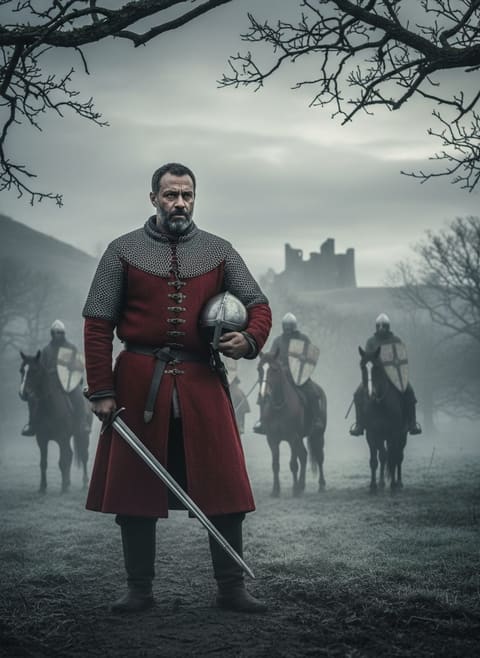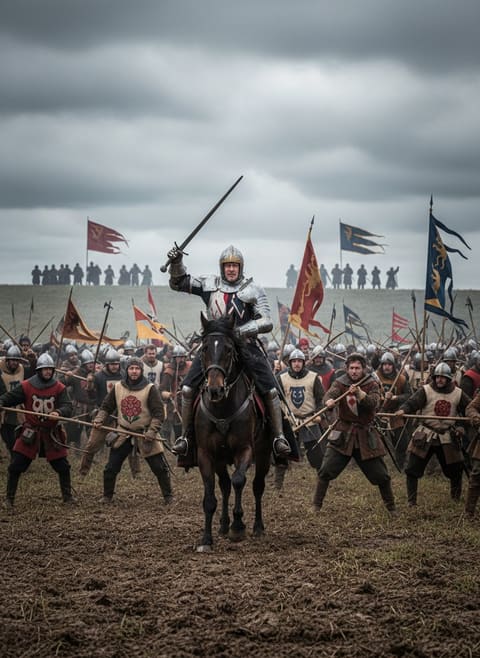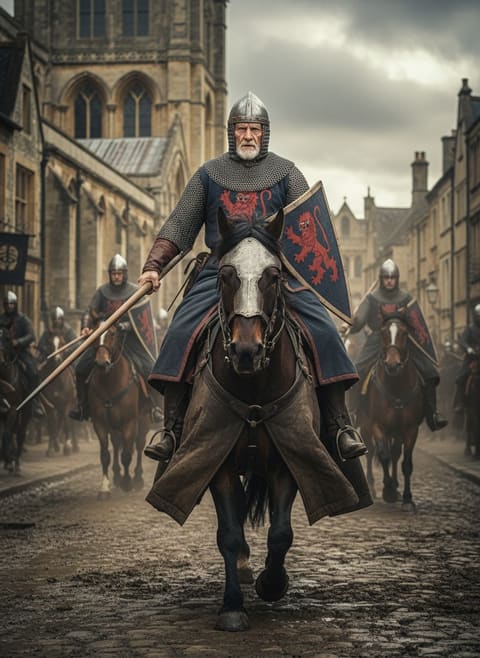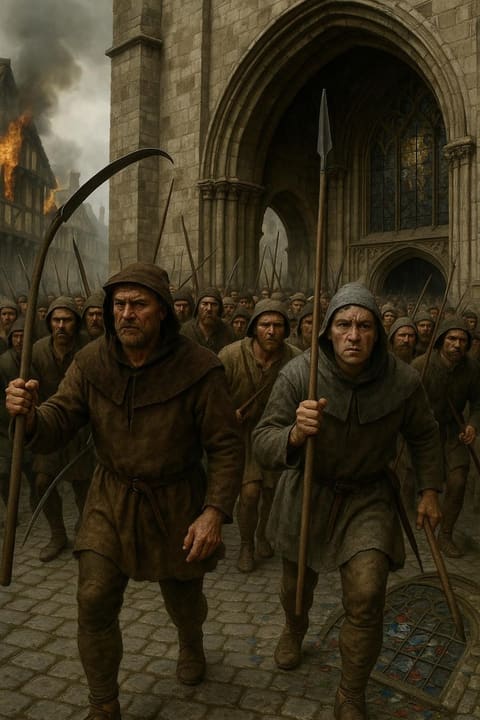
The morning sun began to spill over the cobblestones of London, each stone glistening with the dew of midsummer, as the city awoke to an unusual hum. It was June 1381, and the wind carried the murmur of voices — not the usual hurried chatter of vendors at market nor the roar of shipbuilders by the Thames, but the unified calls of rebellion. On this fateful day, sixty thousand determined souls moved like a tide through London's streets, guided by a singular resolve: to demand justice from their king. And at Smithfield, the heart of the revolt, a meeting that would echo through time was about to unfold.
The Unlikely Leader: Wat Tyler's Rise
To many, Wat Tyler was an unexpected figurehead. A tiler by trade, he was propelled to prominence by a series of social and economic grievances that festered across England. The roots of discontent lay deep; the Poll Tax had exacerbated simmering frustrations, compounding the resentments of laborers still reeling from the Black Death's aftermath. Taxes were akin to shackles for those who had little to offer. It was Tyler's charisma and defiance that transformed this resentment into a formidable movement, one capable of galvanizing the downtrodden. For them, Tyler became a symbol of resistance, leading them to London as a beacon of hope for change.
The Naïve Boy-King: Richard II's Gambit
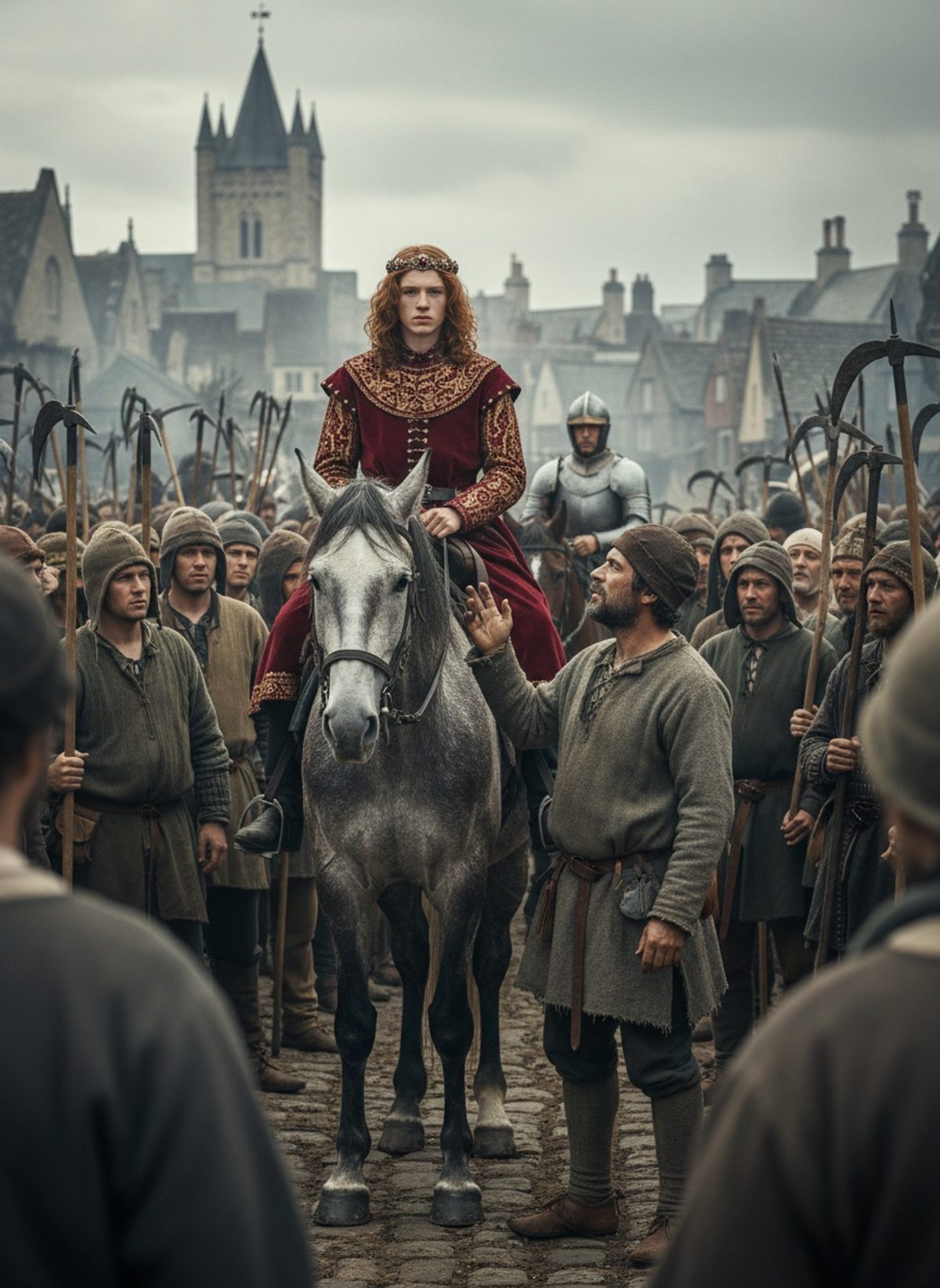
Amidst the din of rebellion, a different story was unfolding within the walls of the royal palace. Richard II was merely fourteen, a young king yet to be tested by the harsh realities of rule. Most monarchs of his age might retreat behind seasoned advisors and thick castle walls in the face of such peril. Yet Richard, with an audacity perhaps born from the innocence of youth, chose a different path. He mounted his horse and rode out to meet the roaring tide of men at Smithfield. Without the comfort of his army or the shield of his royal guard, the boy-king ventured forth to face the leader of England's upheaval.
The Meeting at Smithfield: Handshake Amidst Chaos
The fields of Smithfield, often the stage for bustling market and fair, transformed into a crucible for history on that day. The air was thick with anticipation as two worlds converged. Emerging from the crowd, Wat Tyler towered with defiance, a man of the people whose face bore the wear of a lifetime of toil. Opposite him stood Richard, impossibly young in his regal finery, bearing the weight of his kingdom. What unfolded next was script-like in its shock: Tyler extended his hand, a gesture of parity, to which the king responded. No English monarch before had shaken hands with a peasant! To many, it was an act that defied traditions of divine kingship, an unprecedented bridge between sovereign and subject.
Read next: The Day a Dying Earl Knelt and Saved England's Throne
An Uneasy Peace and an Enduring Legacy
That handshake, however, was not to herald immediate peace. The tension of the encounter unraveled quickly as hostility resulted in Tyler's violent death. Richard's moment of bravery was fleeting; he turned and promised the rebels concessions that were, sadly, deceitful. As the uprising dimmed, the status quo snapped back into place like a taut rope. Yet that gesture, ephemeral though it was, planted the seeds of change. The very fact that a monarch engaged so directly with his people shook the rigid structures of medieval rule — a symbol of both confrontation and connection.
Today, the story of that handshake at Smithfield resonates powerfully. It is a reminder of resilience and the ceaseless tug between authority and the voice of the people. Encountered by their king, those rebels were not mere peasants but voices seeking acknowledgment — a plea that echoes across centuries to remind us of our shared humanity, forever intertwined in the dance of leadership and the governed.