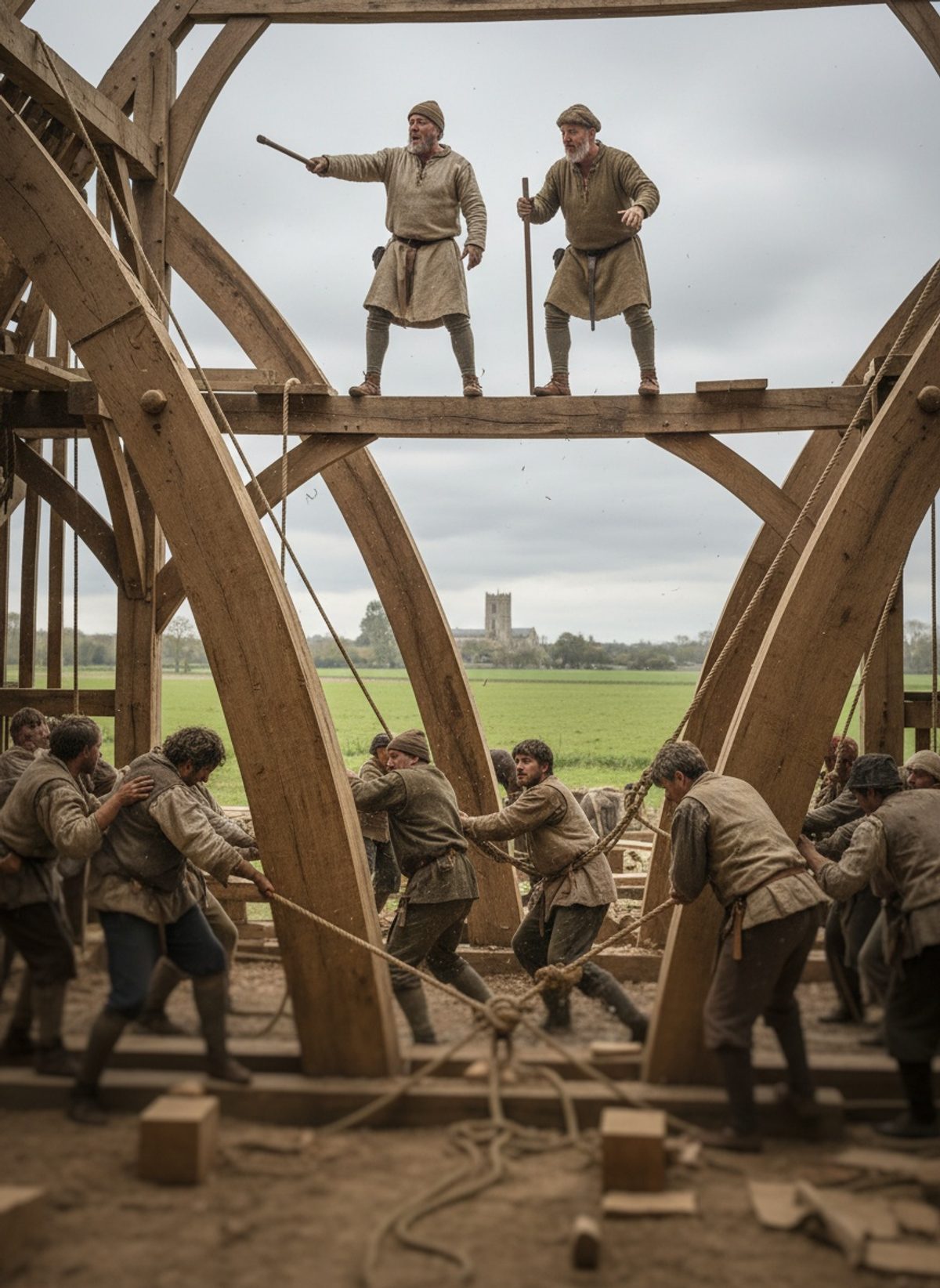
It was meant to be just a barn. What emerged was nothing short of a masterpiece in timber.
The Timbers of Pershore: A Surprising Legacy
Pershore Abbey, nestled amidst the verdant landscapes of Worcestershire, was an architectural marvel even by medieval standards. Yet, in the shadow of its grand stone walls, a different kind of structure would take root—a colossal oak barn. In 1325, the abbot had decreed the need for new storage, likely envisioning a functional, if modest, solution. What resulted, however, was a testament to both ambition and the unmatched craftsmanship of the monks.
Known as the Great Barn of Pershore, this structure vividly captures the blend of necessity and artistry that defined monastic life. Often mistaken for a cathedral because of its grand design, this timber edifice became a symbol of the abbey's influence and ingenuity. Few would expect a structure conceived for storage to endure the tests of time, yet the barn, with its soaring roof and robust beams, navigated history unscathed while many abbey stones became quarry for the ravages of reform and dissolution.
The Art of Timber: Crafting the Cathedral
The monks of Pershore Abbey practiced a lifestyle that prescribed both utility and devotion. It was this combination that allowed them to transform practical endeavors into works that became treasures of ecclesiastical architecture. The barn’s construction reflected the intersection of faith and functionality, requiring skills as diverse as carpentry, engineering, and knowledge of medieval agricultural practices.
Read next: The Day a Welsh Prince Bowed and Broke England's Heart
Building such a structure was no small feat. The oak beams that formed the barn’s skeleton were likely sourced from the nearby Forest of Feckenham, a royal forest and a source of considerable community pride and conflict across decades. Each tree was felled and fashioned by hand, a laborious process involving axes and adzes to shape timbers, and augers to bore wooden dowels that held the frame together without nails.
Inside, the barn’s cavernous expanse hints at the vast quantities of grain and hay it was meant to hold—a visual echo of the abbey's once-great agricultural wealth. The oak beams soar overhead, an intricate latticework carrying the weight of histories told and untold. It’s easy to imagine the monks, heads cowled against the dust, bustling below with harvests that supplied sustenance not only to the abbey but to the surrounding communities.
The Dissolution and the Barn That Endured
King Henry VIII’s dissolution of the monasteries during the 1530s was a period marked by upheaval and loss for many religious institutions across England. Pershore Abbey was no exception. With its brothers scattered and its stones stripped for building local homes and structures, the abbey crumbled into obscurity. Yet, among the ruins, the Great Barn remained, a silent sentinel standing witness to the shifts around it.
The resilience of the barn is as mystical as it is mundane. Unfussened by the fate that befell the abbey, it continued to serve as a focal point for local agriculture and a physical reminder of the abbey’s erstwhile glory. For the community around Pershore, it provided continuity and stability, as even the land's alignment changed from ecclesiastical to civilian hands.
The Barn in Modern Times: Reverence and Preservation
As centuries turned, the Pershore Barn transitioned from a tool of necessity to an object of historical fascination. By surviving beyond its expected lifespan of practical use, it became something of a rural relic—a structure revered not just for its material utility, but also for its testament as a continuous connection to the medieval past.
Read next: The Royal Palace That Autumn Turned Into a Hunting Ground
Regional historians began to take note of its unique construction, and local legends flourished around its creation. While not a highly trafficked tourist site, those who encounter it are undoubtedly struck by its sheer presence; a tangible link to a world both lost and somehow ever-present across England’s evolving landscape.
In 2002, the importance of the barn was formally recognized, anchoring its status as a Grade I listed building. This designation ensured that generations to come would be able to visit and marvel at its architectural ingenuity and historical significance without disruption. The community’s commitment to preserving its rustic majesty echoes the monks’ original spirit of endurance and excellence.
The Story That Matters
The Great Barn of Pershore is more than just a reminder of medieval mastery; it’s a compelling testament to the unexpected durability of what we often ignore. While Pershore Abbey lay in ruins, the barn continued to offer its services, a nod to persistence in the face of impermanence. Its beams hold not just the scars of time, but the quiet triumph of the human spirit—a craft born out of devotion and necessity, unwilling to give way.
In a world where progress often outstrips preservation, such structures remind us of the value in what endures. The monks, perhaps unwittingly, achieved a legacy through the construction of their humble barn that superseded even the most ambitious of their spiritual enterprises. As we stand beneath its hefty timbers today, the barn asks us to ponder: what of our own creations might surprise us by lasting into the centuries ahead?