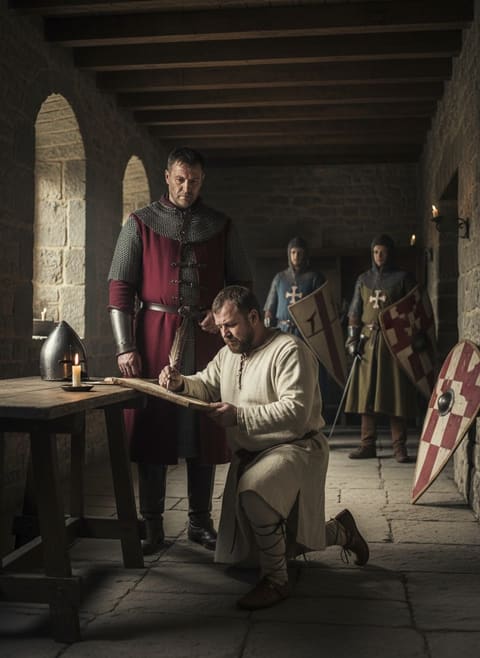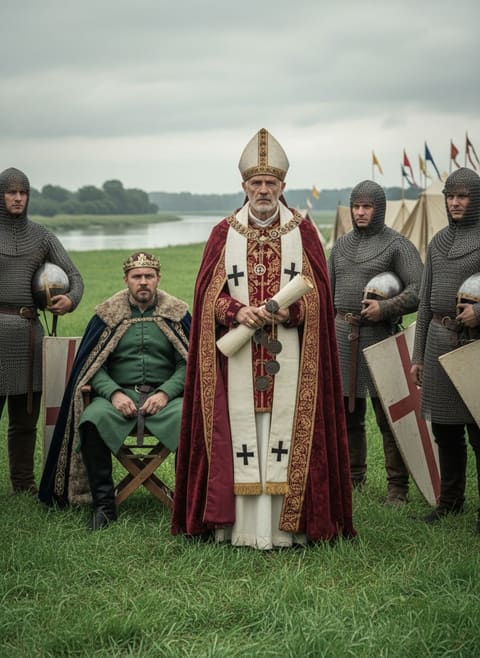
Queen Philippa of Hainault, twenty-three years old, was far from home and yet commanded a presence that could humble kings. Amid the violence of medieval warfare, she held no sword or shield; her only weapon was her tenacity and compassion.
The year was 1347, and the Hundred Years' War raged on. King Edward III of England had laid siege to Calais, a strategic port town in northern France, for over a year. The city's walls held firm against relentless assault, with its spirited defenders weathering both battle and famine. Their endurance, however, came at a great cost. The siege had drained the city’s resources, leaving its people desperate and starving. With little hope left, the leaders of Calais faced an impossible choice presented to them by their captors: surrender and risk death or continue to withstand potentially terminal deprivation.
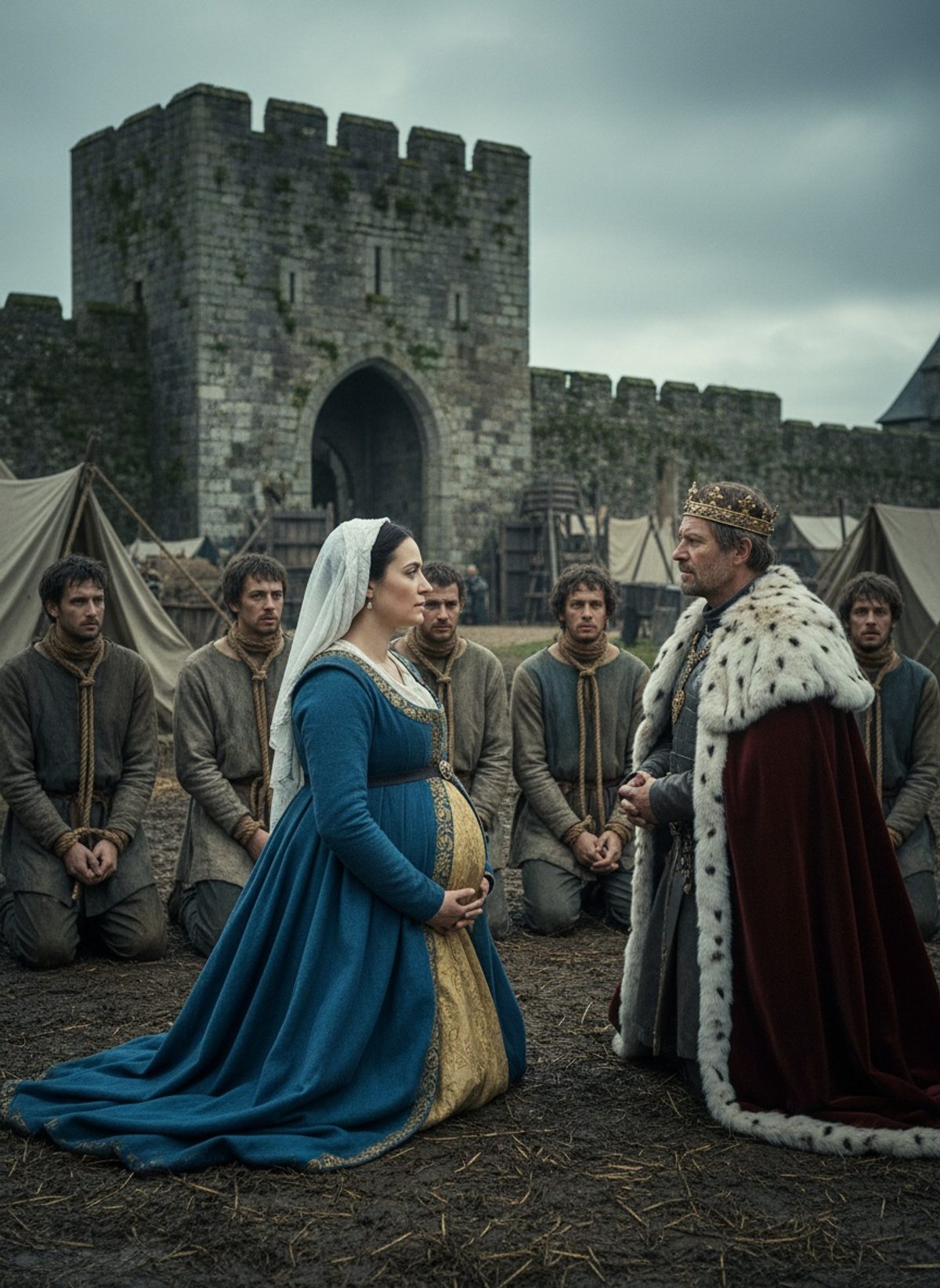
In the thick of desperation, Calais struck an agreement steeped in ancient ritual and sacrifice. Six leading citizens would offer themselves as martyrs, their lives intended to mollify Edward III's vengeful spirit. The scene was set with a grim stage—the six men, barefoot and clad only in their undergarments, trudged through the mud, ropes around their necks, escorted by an English guard. These were not faceless peasants, but the very pillars of their community: Eustache de Saint Pierre stood at their helm, a wealthy merchant known for his leadership and defiance. As they knelt before Edward, the king was exultant in his conquest but cold and determined in maintaining his fearsome reputation.
Edward's resolve, however, was about to meet an unexpected challenge on his own side of the battlefield. Queen Philippa, heavily pregnant, emerged from the shadows of Britain's martial triumph. Her presence was as unexpected as it was daunting against the backdrop of war-hardened soldiers and desperate men in chains. She moved with a deliberate grace, each step towards her husband pleading silently on behalf of the men who awaited their fate.
Read next: The Day a Dying Earl Knelt and Saved England's Throne
You can nearly hear the gasps from the assembled crowds as Philippa dropped to her knees in the same mud that had borne the feet of her condemned, offering a stark parallel and a shared humanity with them. Her hands clasped, her voice quavering with emotion yet unwavering in conviction, she implored Edward not to stain his victory with an act of vengeance that would foul his name and their child’s inheritance. Edward, bracing for the demand of his code as a medieval king to be unrelenting, was not only met by his wife’s plea but by the collective breath of his court and soldiers, hanging on his mercy or wrath.
The request was audacious. Despite the pageantry and expected fortitude of English kingship, this act of sheer compassion by Philippa, unarmed but fiercely resolute, unexpectedly punctured through. It is easy from a modern vantage to overlook the risks she took; to question a king was treacherous, yet here was Philippa, endangering her standing for the lives of strangers from a foreign land and bearing a future heir in her womb.
Her plea was not merely about sparing lives but a call to Edward’s human conscience amidst the trappings of war. The spectacle of six men bowed low marked a climax in the chivalric narrative of medieval warfare, where aristocratic ideals often collided with brutal reality. It was here that Philippa, perhaps not brought into the world of knighthood required by vows of allegiance and chivalry, harnessed something more powerful. Her humanitarian appeal echoed a voice seldom heard in the cacophony of war—the empathetic rationale seeking not just conquest but meaning.
Read next: The Day a Welsh Prince Bowed and Broke England's Heart
For Edward, bound by the expectations of leadership and the relentless pursuit of dominion, Philippa’s intervention was transformative. With a heavy sigh, he glanced at the faces around him—Edward was caught between the desire for retribution and the plain truth of his wife's tearful eyes. Relenting, he granted clemency, an act that shocked both his foes and allies.
Thus, the six men of Calais rose from the mud, their lives spared by the slim thread of a queen's compassion. It rippled through the courts of Europe, this queenly victory of mercy over martial law, reshaping the narrative of siege warfare and royal authority alike. For Edward, it became a testament to his own understanding of justice, tempered in full measure to Philippa’s enduring influence.
What Philippa demonstrated on that muddy battlefield was not simply a wife’s capacity to sway a husband's resolve. It revealed a fundamental truth that transcended the centuries—an individual's courage to step forward can hold back the tide of violence, expanding the possibilities of what leadership and sacrifice could mean. Her actions not only spared six lives but enriched the tapestry of human history, reminding us that true bravery often takes the form of bending the knee, not swinging the sword.