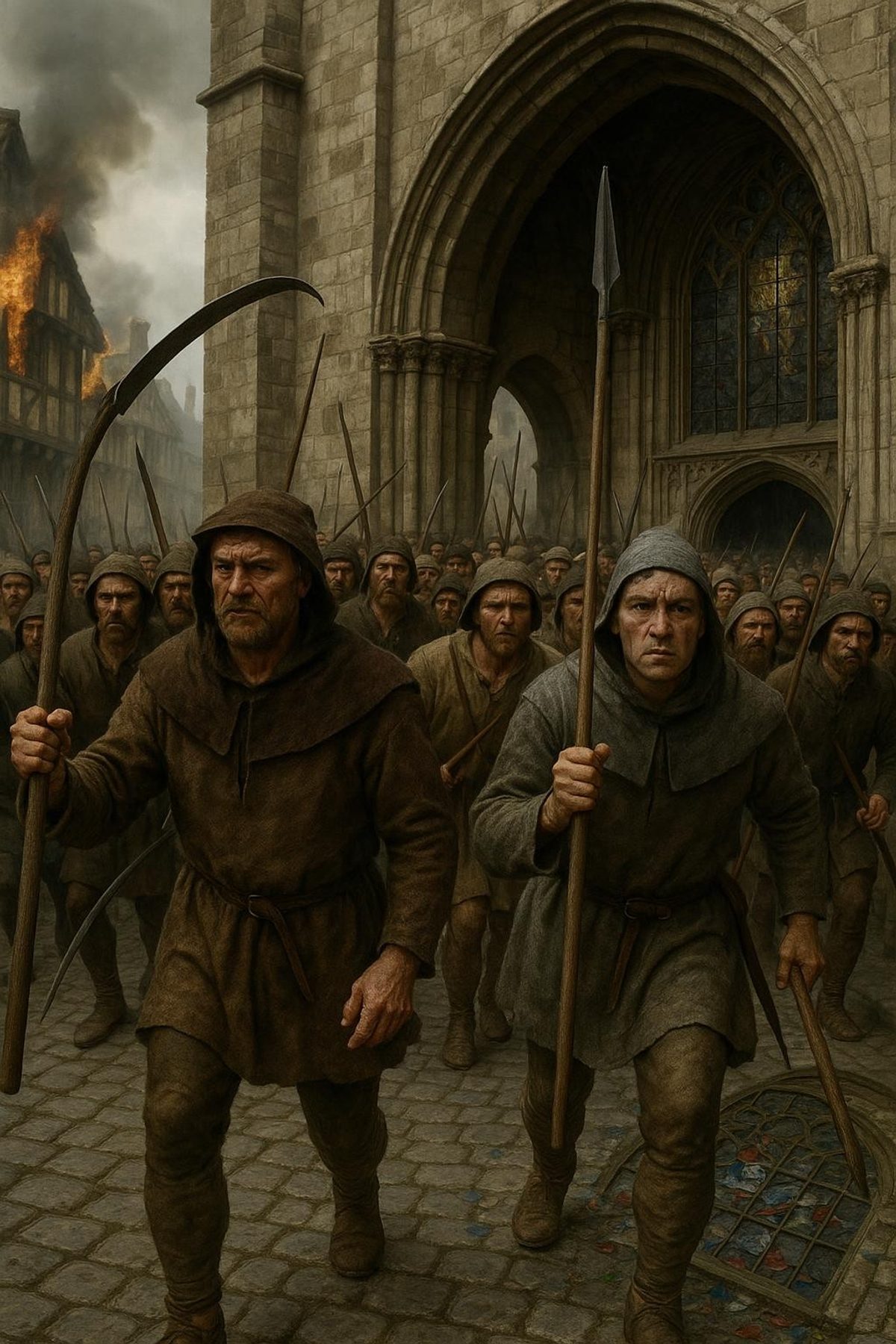
The stained glass erupted with a crash, shards scattering across the flagstones in a dazzling cacophony. Beneath the soaring arches of London's cathedral, the reverberations of the destruction mingled with the growing murmur of the gathered throng. Here, in June of 1381, a crowd of once docile peasants had seized the heart of their city, wielding sticks and righteous fury. They had not come for worship nor for solace; they had come for justice. The cathedral, a place of divine light and liturgy, lay open to the turbulent skies above, its windows no longer depicting the saints but reflecting the faces of the disenchanted below.
The Flames of Rebellion
In the early summer of 1381, England roiled with tension and resentment. The peasants, weary of oppressive taxes imposed to fund the king’s campaigns across the Channel, found themselves driven to desperation. When rumors rippled through the countryside of a new, burdensome levy, it was the spark needed to ignite rebellion. The revolt began in Essex and spread like wildfire, consuming villages and towns as it surged toward the capital.
When the tide of rebels reached London, they were far more than a rabble. Tens of thousands strong, they carried with them not only weapons but a manifesto of change. They demanded freedoms, fair treatment, and the end of serfdom that kept them shackled to feudal lords. It wasn't a faceless mob but an uprising with intent and anger directed at those who had long wielded power over them.
As the throng poured into the city, London became the stage for scenes of chaos and symbolic destruction. They targeted the opulent Savoy Palace, setting it ablaze until its lavish appointments turned to ash. But perhaps nothing epitomized the depths of their discontent more than the attack on their spiritual homeland — the cathedral. For the peasants, each shattered pane was a blow against the clerical establishment that preached humble submission but benefited lavishly from their toil. The destruction of church property was deemed sacrilegious by many, yet for the rebels, it was a profound act of defiance against the hypocrisy within the sacred walls.
Read next: The Day a Monk Stepped Forward and Shamed a King
In Pursuit of the Archbishop
As the stained glass was laid low, another drama unfolded within the precious relic walls of the cathedral. The rebels hunted for Simon Sudbury, the Archbishop of Canterbury, a key target of their ire. Sudbury, an ally to the King and one of the architects of the detested poll tax, was marked not just as an enemy but as a symbol of ecclesiastical corruption. He had advised the imposition of the tax that many believed was designed to break their backs.
The mob’s fervor drove them through the ecclesiastical compounds in a relentless search. As they surged through the cloisters and corridors, whispers of agitation mingled with shouts of anger. The church, meant to be a place of sanctuary, had become a battlefield with nowhere for trepid clerics to hide from the purging wrath.
Ultimately, Sudbury sought refuge in the Tower of London, praying perhaps that its ancient stones could shield him from the storm. The rebels finally captured him, dragging him through the streets to Tower Hill. There, under the gaze of a swelling crowd, they meted out their measure of justice upon him, reinforcing the notion that no man — not even one of God's anointed — stood above their demands. His execution became a symbol both feared and revered, echoing throughout the city and adding to the foreboding legend of that tumultuous June.
Read next: The Day a Dying Earl Stood Up and Freed a Boy King
A Reclaimed Order
In the immediate aftermath, as the uprising lost momentum and the haphazard quest for reform subsided, tales of smashed windows and hunts through sacred halls lingered in the air, retold around flickering fires and in shadowed corners. King Richard II, although only fourteen at the time, later quelled the revolt with promises that were mostly never kept, reasserting the crown's dominance.
While peace returned to London, the shattered windows of the cathedral served as a stark reminder of the peasants’ brief, formidable stand. Left unrepaired for some time, the broken glass opened the interior to London's less than pious climate, the winds and the rains, as though reflecting how the events had bared the raw wounds of English society to its own eyes. It was a visible testament to that moment when the humblest of men shook the foundations of power, leaving the world both shocked and unsettled.
In the context of history, the events of June 1381 in London resonate as a dramatic legend of defiance — a fearless challenge to authority woven through acts of destruction and retribution. The rebels may have failed in permanently altering their destinies, but their impact was undeniable, marking a shift in the perception of the peoples' power. Today, the story of the smashed windows implores us to remember how even the most inviolable sanctuaries may hold the echoes of injustice and the voices clamoring for change.