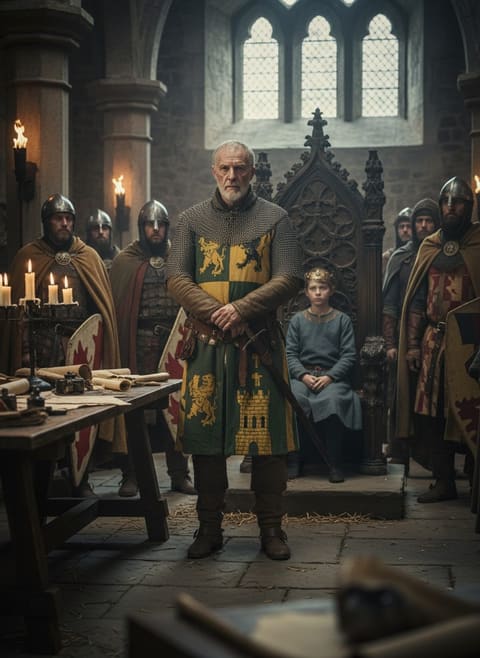
At seventy years old, William Marshal was no ordinary knight bending under the weight of time. He stood resolute, preparing to shield a kingdom on the brink of collapse. His was a lifetime of loyalty, about to culminate in one final charge—a testament to knightly valor that defied both age and expectation.
The Boy Who Would Be King
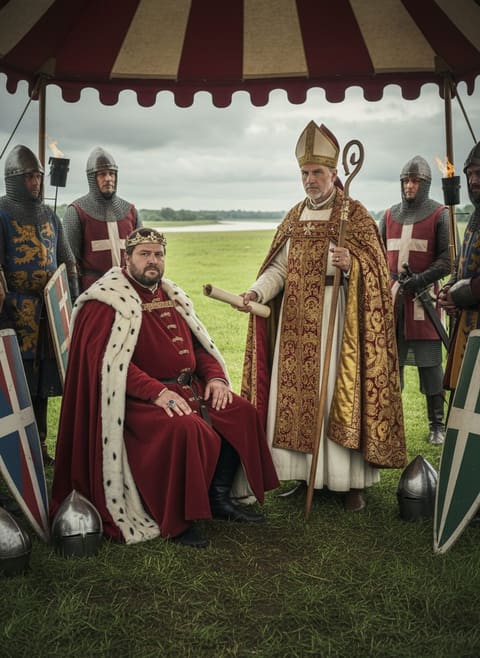
In the tumultuous year of 1217, England's crown was perched precariously on the head of a young boy, Henry III. Barely nine years old, Henry had inherited a kingdom riddled with internal discord and threatened by foreign incursion. Reeling from the aftermath of King John’s turbulent reign and the signing of the Magna Carta, the kingdom lay fractured. French prince Louis, buoyed by a coalition of English rebel barons who saw opportunity in discord, sought to seize the throne. England's sovereignty teetered on the precipice. Yet in this chaos, one man's loyalty and strategic acumen would make all the difference.
In stark contrast to the fledgling ruler he served, William Marshal was the embodiment of seasoned nobility. Previously revered as the greatest knight in Christendom, his prowess in tournaments was legendary, earning him prestige throughout the courts of Europe. His decision to support the young king was not born of naiveté or nostalgia, but of a strategic understanding of loyalty and justice. Marshal believed in securing the legitimate line, even if that security was embodied by a boy too young to wield a sword himself.
Marshal's Gambit
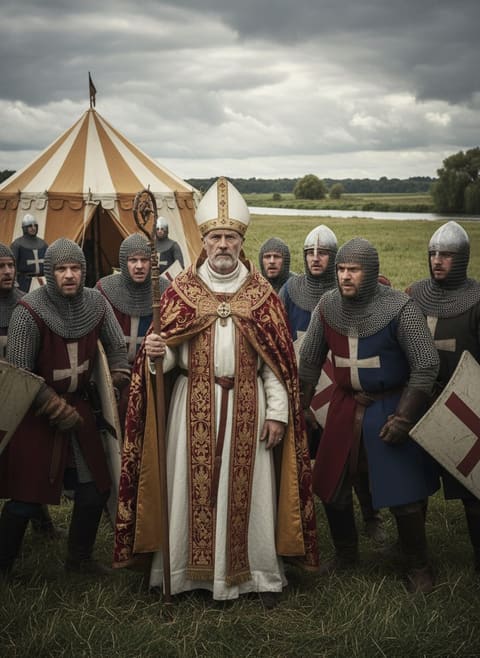
In the spring of 1217, Louis and his forces advanced, confident in their intended dominance. With London in their sights, many believed it was only a matter of time before French rule would be imposed. Against this backdrop, Marshal convened with his supporters at Gloucester. There, beneath the towered shadows, he unfurled a daring strategy — a show of force at the Battle of Lincoln. His plan was perilously simple: marshal the loyalist forces, engage the rebels before they could consolidate further strength, and deliver a decisive blow.
Read next: The Norman Who Rewrote England's Language in a Single Decree
The battle itself unfolded as a vivid tableau of medieval warfare. Marshal, draped in mail that shimmered even beneath grey skies, rallied aging knights and inexperienced men alike with the indomitable spirit of a seasoned warrior. It was William's respected reputation and unyielding resolve that tipped the balance. His speech, impassioned with the promise of victory, renewed hope among the disheartened.
Call of the Riders
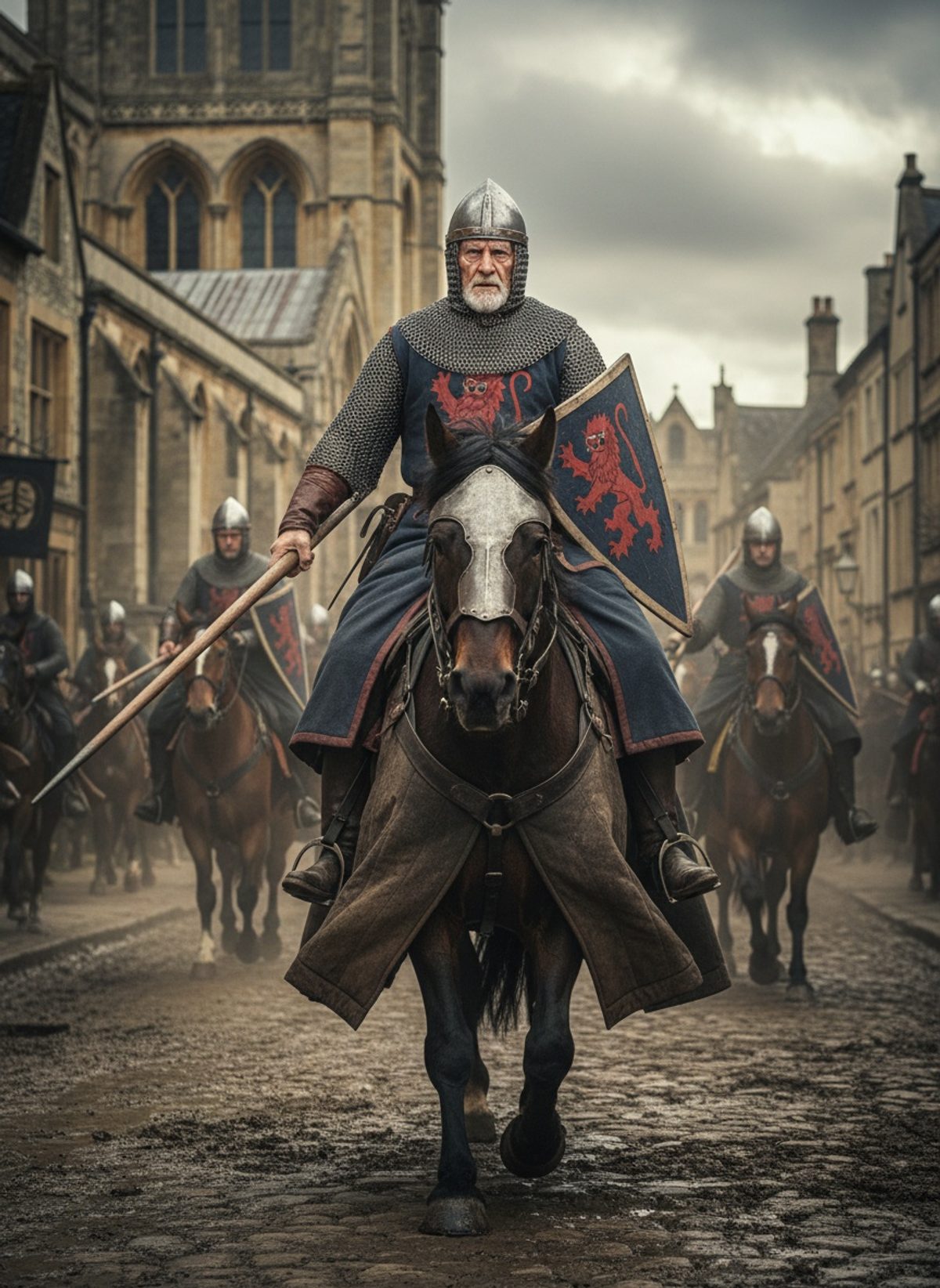
On the morning of May 20, William Marshal's voice, grizzled yet electrifying, echoed across the fields of Lincoln. Rallying his men with the famed call of “God and St. George!”, he led a mounted charge that would be spoken of in hushed tones centuries hence. Despite the overwhelming odds and his own frailty, he charged at the enemy with a warrior's deftness, his lance but an extension of his will.
Read next: The Day a Monk Stepped Forward and Shamed a King
The clash of steel on steel resounded as horses reared and men met their fates, dust and blood mingling in the air. Amidst the chaos, it was Marshal's leadership that steered the tide. His focus, his command, and his fearlessness inspired the loyalist forces, serving as the cornerstone of their eventual triumph. Following hours of fierce combat, it was clear — the Battle of Lincoln belonged to the Crown, and William Marshal's legacy was cemented anew.
A Kingdom Preserved Through Fealty
Though the skirmishes were not yet resolved, the triumph at Lincoln was pivotal. It sent ripples across the divided territories, weakening the resolve of Louis's supporters and rekindling a faltering hope. Within months, the French prince recognized the waning of his campaign, eventually leading to his capitulation. Young Henry III remained upon the English throne, his reign secured, his rule legitimized not by birthright alone but by the blood and bravery of a knight who refused to yield to time.
This tale from the shadows of history reminds us that courage is not confined to the young nor valor to the strong. The sands of 1217 carried with them the whisper of an old knight's stirring fortitude. In every charge, in every shout of the name of St. George, in every stroke of Marshal's sword, there lay a profound truth — that duty and loyalty are ageless, transcending the passage of years. As we reflect upon this forgotten victory, we see not just a battle won, but a legacy of integrity that continues to resonate, a forgotten lesson now reclaimed by history's pen.