He was not born into rebellion. Yet John Day became the printer who defied a queen. In a time when dissent seemed unthinkable, his was a voice that refused silence.
The Silent City
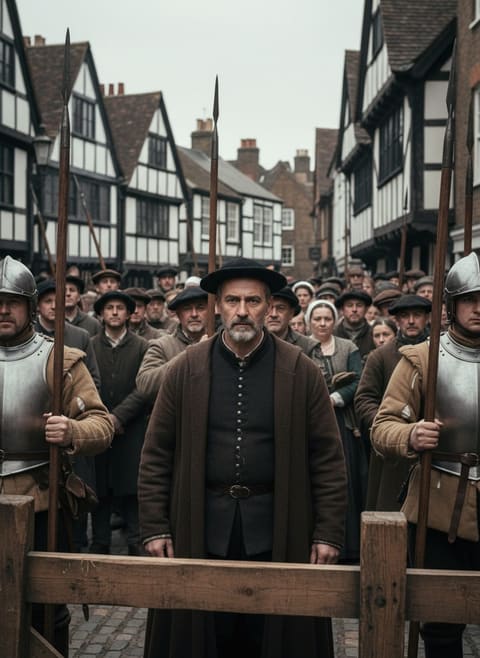
Picture London in 1553, a city cloaked in tension and fear, its streets quieter than the beating heart of a kingdom holding its breath. Queen Mary had ascended the throne with the resolute intent of reversing her nation’s course, steering it away from Protestant reformations back toward the Catholic faith. The once-buzzing centres of Protestant thought where books leapt off printing presses had been forced into grim silence. The very paper that bore the ideas of new religious thoughts had been stacked and stashed, the printing presses standing still, mere relics of a transforming society.
Enter John Day, a seemingly ordinary printer whose daily life must have echoed these hushed streets. To him and his Protestant colleagues, it wasn’t merely ink and paper being banned; it was their faith, their very voice. As those around him opted for safety in silence, John Day chose a path far different. As the city went mute, he clung to the sacred craft of printing, embracing the clandestine. As Protestant books disappeared from the public eye, Day’s press furiously continued to turn them out, each page a whispered defiance against the ruling Roman church.
The Hidden Press
In the dim corners of London, hidden from inquisitive eyes, John Day hid his printing press. Its location, a secret jealously guarded, became both the heart and the hope of underground Protestant England. By night, with the city enshrouded in darkness, the furtive sound of a press at work was the soundtrack of covert rebellion. These nocturnal operations were a dance with danger — every printed pamphlet a step closer to potential doom.
Read next: The Day a Tudor Chancellor Chose Death Over a Royal Lie
Among the illicit publications was a spectrum of Protestant pamphlets, each carrying messages carefully composed to inspire and inform. These works were distributed discreetly, their circulation reliant on a network as secretive and determined as Day himself. Risk lurked at every corner, yet Day’s commitment outshone his fear. Each batch of printed material was a gamble, a game of shadows played against Mary’s agents. It was a precarious existence, yet through it, Protestantism clung on, thanks to Day’s unyielding dedication.
The Walk to the Tower
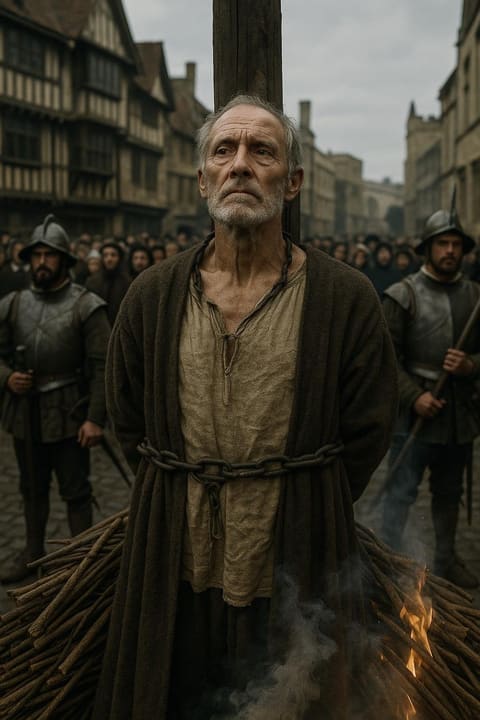
Despite the secrecy, such defiance could not go unnoticed forever. Inevitably, Day was discovered and apprehended. His capture sent ripples of dread through the Protestant underground. Marching towards the foreboding Tower of London, Day faced not just the threat of imprisonment but the very possibility of death. Yet the walk that should have marked his end became, surprisingly, another chapter in his story.
It was here, under the towering, austere gaze of one of the most infamous prisons in the land, that fortune twisted fate in Day’s favor. Perhaps it was a due to lack of evidence, or maybe it was the intercession of sympathetic allies. The specifics remain lost to history, but what is certain is that John Day did not remain within those stone walls for long. Against all odds, he walked out of the Tower, free to tread the streets of London once more.
Read next: The Day a Tudor Bishop Refused to Crown a Usurper
Continuing the Fight
One might expect that incarceration would quell his rebellious soul, that free from his chains, John Day would retreat into the safety of silence. But retreat was not in his nature. Instead, he returned to his printer's threadbare shop and began anew. The resonance of his presses started again; his expression of defiance undiminished, his determination only stronger.
Day resumed his work with renewed vigor, his stakes a reminder of both peril and possibility. As news of his audacity and survival spread, John Day's solitary fight morphed into an icon of Protestant resilience. His presses continued to hum, now not just with pamphlets but with the loud alacrity of an ideologue, pounding a message enduring — that belief shapes across boundaries, royal edicts, and even death.
John Day’s legacy serves as a nuanced fragment of history. His courage ignites an understanding more profound than merely an act of defiance. It tells of a core persistence within humanity, the will to express and maintain one's beliefs despite immense opposition. A forgotten footnote in many textbooks, his hidden presses helped pen the foundations of a resilient Protestant thought, echoing through centuries. In analyzing him, we remember that amid tyranny and attempted silencing, the slender yet indestructible tether of belief weaves silent revolutions, reverberating softly yet consequentially through time.