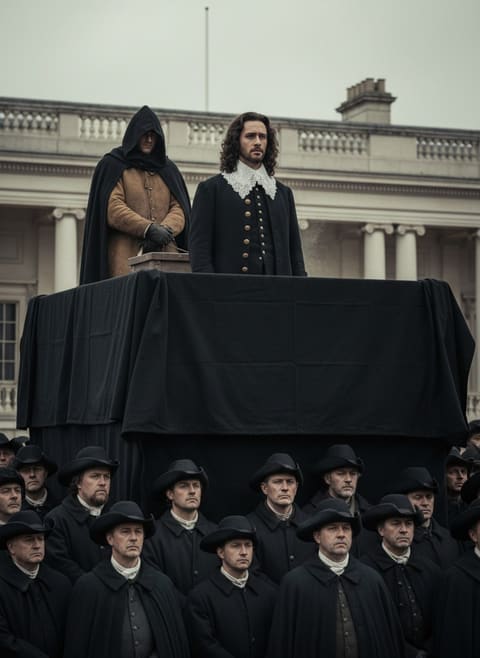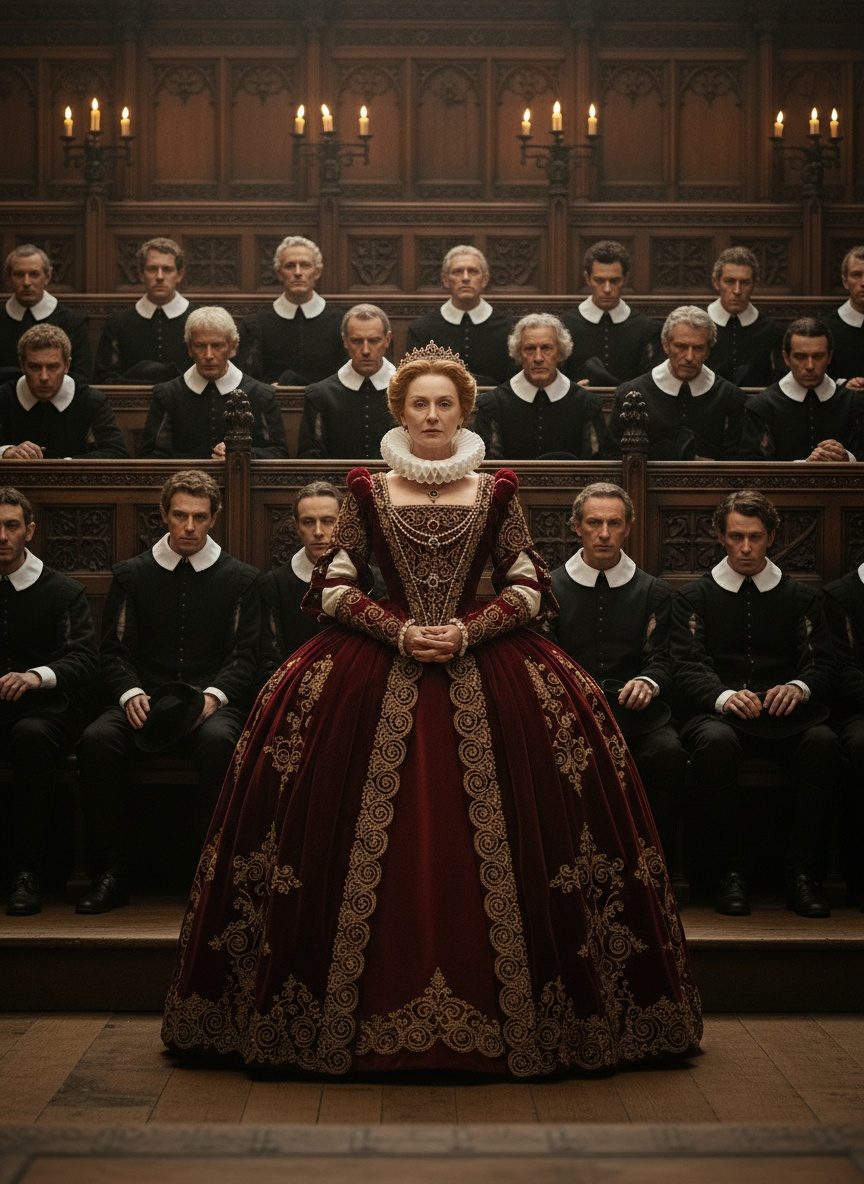
The late autumn light sliced through the ancient windows of the House of Commons, casting elongated shadows upon the faces of its members. Outside, the November air carried a biting chill, a harbinger of the harsh winter to come. The hall was filled with the murmur of anxious conversation, a symphony of discontent that echoed off the stone walls. It was amidst this charged atmosphere, in 1601, that England's Queen, Elizabeth I, walked into the chamber alone, her presence commanding instant silence. Her parliament, once loyal and now seething with dissent, awaited her words. Today, the formidable balance of royal power and parliamentary influence hung precariously in the balance.
At sixty-eight, Elizabeth was no longer the young queen who had come to the throne with youthful vigor and a promise of a golden age. Her reign was now threatened by a crisis more political than military, yet every bit as dangerous. The issue at hand was the royal monopolies, a policy that had begun as a financial convenience but grown into a source of widespread grievance. By granting exclusive rights to favored courtiers and businesses, these monopolies stifled competition and burdened the common people. The House of Commons was united in its indignation, ready to challenge the very authority of the crown.
Yet, in that moment, Elizabeth's mere presence altered the atmosphere. The tension palpable, the air seemed to hum with anticipation as she drew breath to speak. Unlike her previous appearances, she bore no written notes, relying instead on the sharpness of her mind and the force of her words. Her ability to engage and inspire was legendary; she was, after all, the monarch who had stood defiant against the Spanish Armada and emerged victorious. But this was different. Here, she faced her own parliament's ire, a domestic front where the battle lines were drawn not with swords, but words.
As the queen began to speak, her voice carried a blend of regal authority and personal sincerity. She acknowledged the grievances of the parliament, never diminishing their concerns, but framing them within the context of her deep-seated care for her subjects. Elizabeth's astuteness lay in her ability to intertwine her authority with a profound empathy, turning a moment of potential confrontation into one of reconciliation. With each sentence, she wove a narrative that emphasized her duty to her people and her unwavering commitment to their welfare.
Read next: The Day a Tudor Chancellor Chose Death Over a Royal Lie
It was a masterclass in political maneuvering. Elizabeth addressed their anger by promising reforms and expressed a willingness to reconsider the controversial monopolies. Her words were honeyed with humility, yet her underlying message was clear — she alone remained England’s rightful and able ruler. Here was a queen who understood that power was not just in commanding armies or signing decrees; it was in understanding and when necessary, bending.
As she continued, Elizabeth's tone shifted from one of persuasion to a poignant reflection of her own reign. She spoke of the love she had for her country, a love that had defined her rule since she had ascended the throne. Her speech, later remembered as the "Golden Speech," was not just a political address; it was a reminder of a monarch who saw herself as a servant to her people, not just a sovereign. Her ability to humanize her role resonated deeply with those present, bridging a chasm that had threatened to divide them irreparably.
When Elizabeth finished, the room remained silent, each man aware that he had witnessed not just a speech, but a moment of historical significance. The force of Elizabeth’s spoken word had quelled a rebellion that could have erupted into outright defiance. Her willingness to confront the issues — and her parliament — in person, without the buffer of ministers, reinforced the respect her subjects held for her. Even as age crept upon her, Elizabeth’s intellect and spirit remained undiminished.
Read next: The Day a Tudor Bishop Refused to Crown a Usurper
This extraordinary episode in English history was about more than a monarch defending policy; it was about a leader reaffirming the bond between ruler and nation. The Golden Speech is remembered as Elizabeth I's eloquent assertion of mutual trust and responsibility between the crown and parliament — a defining moment that fortified the unique political landscape of Tudor England. At a time when force could easily have triumphed, words instead wielded the power to change the course of a kingdom.
As Elizabeth left the chamber that day, she carried with her not just a sense of victory, but an understanding of the complex fabric of governance she had reinforced. Her actions served as a reminder that in politics, as in life, the most potent force can often be human connection. In an era rife with power struggles and ambitions, her speech stands unmatched in its subtlety and impact.
Today, the Golden Speech remains a potent reminder of the power held by those in leadership to alter history not just through grandiose acts of war or conquest, but through moments of profound human communication. Elizabeth I's ability to address her parliament with such depth, at a point when they stood on the brink of rebellion, illustrates not just the power of oratory, but the enduring strength of empathy in governance. In this, and many other respects, the legacy of Elizabeth I continues to resonate, offering lessons on leadership that echo across the centuries.