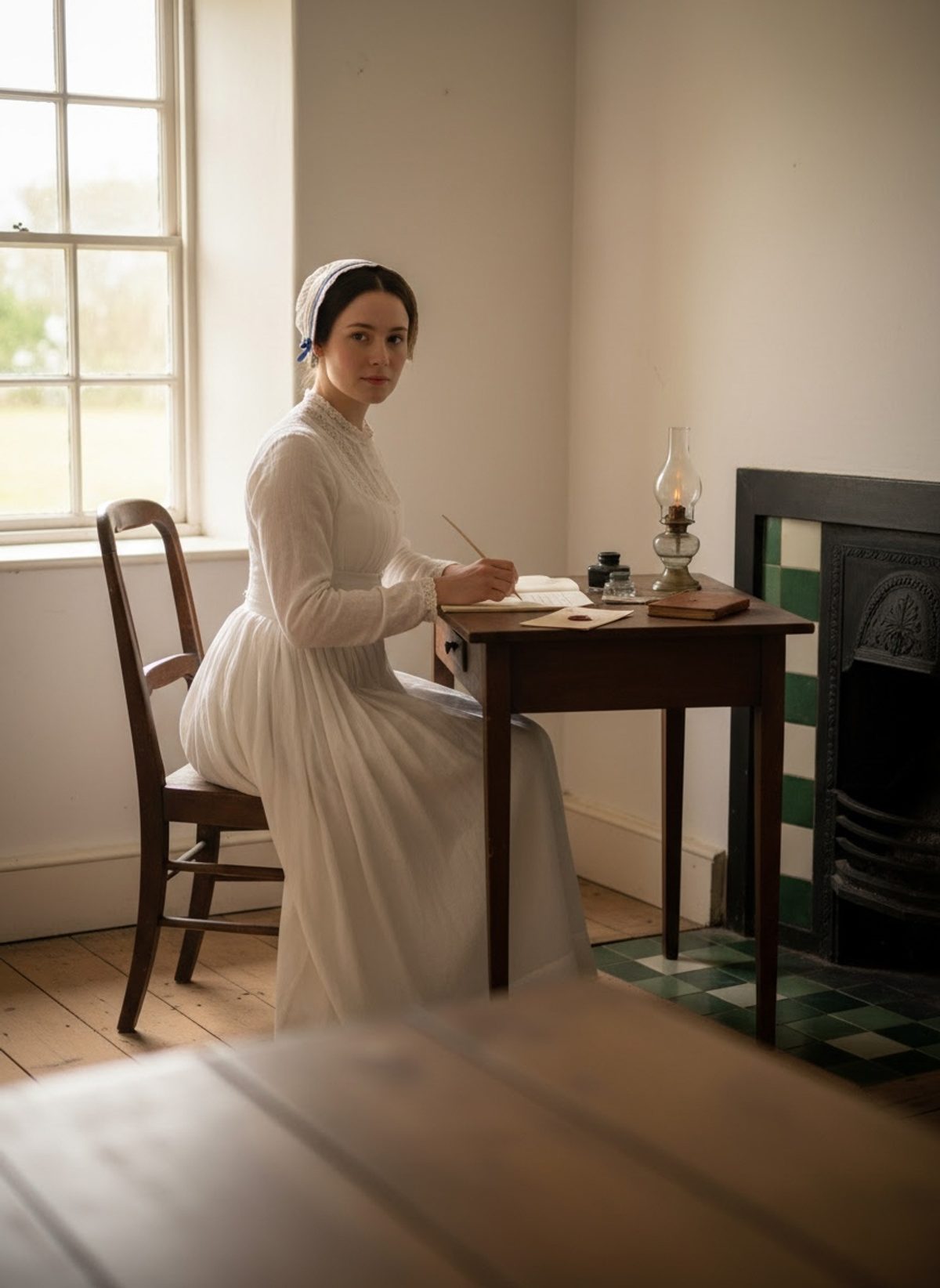
The ink splattered across the page as Jane Austen pressed her quill with frustrated abandon, ever mindful of the flickering candlelight that barely illuminated her tiny writing desk.
She paused, listening to the sounds of the Hampshire evening seeping through the open window, pinching the bridge of her nose and willing the threads of another enchanting tale to come together. The world outside seemed vast and indifferent to her endeavors, yet within her, a character as enduring as the English countryside she loved was forming—Fitzwilliam Darcy.
The Elusive Art of Anonymity
Jane Austen's world was one where the notion of a woman writer conjured visions of quiet rebellion against societal norms. Female authors were an exception rather than the rule, often veiled in anonymity to preserve delicate reputations. Austen herself was acutely aware of this dissonance.
It is no surprise that when "Pride and Prejudice" first graced the shelves in 1813, it did so without her name on the cover; she was identified simply as "the author of 'Sense and Sensibility'." This was her chosen cloak of invisibility, at once a restriction and a shield, preserving her social standing while allowing her words to unfurl freely.
Read next: The Night a Bristol Merchant Stood Up and Freed 130 Slaves
Austen's decision to sell the copyright for the novel for £110—about £9,000 today—was both a pragmatic move and a relinquishment of future earnings. The deal must have seemed at the time more of a chance than a payout to a writer whose previous work had met with modest acclaim but little monetary reward. Yet, the characters she birthed—molded with such deftness and humanity—were about to step beyond the confines of regency sprigs and enter the annals of literary permanence.
A Legacy Made of Words
It is remarkable to consider how Jane Austen did not live to witness the full breadth of her legacy. She died in 1817, a mere four years after "Pride and Prejudice" appeared, leaving a world that scarcely noticed her departure.
With no major obituaries nor public tributes, her passing was as understated as her life of literary creation had been. The now-iconic Mr. Darcy was only beginning to capture the imaginations of readers whose hearts and minds expanded upon each interaction between him and the indomitable Elizabeth Bennet.
What Austen left behind was not a wide array of possessions or accolades but a collection of novels that, unbeknownst to her, would endure far beyond the constraints of her earthly existence. Without newspapers announcing her death and no grand monument to mark her resting place, Austen's immortality resides solely in print—a paradoxical anonymity reflecting the nature of her time yet transcending it through the art of story that she so masterfully spun.
Read next: The Day a Foundling Hospital Changed What Britain Owed Its Children
The Afterglow of an Unseen Star
In the years following Jane Austen's departure from this world, "Pride and Prejudice" continued to thrive, propelled not by the marketing machine of its era but by the pure force of narrative gravitas. Readers were drawn to Darcy, Elizabeth, and the immersive social landscapes they inhabited. As the industrial age pushed open a new chapter in human achievement, the quiet rebellion and joy in Austen's prose flourished amidst waves of change, and her characters grew ever more iconic.
Charles Darwin’s evolutionary narrative of nature, the technological leaps of the coming century, and even global conflicts would come and go. Yet the heart-stopping moment when Darcy first emerges from the mists along the lanes of English manor estates remains perpetually pivotal, a testament to Austen's subtle genius. Her works demonstrated not just an unparalleled grasp of human emotions but an intricate understanding of societal structures that resonate across culture, time, and gender.
The woman who conjured a literary figure of Darcy's stature and married him to the world never received in life the fame her characters achieved. Yet perhaps it was this very absence of recognition in her era that allowed Austen to observe purely, free from the constraints of fame, the vicissitudes of the human condition.
Her anonymity in the Regency era provided her the space to weave stories unclouded by external expectations or pressures. Contemplating her life invites a reflection on the quiet power that anonymity might hold, a power that can birth art enduring as Darcy himself.