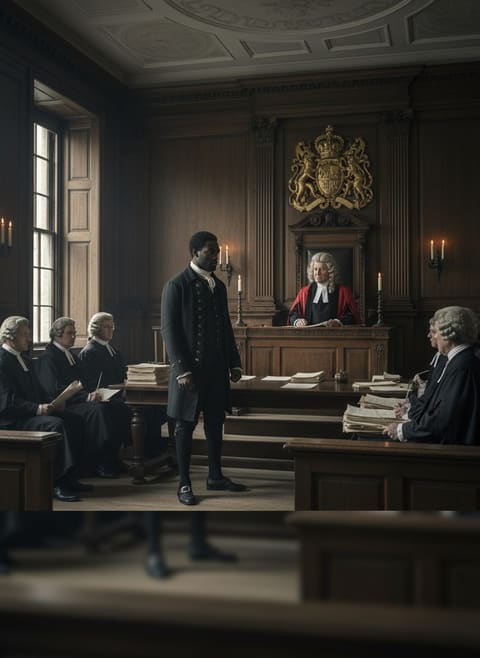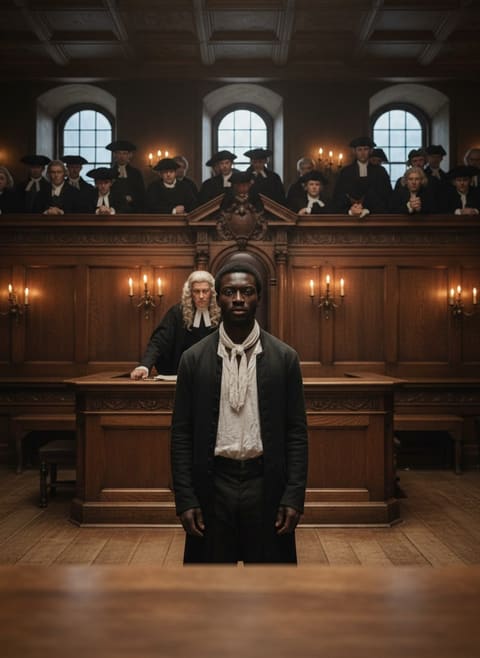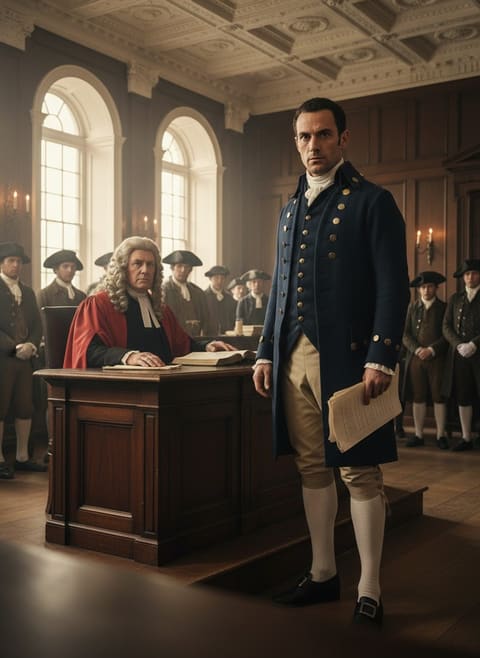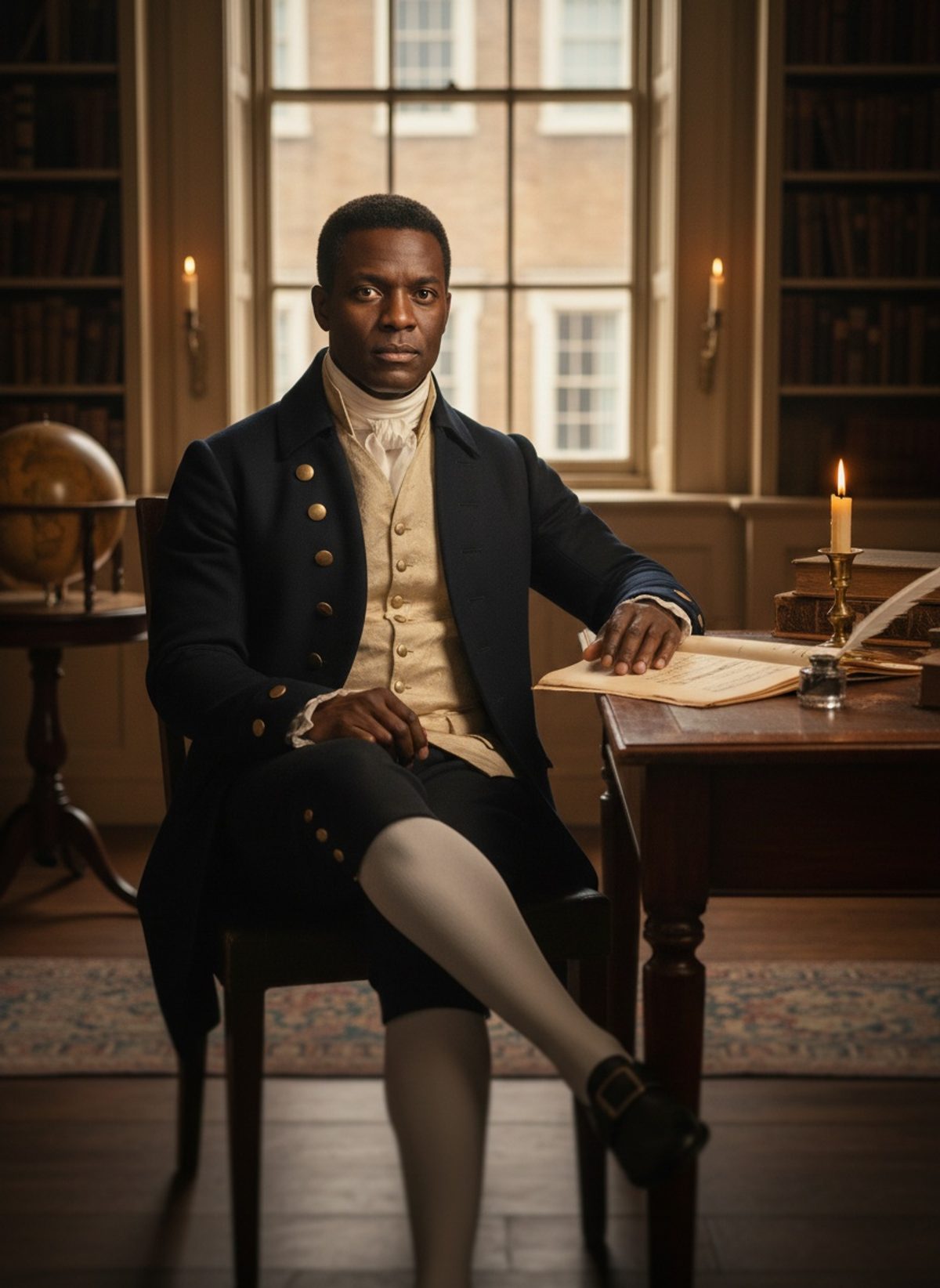
May 22, 1807. The morning sun painted Westminster in a golden hue.
Echoes of Chains: The World of Olaudah Equiano
In the bustling heart of Georgian London, lined with cobbled streets and baroque façades, the air was tinged with anticipation. Parliament was abuzz; lawmakers, statesmen, and scholars converged for what would become a monumental day in Britain's legislative history. Just months before, a crucial bill passed, dictating the end of the transatlantic slave trade—a watershed moment fueled, in no small part, by the indelible tale penned by a man who had once known the searing bite of shackles. Though Olaudah Equiano had departed this world in 1797, the resonance of his words had ascended beyond the dim confines of his time. They continued to reverberate through parlor readings, political assemblies, and the collective consciousness of a nation inching towards enlightenment.
Equiano’s memoir, a riveting and harrowing narrative, had proliferated like wildfire across the drawing rooms and parlors of Britain. The journey of the young boy, ripped from the verdant lands of modern-day Nigeria, trafficked across the merciless Atlantic, and sold into a life of servitude, pierced through the polite veneers of Georgian society. It was more than a memoir; it was an unassailable arrow of truth. As readers turned its pages, they uncovered not just a tale of survival, but a robust critique of the paradoxical values of their civilization—one teetering between enlightenment and oppression.
The compelling story transformed Equiano from a mere historical casualty to a posthumous advocate, rallying against the same system that once claimed ownership over his existence. As he recounted his voyage from enslavement to freedom, learning to read and eventually purchasing his own liberty, Equiano’s narrative became the beating heart of the abolitionist movement. His eloquence shattered stereotypes of African inferiority, challenging the intellectual pillars of an empire still entrenched in the grim enterprise of human trade.
Read next: The Day a Freed Slave Stood Before the King's Council
Ink and Intellect: The Weapon of Words
Equiano’s monumental work, *The Interesting Narrative of the Life of Olaudah Equiano*, was more than just his autobiography; it was a manifest of resilience and enlightenment. Published in 1789, with multiple editions during his lifetime, it captured the imagination of a broad audience, transcending its era as it climbed the echelons of influence. What was it about his words that gripped the minds thirsting for justice? It was the stark juxtaposition of his early trials against his cultivated eloquence and precise depictions of the iniquities endemic to slavery. These pages reframed the discourse—no longer was it possible for the learned gentlemen of Britain to protest ignorance.
Equiano’s narrative embodied empirical evidence, shedding light on the insidious nature of the trade through both his own experiences and those of countless others. His unvarnished accounts spoke directly to powerful figures, such as William Wilberforce and Thomas Clarkson, fortified by testimonies they could no longer dismiss. Equiano’s descriptions of the Middle Passage were haunting, casting a shadow that lingered long enough to influence legislation. Thus, when lawmen gathered to dismantle the trade brick by brick, it was Equiano’s imagery that informed their conscience, his truth indelibly stamped on the ink of the bill that would shutter the markets of human despair.
His enduring legacy was marked by an unyielding belief in the potency of education and communication as tools for social change. No longer cloaked by the indifference of distance, the British public was confronted with the stark humanity of those they once dismissed as others. Equiano’s words were torches in the fog, lighting a path toward a more equitable society. Yet, the obstacles were far from vanquished, for while the trade ended, the fight for full abolition of slavery was still arduous and ongoing.
Read next: The Day a Freed Slave Stood in Court and Named His Price
Lessons and Legacies: A Catalyst for Change
On the day Britain voted to abandon the trades of human misery, Equiano’s spirit loomed large. Some might say May 22, 1807, was just another ascent of the British legislative procedure—yet it was history in living form, propelled by the profound echoes of a freedom fighter whose courage defied the temporal confines of his life. The reverberations of Equiano's narrative continued to shape the dialogue around human rights, both in his time and beyond.
London, with its grandeur of empire, was forever altered by the testimony of one who had traversed its deepest contradictions. Equiano’s virtuosic storytelling inspired a multitude, ensuring that his legacy did not perish with the cessation of ink on paper. It was a narrative that demanded an acknowledgment of shared humanity—a call to the greater moral rectitude of a nation grappling with an empire's contradictory morals.
The struggle for equality and justice—a testament to Equiano’s bravery—remains pertinent. His words are now inscribed not only in books but also in the collective conscience that yearns for freedom, justice, and reform. In immortalizing his story, Equiano imparted an inheritance of action, imploring future generations to recognize and rectify the inequalities that abound. This single freed slave, through the quill and courage, enshrined a message that echoes through Britain's hallowed halls, beckoning steadfast vigilance and prompting a timeless whisper across ages: change is the progeny of courage and truth.