He was the son of a minor Irish noble, raised amidst the rolling fields and damp skies of his homeland. Arthur Wellesley, later to be known as the Duke of Wellington, was not the product of privilege and prestige that many assume; instead, he built his legacy on tenacity and unyielding foresight.
As the brutal Napoleonic Wars waged across Europe, 1810 brought about one of its most strategical strokes, not on the scorched fields of battle but in the hills and valleys of Portugal. Wellington, in a move akin to a master chess player anticipating his opponent's every move, orchestrated a defense that was as invisible as it was impregnable. The French Marshal André Masséna, with 65,000 seasoned soldiers at his command, was marching confidently through Portugal, eyes fixed on capturing Lisbon and striking a decisive blow to the British-led resistance. Yet, as his columns pressed onwards, they remained blissfully unaware of the trap that awaited them—a labyrinth of fortifications that Wellington had been crafting in secret.
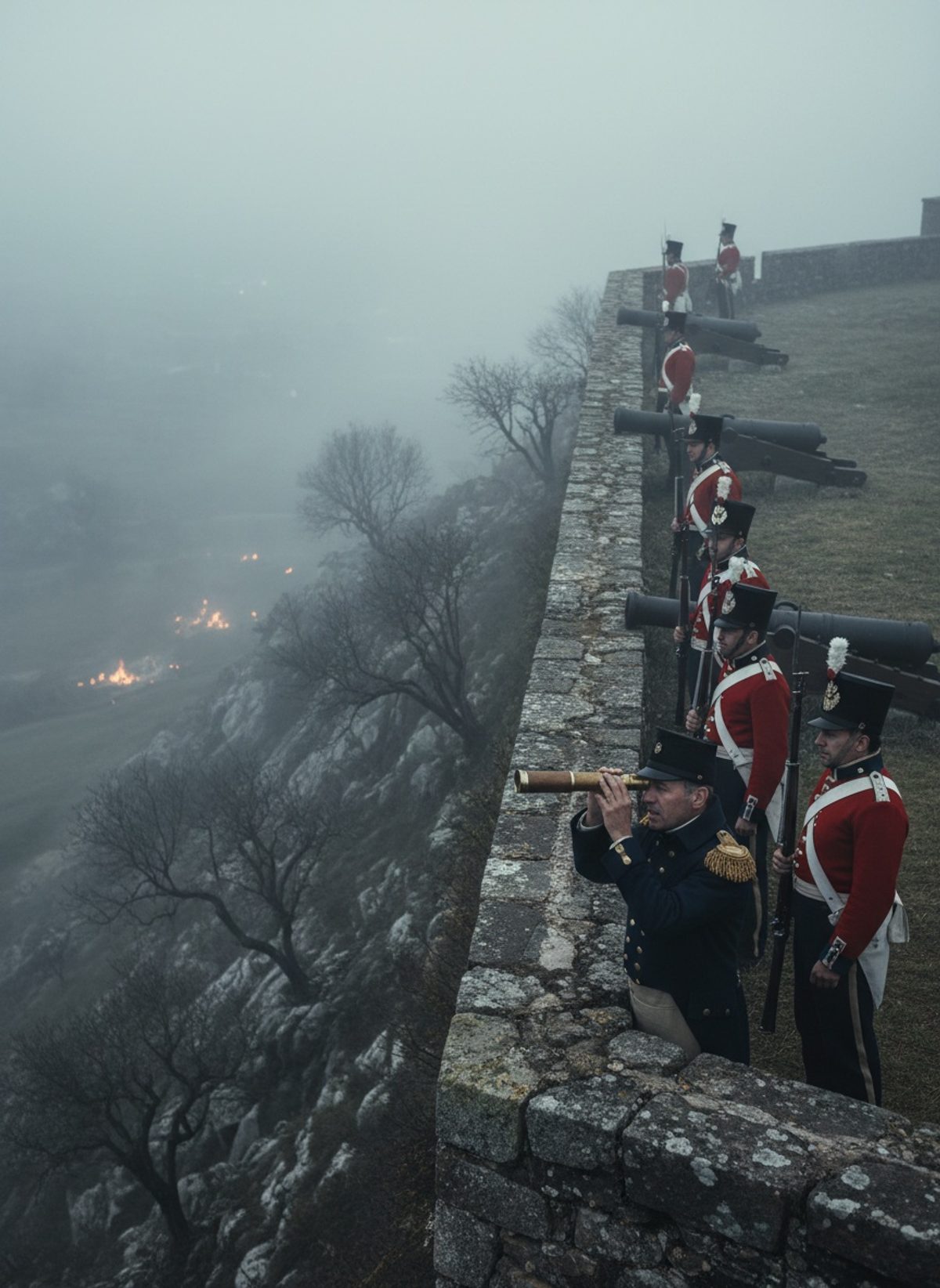
Over thirteen months, Wellington masterminded the construction of 152 forts along the Portuguese landscape, their presence—and indeed purpose—masked with a subtlety so profound that not a single whisper reached French ears. The painstaking labor of creating thirty miles of fortified ridges remained hidden, as inconspicuous as the quiet crescendo of a gathering storm. These defenses, known collectively as the Lines of Torres Vedras, were a feat of military engineering and strategic genius, blending seamlessly into the contours of the land. Their design wasn't merely about repelling a siege but exhausting the invaders, leading them to a dead end with nowhere to turn and nothing to subsist on.
Wellington's foresight bore fruit as the French troops, initially buoyed by their swift advance, found themselves stalled and beleaguered. As autumn of 1810 deepened, Masséna's army found their path to Lisbon blocked by this insurmountable line. The invincible was rendered impotent by an army they could not see. Masséna's scouts, normally adept at ferreting out intelligence, were blindsided by the simplicity of an absence. There was no rallying call to arms, no clash of sabers or drumming of cannon; just the oppressive silence of an unanticipated defense. However, the real battle was not to be fought with muskets and bayonets, but with the relentless march of hunger and the bone-chilling grasp of a harsh winter.
The months that followed were a slow and agonizing dismantling of the French invaders. The discipline that carried Napoleon's forces so far began to crumble before their very eyes as hunger gnawed at their resolve. Deprived of supplies, their usual foraging tactics rendered futile by the systematic stripping of resources in Wellington's withdrawal, they faced the unyielding reality of desperation. Food was scarce; even the hardiest forager could not conjure sustenance from barren land. The line between resilience and futility began to blur, and morale plummeted. Starvation is a ruthless adversary, far less forgiving than even the bravest of foes.
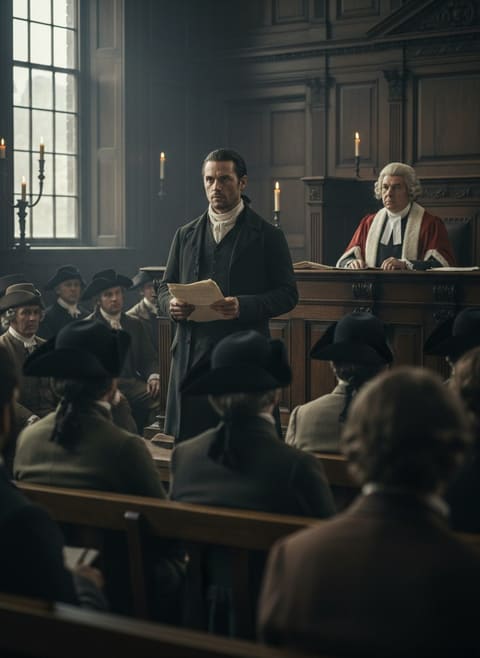
Read next: The Day a Freed Slave Stood in Court and Silenced England
The situation worsened as the winter took relentless hold, leeching warmth from the land and sap from spirits. The frigid landscape, once a springboard for conquest, morphed into a brutal adversary, wiping away more than the will to fight. And still, Wellington waited, like a shepherd with no need to drive his sheep; the landscape did it for him. When Masséna finally withdrew in early 1811, his forces were a shadow of their former selves. The grand army of 65,000 soldiers limped back with losses staggering in both scale and nature, leaving behind 25,000 of its number—testaments to the effectiveness of absence and attrition over confrontation.
The aftermath left rivers of ink to flow in diaries, letters, and historical accounts, frequently focusing on the seemingly insurmountable prowess of the British army. Yet, the real lesson lies not in the laurels of battle, but in the strategy unseen, the art of tactical warfare that thrives in the shadows. Wellington understood something fundamental: that victory need not always be claimed with a clash of swords. Sometimes, it emerges quietly, purposefully carved from the patient mold of strategy embraced by silence.
This episode serves as more than just a tale of tactical genius. It echoes through the annals of history as a reminder that true power lies in the mastery of the unseen and the unspoken. The triumph of Wellington's forces against apparent odds stands testament to the capacity of foresight, patience, and the utilization of the environment as a weapon in itself. In a world where loud declarations often overshadow subtlety, the Lines of Torres Vedras concealed paths of time’s greatest warlords in their complexity and simplicity alike. They remind us that often, silence is the most formidable foe of all.