He was a soldier in the British Army. He carried a German gun, which he'd never been trained to use.
The Ride into Holland
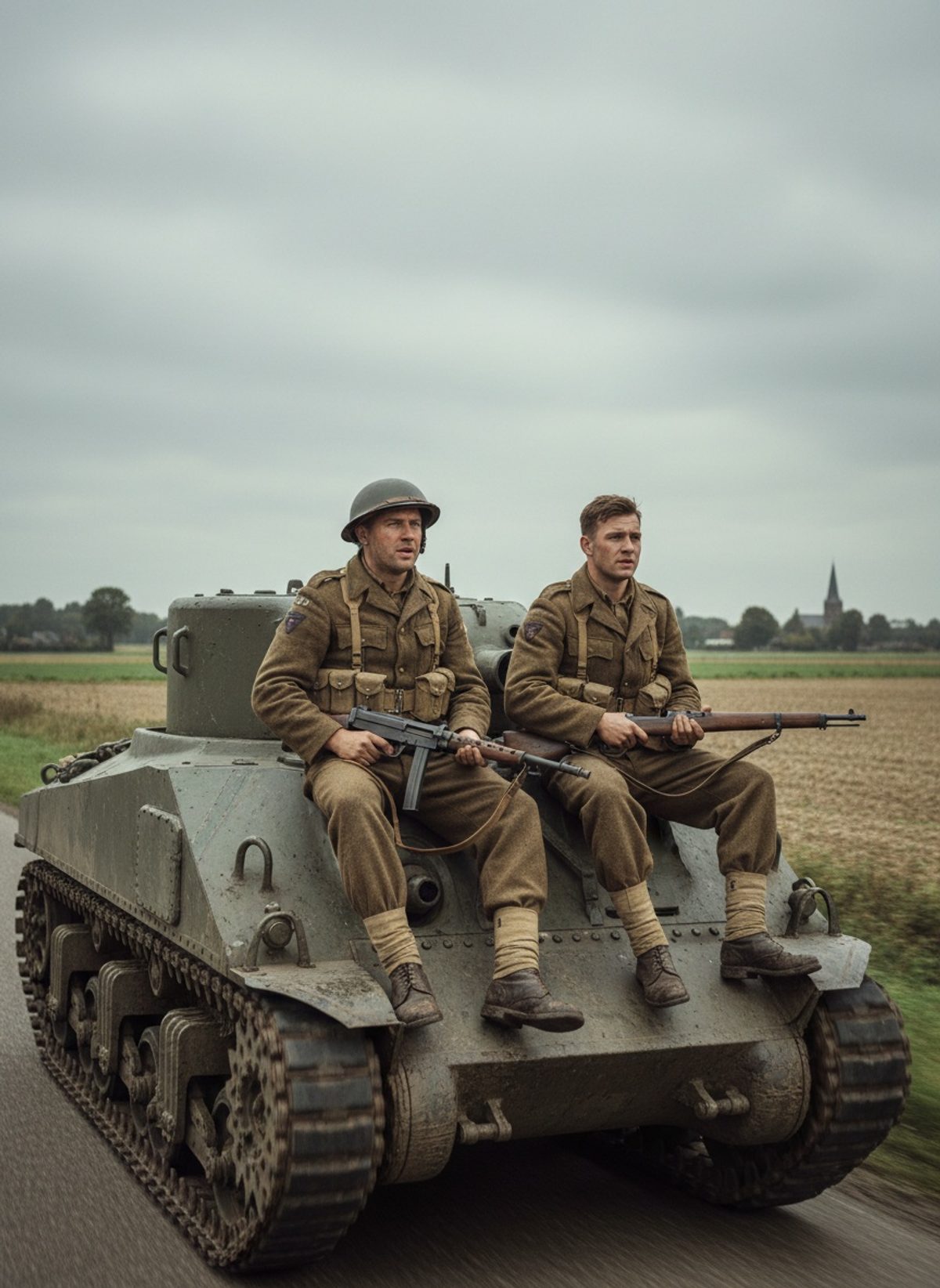
On September 24, 1944, the rolling plains of Holland were alive with the rumble of tanks and the clatter of the 8th Corps. British infantrymen clung precariously to the hulls of Sherman tanks, as the army pressed northeast, their mission clear and fraught with peril. The speed of the advance left little time for marching — armored vehicles forged the vanguard of liberation, their powerful engines cutting through the liberated Dutch countryside. Among these determined men was a British soldier, distinct from his comrades not by his uniform, but by the weapon in his hands: a captured German MP-40. This submachine gun, designed for blitzkrieg and known for its vicious efficiency, had changed hands and allegiances, now threatening the forces it once served.
The image of a British soldier, riding a Sherman and gripping an enemy weapon, is one of stark and striking contrast. It defies the black-and-white sense of order that wartime narratives often create, where allies and enemies occupy neatly defined sides. Here, in the open-air battlefield of Holland, the fluid chaos of war turns even equipment into double agents. The MP-40, slim and sinister, gleamed in the dim autumn light as its new owner rode toward unknown dangers. This daring advance wasn't just about military might — it was about using every possible resource to turn the tide of war toward victory.
From Enemy to Ally
Captured weapons had always been part of the spoils of war, but they symbolized something greater when used in combat against their creators. Perhaps it was the practical advantages — the efficiency, ease of handling, or even intimidation factor. But there was also a symbolic conquest when such tools were turned back on their makers. The MP-40, with its distinctive foldable stock and streamlined barrel, was already an object of fascination and fear. Capturing one meant more than gaining a weapon; it was a trophy of survival and dominance.
Read next: When Hasler's Marines Paddled Into Bordeaux, 1942
For the British troops, such trophies presented both a challenge and an opportunity. The MP-40 was reliable, capable of firing 500 rounds per minute with devastating effect. However, it also required different ammunition than the British standard, and its mechanics were foreign to those who had trained on Lee-Enfields and Sten guns. Yet resourceful soldiers quickly adapted, driven by necessity and survival.
A British infantryman wielding German arms also served a psychological purpose. For the advancing men of the 8th Corps, it was a subtle way of saying: "We are not only defeating you, but we are co-opting your tools, too." In the furious momentum of September 1944, every ploy, tactical decision, and psychological move contributed to unseating entrenched forces and liberating occupied lands.
The Army Film and Photographic Unit
As the events unfolded in the rugged landscapes of Holland, another group played a crucial role in documenting the vivid realities of the war. The Army Film and Photographic Unit was embedded with troops, tasked with capturing the essence of war beyond mere strategy and maps. They chronicled fear, bravery, exhaustion, and triumph as the human face of conflict amidst the scorched earth.
These wartime chroniclers captured the black-and-white frames of men and machines, creating a visual narrative that transcended the era. The image of the British Tommy with the German gun speaks to their success. It illustrates the blend of cultures and arsenals that marked the European stages of World War II, highlighting not just a military advance, but a cultural clash characterized by shared desperation and cunning evolution.
Their footage and photographs became the historical fiber, weaving local skirmishes and grand strategies into one cohesive figure. Every crack of gunfire, roll of tank tread, and captured German gun reflected both the technological evolution and the pervasive chaos of a continent embroiled in global conflict. Their work remains an indispensable archive, allowing future generations to experience the visceral impact of battles long past.
Why This Story Matters
Stories like that of the British soldier riding a Sherman with an MP-40 in hand spotlight the unpredictable realities of war. They serve to dismantle neat narratives and reveal the complexity that lies beneath. Wars are fought not only with guns and tanks but with spirit, adaptability, and the relentless human capacity to improvise when faced with adversity.
This historical vignette urges us to reflect on the fluid dynamics of conflict, where today's threat might become tomorrow's asset. It underscores the significance of understanding and adaptation in the quest for victory. Moreover, it also reminds us of the blurred lines of warfare, where identity is fluid and survival requires a blend of both tradition and innovation. Ultimately, this snapshot of war asks us to consider how we define ally, enemy, and the tools we wield in our most trying times.