The Gulf War ended in February 1991 with the rapid and decisive victory of coalition forces. But while most know the broader strokes of Desert Storm, few are familiar with the story of a single British tank that rolled into the sands of Kuwait, bearing a name synonymous with resilience: Churchill.
The Origins of a Legend
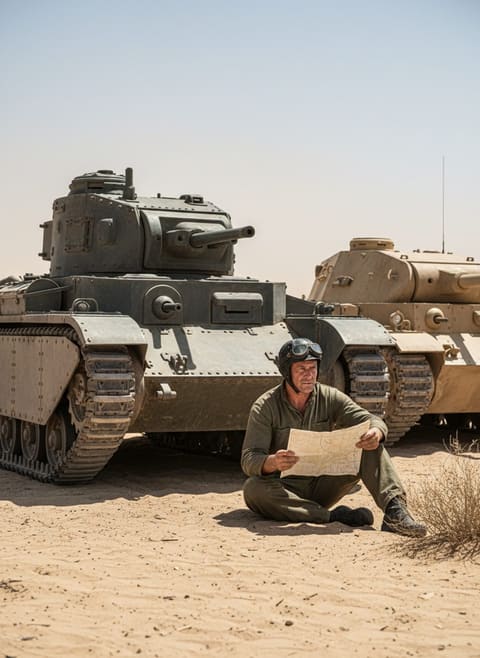
The Challenger 1 tank, known as Churchill, was not just any armored vehicle. It was helmed by Lieutenant Colonel Arthur Denaro, a distinguished officer of the Queen's Royal Irish Hussars. The regiment was steeped in history, formed from the amalgamation of the 4th Queen's Own Hussars and the 8th King's Royal Irish Hussars in 1958. Deployed across global hotspots, from Aden to Malaysia, the regiment was well-prepared for action.
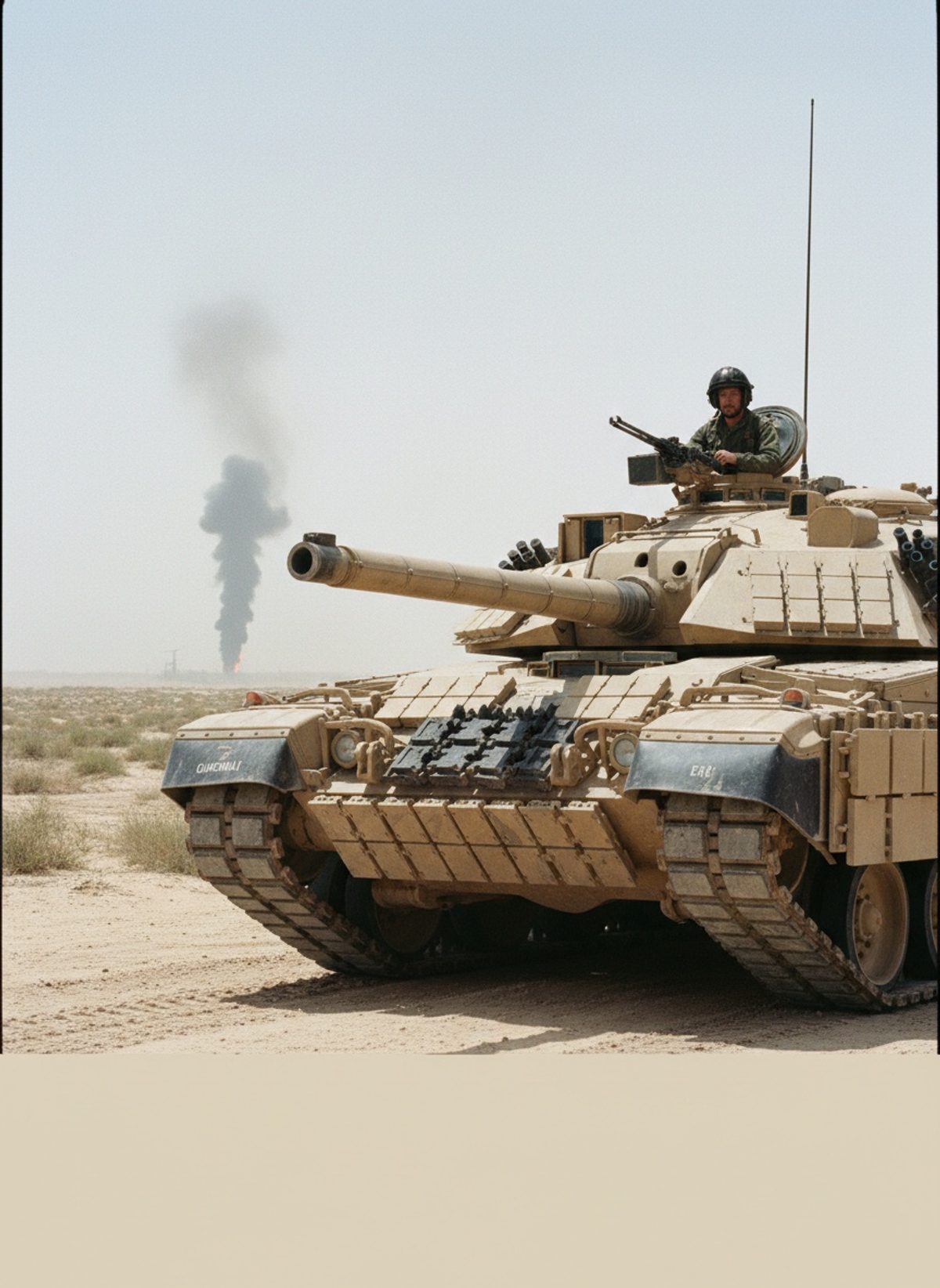
This particular Challenger 1, registration 64 KG 87, was outfitted with advanced Chobham armor and Explosive Reactive Armor (ERA) to enhance its resilience. As conflict loomed in the Gulf, the tank was meticulously outfitted in anticipation of the demanding desert warfare that awaited them. Yet, when Denaro and his regiment crossed into Kuwait, their mission transcended mere tactical considerations.
Into the Kuwaiti Theater
February 1991 was a time of tension and hope for the coalition forces engaged in the liberation of Kuwait. When the Challenger 1 named Churchill rolled into the desert, its formidable presence was a testament to British engineering and military efficacy. It was a juggernaut designed to withstand the harsh environment and intense combat.
Read next: When the Kabul Garrison Marched Out and Never Came Back, 1842
The addition of Chobham armor, named after the Chobham Common in Surrey, was one of Britain's greatest armored innovations. First introduced in the late 20th century, this composite armor was valued for its exceptional protective qualities. Complementing it was the ERA, a technology designed to counteract the threat of contemporary anti-tank munitions. Together, these enhancements ensured that Challenger tanks like Churchill could withstand the fury of the battlefield.
While the campaign against Saddam Hussein's forces was relatively brief—ground operations lasted a mere 100 hours—the contribution of the Challenger 1 was no less significant. As Denaro commanded his crew through perilous encounters, the Churchill demonstrated remarkable durability, its capabilities coming to the forefront as its thick armor blunted enemy fire and its powerful gun dispatched targets.
The Silent Symbols
In the fierce desert terrain, Churchill was more than just a tank; it was a symbol of British resolve and heritage. The decision to name it after Winston Churchill, the indefatigable wartime Prime Minister, underscored the connection between past and present acts of bravery. It was as much a psychological tool as it was a military asset, boosting the morale of those who served with it.
In the heat of battle, where grains of sand could thrash with the same ferocity as gunfire, each mechanical component of the Challenger 1 was subjected to extreme tests. However, the crew's dedication and expertise kept it functioning. Denaro and his men understood that every scratch on its hull represented a lesson in perseverance, with the name Churchill acting as a talisman against adversity.
The Journey Home
With the end of the conflict, Churchill was among the many mechanized soldiers to return home. Yet, its journey home was one of transformation. The steadfast armor that had shielded it through the desert campaigns was stripped away. It returned not as the battle-hardened behemoth that entered Kuwait, but in a more humble guise.
Read next: When Hodson's Horse Charged Into Delhi's Smoke, 1857
Despite the removal of its defensive layers, the name Churchill remained boldly emblazoned on the hull. This stark image—of a tank laid bare but never stripped of identity—captured the essence of its service. It was both a nod to its past glories and a statement of enduring spirit, echoing the resilience of its namesake.
Why It Matters
The tale of Churchill in the Gulf War is more than a narrative of military hardware. It is a reminder of the quiet, unnoticed parts of history that intertwine with the grand stories we think we know. It's a story of men and machines, of tradition and innovation, carried through the dust of conflict.
As the sands of time cover the specifics of each battle and skirmish, the Challenger named Churchill stands out—a testament to not only the soldiers within it but to the broader human legacy of facing adversity with courage.
It teaches us that in every piece of history, there are layers worth peeling back, revealing the untold tales that add depth to our understanding of the past. In this evolving tapestry of history, stories like that of Churchill remain vivid threads that connect us to acts of valor that textbooks often overlook.