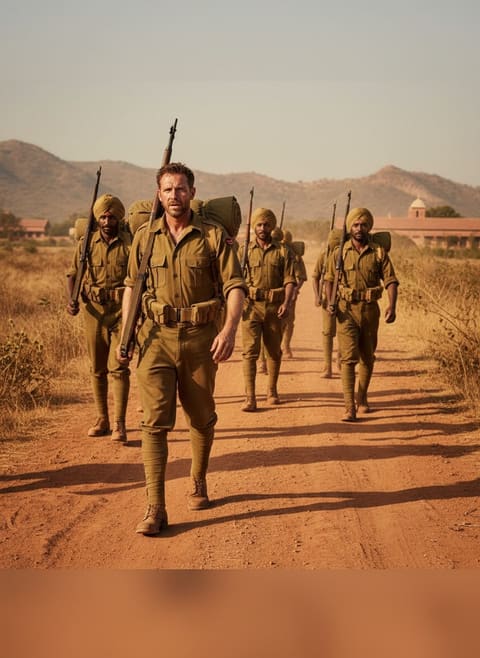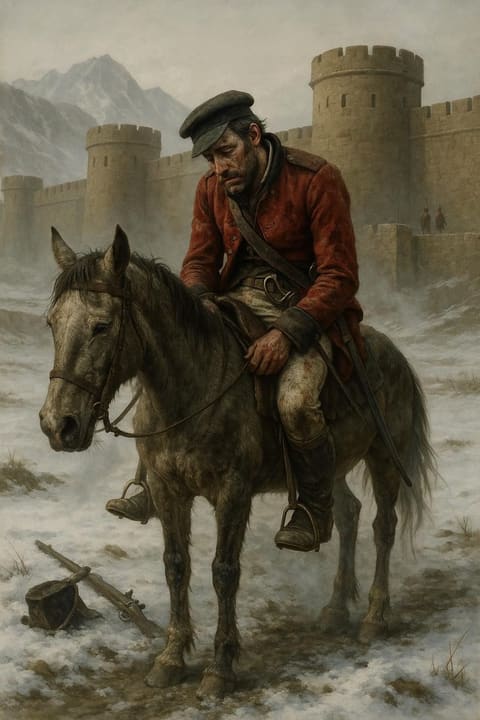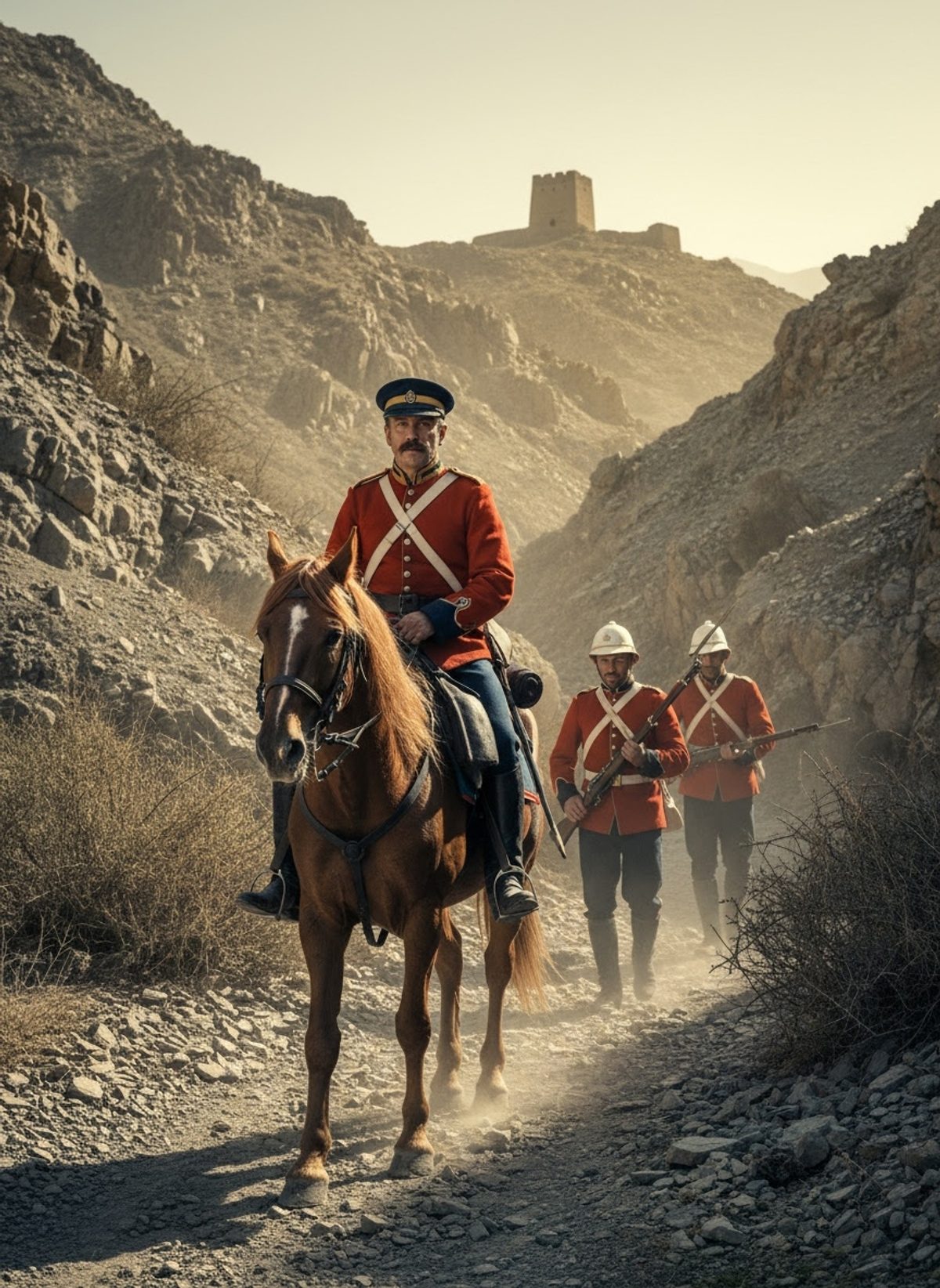
September 1879. A dusty breeze swept across the barren Afghan landscape, where shadows leaned long and lean upon the rutted road.
Marching Into the Unknown
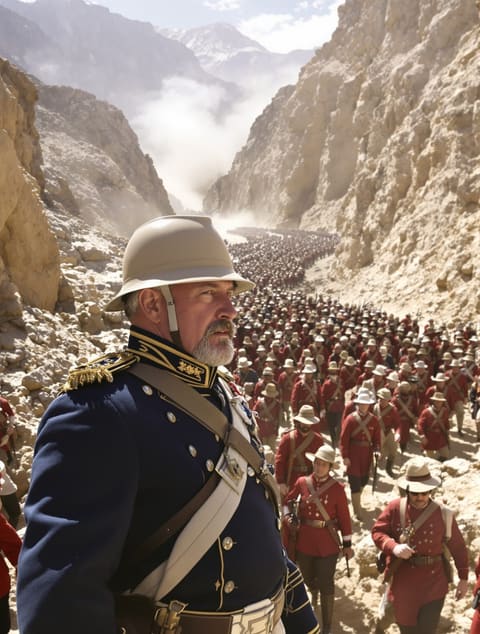
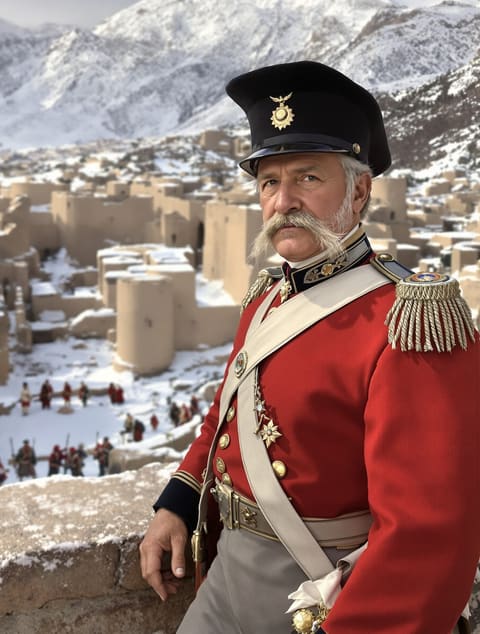
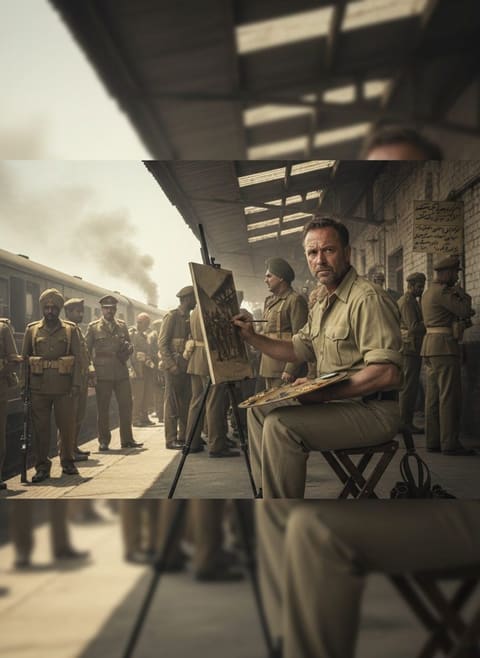
On the heels of ancient empires that had risen and fallen in these unforgiving terrains, the British forces found themselves navigating the perilous path toward Kabul during the Second Anglo-Afghan War. The mission was clear: establish control and ensure the stabilizing presence of British interests within Afghanistan. Major Thomas Colville was one of many officers leading the charge, a determined figure among the kaleidoscope of khaki-clad soldiers pushing through hostile landscape and history alike.
Colville's journey was a testament to endurance and resilience. The region they traversed echoed with the ghosts of Genghis Khan’s legions and a multitude of other invaders who once trod the narrow passes and wide-open valleys. The route to Kabul was not a simple march over open ground—it twisted through desolate deserts and forbidding mountain passes, resonating with the whispers of relentless winds and ancient conflicts.
Within the ranks, spirits ebbed and flowed with the scorching days and icy nights, the men galvanizing themselves with thoughts of home and duty. Despite the grim spectacle of barren beauty and the ever-present threat of an unseen foe, Colville and his men pressed on. They were custodians of an Empire's ambition, linking the Queen’s distant realm to the Afghan frontiers by sheer will.
Read next: When General William Elphinstone's Order Doomed 16,000 in the Afghan Snow
The Ghostly Ambush
Victory often bears the cruelest irony, and for Major Colville, it was an ambush far from the din of Kabul's contested heart that was to be his undoing. Having survived arduous marches and fierce skirmishes, Colville's death came not in a chaotic battlefield where he might steel himself against an identifiable enemy but on a seemingly secured road—a vulnerable thread in the Empire's extensive tapestry.
On that fateful day in September 1879, Colville rode along a road the British believed firmly under their control. It was here, under a camouflaging serenity, that a hidden enemy struck. The attack was swift, emerging from the surrounding landscape with devastating precision. Bullets tore through the fragile peace of the evening’s glow, claiming Major Colville in a moment that rendered the illusion of safety shattered.
The ambush underscored the volatile and unpredictable nature of Afghan warfare—a land where domination could be lost to a handful of resolute souls. In that instant, what was clear was obfuscated, the lines between victory and vulnerability merging in a moment of palpable trepidation.
Echoes of the Past
In the aftermath, tales of Major Colville's demise barely resonated in the bustling world beyond the mountain passes. Back in Britain, newspapers gave little space to the fleeting existence of a decorated officer on foreign soil. Yet, his story interweaves with the broader, stark realization of Afghanistan's daunting challenge to outsiders: no road was ever truly safe, no victory ever absolute.
Read next: When the Kabul Garrison Marched Out and Never Came Back, 1842
This event painted a vivid scene for those who dared to fill their imaginations with the vast, rugged Afghan terrain—a landscape notorious for swallowing armies. The barren outlook, broken only by the occasional caravanserai, was a reminder of the relentless and unyielding spirit of the Afghan warriors and the land they defended.
For the warriors in Kabul, this was as much a tale of their unyielding brutality as it was about their fierce loyalty to preserve their homeland's integrity from external dominion. For the British, it marked a stark legacy of the enduring struggle and reminded those in power of an identical fate encountered by invaders throughout history.
A Warning Etched in Blood
Today, the quiet tragedy of Major Thomas Colville's ambush serves as more than a footnote in the legacy of the Empire. It is an unvarnished glimpse into the treacherous complexities of imposing control over a land known for defying the harshest attempts at colonization. His death illuminates the persistent nature of conflict within Afghanistan, a crossroads where empires clash and dreams unravel.
Major Colville's untimely end on a lone Afghan road urges introspection on the transitory nature of military conquest. It serves as a tacit acknowledgment that empires, no matter how powerful, walk upon treacherous ground when venturing into Afghanistan—a rugged land where conquest is fleeting and peace remains ever elusive.