The mist rose over the River Thames with a chill that clung to the skin, a reminder of the war on the horizon. In the spring of 1917, Britain stood perilously close to defeat.
The Royal Navy, the lifeblood of the empire, was strained to its breaking point, struggling to tame the vastness of the seas while maintaining its grip on distant colonies. Yet, out of this fog of uncertainty emerged an unlikely beacon of hope — a woman whose military credentials extended no further than her commitment and resolve.
The call came from the Admiralty, desperate to replenish its depleted ranks with fresh hands. But with men swallowed by the trenches and trenches swallowing more men, the potential recruits had dwindled to a trickle. An unexpected solution presented itself in the form of Katherine Furse, a seasoned leader of the Red Cross. Though her hands had never hoisted a mainsail or tied a naval knot, she was poised to navigate uncharted waters.
Forging a Force from Scratch
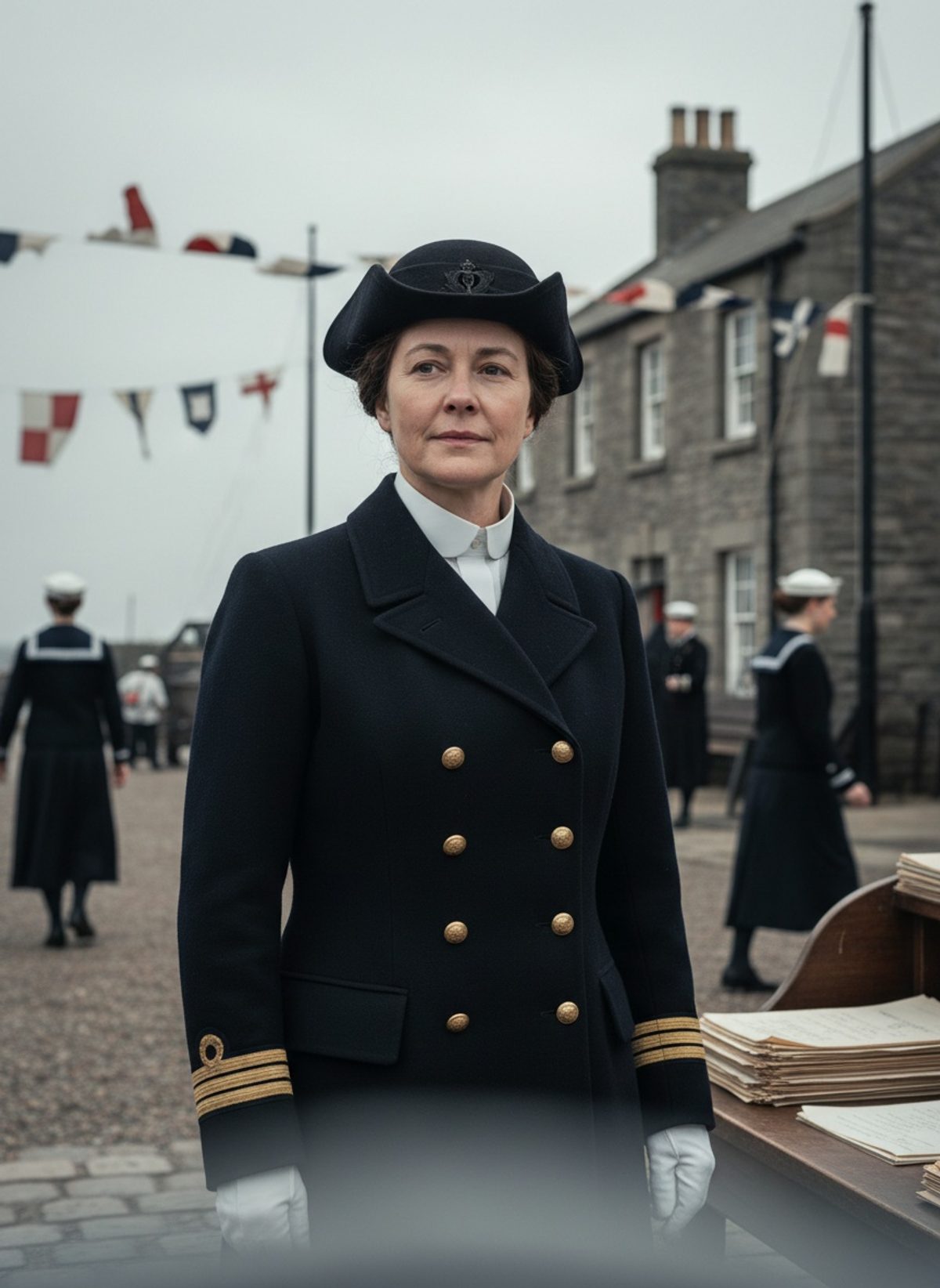
Katherine Furse was no stranger to challenges. Born into a family known for social reform, she had already proven her mettle by leading the Voluntary Aid Detachments, arming herself with nothing but determination against the tide of war. Her selection to lead the newly formed Women's Royal Naval Service (WRNS) was not merely unconventional — it was revolutionary.
Read next: When a Cipher Clerk's Mistake Nearly Cost Britain Gallipoli
The Admiralty handed her the framework: a directive and a name. What it lacked in resources, it compensated with urgency and a mandate to succeed. The WRNS was to be a critical auxiliary force, not just filling roles left vacant by enlisted men but undertaking tasks traditionally reserved for them. Furse immediately set to work, canvassing the country for women who could rise to the challenge.
Within the confines of borrowed offices and improvised supplies, Furse began laying the groundwork. She demanded standards as rigorous and professional as any naval posting, believing a robust operation required not only discipline but a fierce esprit de corps. It wasn't long before her vision caught fire, and volunteers flocked. Each new member brought with them stories of resolve — some were daughters of industry workers, others of fallen soldiers, all eager to contribute their share.
By the end of the year, over 3,000 women were registered as Wrens, as they were affectionately dubbed. They trained as clerks, cooks, telegraphists, and drivers, stepping into roles as vital as they were varied. The WRNS became a living proof of what could be achieved when limitations were cast aside.
A Scorching Summer's Work
Sitting in the heart of London, the makeshift headquarters of the WRNS buzzed with tenacity that belied its roughly assembled rooms. Through the summer of 1917, Furse’s work transcended mere organization. It became an intricate symphony of logistics. Supplies were scarce; every uniform, every piece of equipment required meticulous coordination to equip the fast-growing ranks.
The range of tasks within the WRNS was as diverse as Katherine’s aspirations. Women manned vital communication lines, assessed complex naval equipment, and handled dispatch duties once reserved solely for men. They mastered the mechanics of motor vehicles and motorcycles, embodying the dynamic spirit that the war demanded. Far from the traditions of household management, they calibrated radio frequencies and plotted radar readouts with accuracy equal to their male counterparts.
Tragedy briefly darkened the skies in October 1918 when tragedy struck: the RMS Leinster was torpedoed. Nineteen-year-old Josephine Carr became the first Wren to die in active service, symbolizing the blood and sacrifice that marked their trailblazing journey. Yet, like the sparks relentlessly exploding into the night, the resolve of the Wrens was unquenched. They had tasted empowerment and purpose, and refused to let it be denied.
By the conclusion of the war, over 6,000 women had served in the WRNS, their contributions transcending expectations. Yet, in the victory celebrations of 1919, the decision was made to disband the service. The war's end signaled a return to the status quo, and thus the WRNS was quietly shelved, to be revived again in another desperate hour decades later.
Read next: When the Matilda Tank Rolled Out of Vulcan Foundry, 1937
The impact of Furse's unprecedented endeavor could not be buried. It carved out a template for women's service in the military, proving their value and capabilities in roles far beyond what societal conventions had allowed. The seeds sown during those tumultuous eighteen months took root in the consciousness of a nation, setting precedents and fueling the ambitions of generations of women to follow.
Beyond the Horizon
In scrutinizing Katherine Furse’s profound impact, one finds that more than the tangible results of her leadership, what remains most striking is the transformation she inspired. The WRNS did not merely provide wartime services; it symbolized a shift in cultural attitudes towards women in military roles.
Furse pioneered a change that resonated far beyond the Navy's confines. She carved a path that intersected with larger tides of social progress, challenging and changing the perception of what forces women could become. Katherine didn't just build a service; she constructed a legacy marked by courage, resilience, and breaking boundaries.
The WRNS's narrative is among the many tales subtly interwoven with the broader tapestry of history — sometimes overshadowed, often underestimated. It is a reminder of the courage that manifests in unlikely places, of how necessity births innovation. Dame Katherine Furse demonstrated with clarity and conviction that silence is not an option when forging new pathways.
In the shifting shadows of war and peacetime politics, Furse’s Wrens lit a beacon that continues to draw reflection. They remind us that adversity is fertile ground for courage, and in that courageous pursuit lies the foundation from where legends arise.