History often remembers the victors, yet sometimes the stories of those who arrive just too late are equally profound. Such is the tale of the Camel Corps' desperate dash through the Saharan sands — a breakneck journey thwarted by the march of time itself.
The Unlikely Cavalry
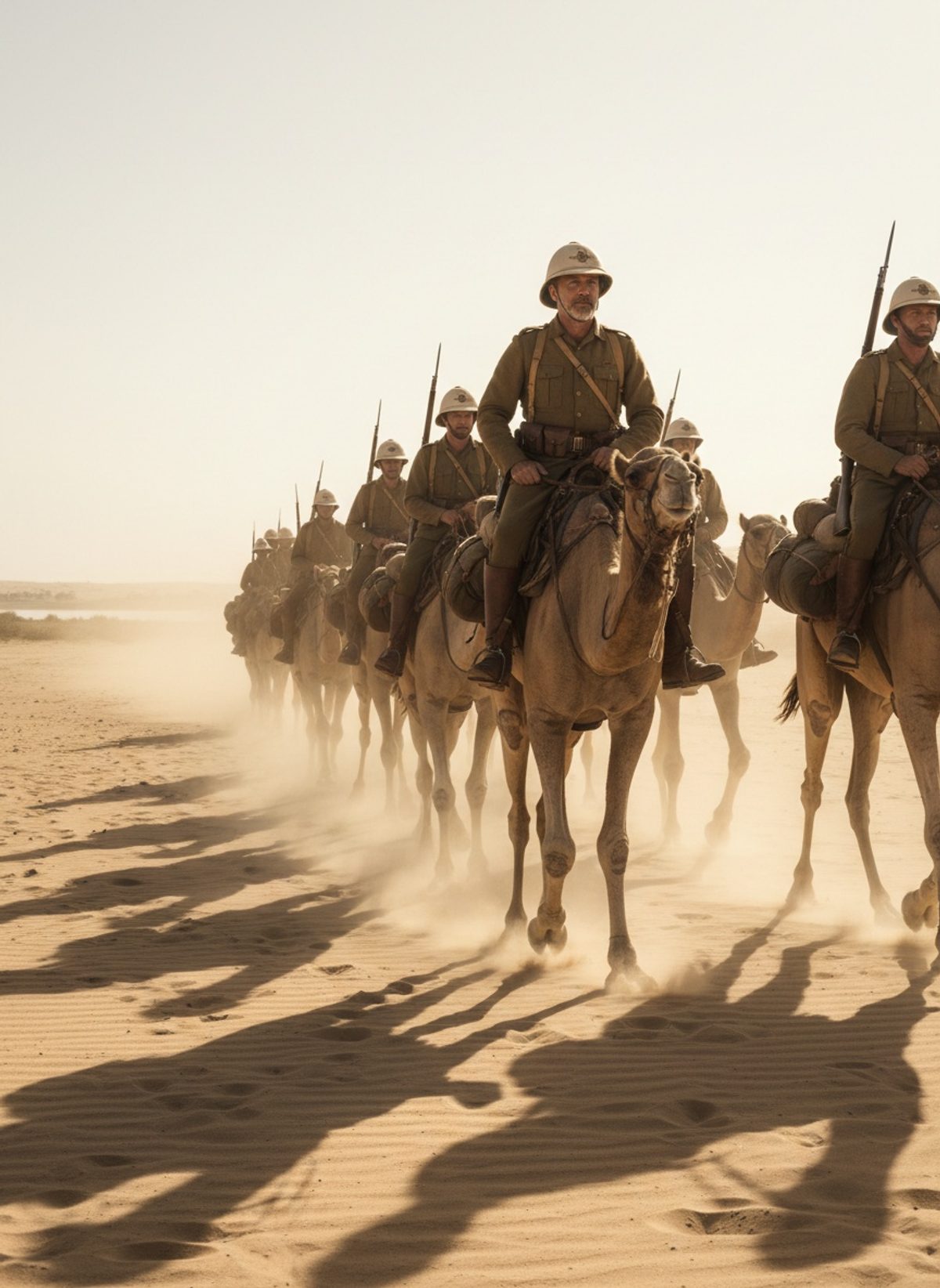
In the labyrinth of Britain’s imperial history, the Camel Corps occupies a curious corner. As the Victorian Empire's ambitions drew it into the depths of the Sudan, the British faced a uniquely harsh environment. Never before had they needed to build a cavalry unit entirely from camels, those ungainly but hardy "ships of the desert." The task was formidable: assemble a force from scratch, train inexperienced soldiers to ride and fight from camels, and do it all in a matter of weeks.
This hastily assembled force was tasked with one of the most critical missions of the time: the relief of General Charles Gordon, a storied soldier-diplomat besieged in Khartoum by the forces of the Mahdi, a charismatic Islamic leader whose ambition was reshaping Sudan. Gordon, revered back home as a national hero, had held the strategic city for months, but his defenses were crumbling under the relentless pressure of the besiegers. British authorities, initially reluctant to intervene directly, could no longer ignore the public outcry for action and the potential geopolitical ramifications of losing Gordon and Khartoum.
The Camel Corps was a logistical marvel and a testament to British resolve and ingenuity. It included men handpicked from regiments all over the empire, each chosen for their endurance and adaptability. They received a crash course in camel-handling — an absurd sight for anyone familiar with horse-based cavalry drills — and set off into one of the world’s most unforgiving terrains. Under a searing sun across a landscape where mirages danced above dunes and sandstorms could smother the horizon, their march was nothing short of epic.
Read next: When Sidney Smith Held a Wall and Broke Napoleon's Dream
The Throes of Abu Klea
The campaign, however, was not simply a grueling desert march. At Abu Klea, their progress was violently interrupted. Here, the Camel Corps encountered the forces of the Mahdi in a clash that would become the battle's darkest hour. Desperate and outnumbered, they engaged in brutal combat. The battle was a seething chaos of clashing swords, gunfire, and the terrible bleating of camels startled by the pandemonium around them. Over the course of that January day in 1885, the desert sands were stained with the blood of soldiers and tribesmen alike, as the Mahdist warriors surged in waves, wielding spears and swords with deadly precision.
The British formed a defensive square — a tactic of the Napoleonic Wars adapted to meet the ferocious Sudanese onslaught. Soldiers stood shoulder to shoulder, their Enfield rifles chambered and ready, while the camels were hobbled behind the lines, frightened but held tight by their handlers. It was a scene of fiery determination and desperation, the future of an entire campaign swung on the outcome of this confrontation. Though the British ultimately emerged victorious, it came at a significant cost. The battle left scores dead and injured, hindering their force at a moment when speed was of the essence.
Despite their victory, the battle at Abu Klea had sapped their strength and momentum. The desperate pace of the desert march, coupled with the loss and fatigue, took a toll on the men and their beasts alike. Abu Klea stands as a grim tableau of colonial warfare where cultural destinies and imperial ambitions collided. This battle foreshadowed the tragic delay that would define the outcome of their mission.
Read next: When Napoleon's Old Enemy Held a Wall Against Him, 1799
Khartoum: A City Changed
Four days too late — these words reverberate through the annals of history with a solemn echo. As the dust-settled Camel Corps finally reached the banks of the Nile, their beleaguered journey felt like a cruel exercise in futility. Khartoum, once guarded by Gordon's unyielding resolve, lay conquered. The city had fallen to the Mahdi’s forces, its fate sealed on January 26, 1885, a scant four days before the relief column's arrival. The sight that greeted them was one of disillusionment and despair. The Union Jack no longer fluttered from the city ramparts, and Gordon, the indomitable symbol of British prestige, was dead — felled not in the heat of battle but by the sands of time that eluded British aid.
The implications of Khartoum's fall were profound. It marked a significant moment in the colonial confrontation in Africa, where imperial ambitions clashed with local resistance in spectacular and devastating fashion. The death of Gordon stirred outrage in Britain, a national soul-searching compounded by the imperial government’s earlier indecision, prompting a rekindling of savior narratives and mythic hero-making. Yet, the mishap also underscored a fundamental fallibility within the Empire; logistics, timing, and the whims of an indifferent desert had conspired against even their most determined efforts.
This saga of the Camel Corps carried lessons well beyond the headlines of its day. It reminds us of the shifting powers in an age of empires, the endurance of human spirit against insurmountable odds, and how history is often carved by those who miss their moment. In Khartoum's shadow, the legacy of unyielding seasons and the indifference of time offers a humbling contemplation on the fragility of human undertakings.