Crossword puzzles are innocent enough. Until they become the center of a wartime mystery that crosses the line between coincidence and espionage.
The Puzzle That Shook an Empire
It was a typical late spring day in 1944. The pastoral calm of Surrey, England seemed undisturbed, an oasis of normalcy in a world set ablaze by the Second World War.
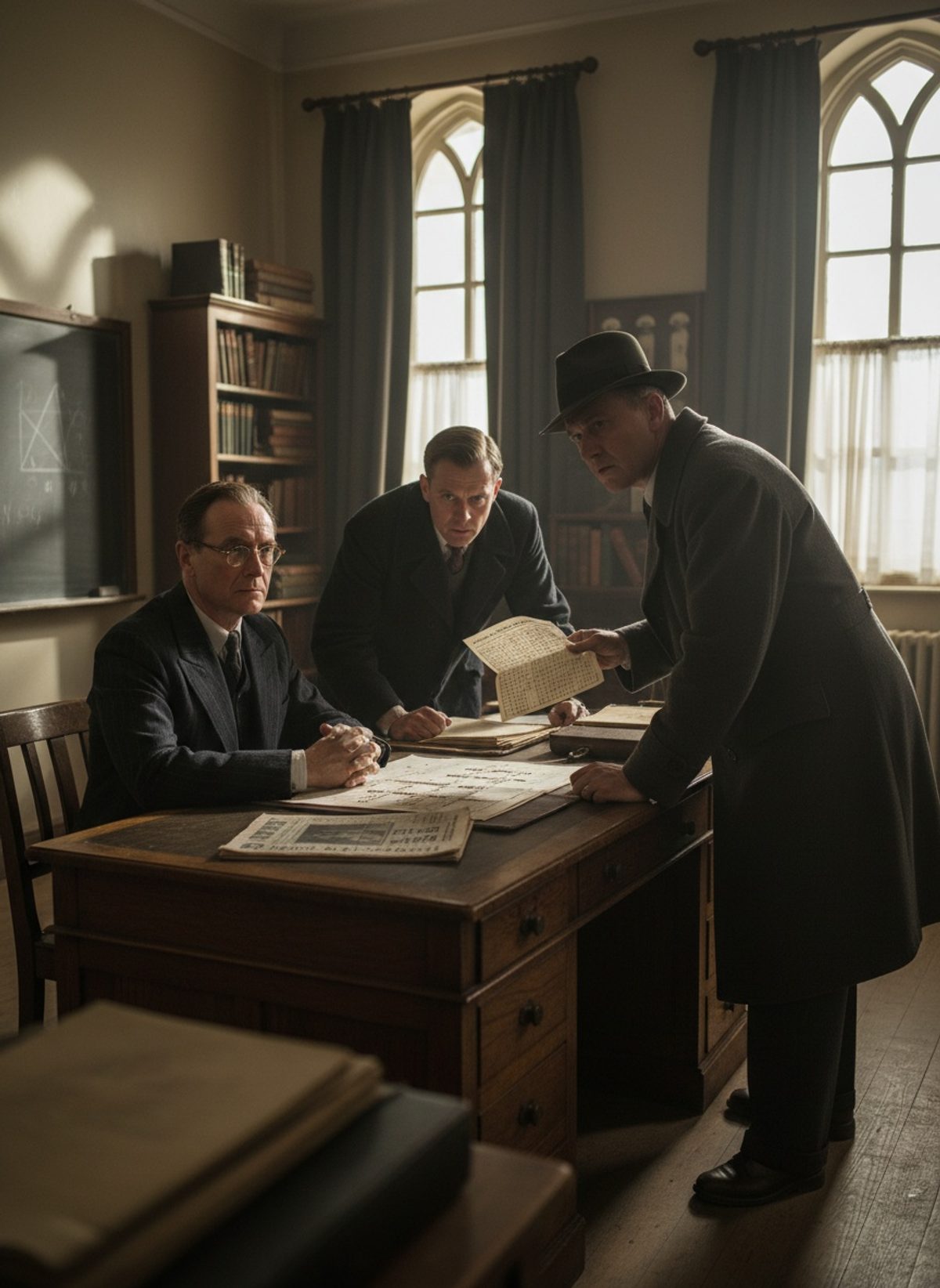
Yet, inside a classroom steeped in tradition, Leonard Dawe, headmaster and part-time crossword compiler for the Daily Telegraph, unknowingly cracked the fragile facade of wartime security. It was Dawe's customary method—taking clues from life, weaving them into the challenging grids beloved by his readers. But this time, the clues unlocked a Pandora's box feared by military planners.
Scrolling through the printed puzzle, MI5 agents must have felt their blood run cold. Words like “OVERLORD,” “MULBERRY,” and “NEPTUNE” leaped from the grid—seemingly plucked from the very heart of the Allied invasion plans.
Read next: The Quiet Liverpool Clerk Who Became British Comedy's Dark Heart
Operation Overlord, the codename for the Allied invasion of Normandy, was the closely guarded secret poised to become the largest amphibious assault in history. Its success relied heavily on stealth and surprise. Yet here it was, naked and vulnerable, exposed in black and white with staggering clarity.
A Race Against Time
For MI5, the stakes could not be higher. As the clock ticked down to zero hour, they launched into a controlled scramble to prevent a potentially catastrophic security breach. Investigators traced their way to the leafy enclaves of Surrey, determined to uncover how Dawe, an unassuming academic, had come to possess knowledge that even seasoned spies would die for. Was this a lucky coincidence, or was Dawe weaving the strands of treachery into his puzzles?
From Dawe's perspective, it was all a bewildering whirlwind. Just days after the puzzle's publication, MI5 agents descended upon his peaceful school, demanding explanations for the choice of ominously prescient words. The interrogation process revealed nothing beyond Dawe's shocked innocence. The words, he insisted, were an inexplicable coincidence, a mere product of his methodical yet random selection process.
The origins of these fateful puzzle words, however, were found back in the classroom. Students, eager for approval and captivated by Dawe's crossword craft, often suggested words to their master. It's not hard to imagine the eager, attentive boys absorbing snippets of cryptic chatter from soldiers stationed nearby. These curious snippets, unintelligible to a civilian ear, trickled innocently back to their headmaster. Unwittingly, the boys had played their part in a grand wartime intrigue.
Read next: When the Indian Army Turned Its Officers Into Privates, 1942
The Implications of Innocence
For the intelligence community, it was a sobering reminder of their delicate balancing act. Security measures were a tightrope: confidentiality bolstered by the unwitting contributions of everyday citizens, formulating an unbreakable defense. Yet, this incident exposed vulnerabilities—a glimpse into an era when secrets were crafted in chatter and innocent questions could loop the noose of espionage events onto unsuspecting bystanders.
In the grand scheme of Allied efforts, no harm came from the crossword escapade. By the time true suspicions arose, Operation Overlord had already assumed its place in history as the pivot that swung the war in favor of the Allies. The event underscored the existence of our collective vulnerability; despite superior technology and all-seeing surveillance, human unpredictability forever remains an omnipresent variable.
The Final Grid
As the war drew to its close, the memory of Dawe's crossword anomaly faded into Britain's vast tapestry of triumph and uncertainty. Regardless, Dawe found himself criminally uninvolved yet permanently etched into a surreal chapter of wartime folklore. Once the storm had passed, he resumed his duties, perhaps reflecting on the capricious nature of fate over his puzzles, which continued to challenge post-war Britain.
Though life resumed its march and the secrets once embedded in Dawe's crossword faded into obscurity, this mystery brings to light the human element in historical narratives. It leaves us questioning the convergence of chance, consequence, and the untold tales of seemingly ordinary actors in extraordinary times.