Most histories of the British Empire focus on its global might. But they often leave out the fires stoked by the people it tried to subdue.
The Promise of the Kat River Settlement
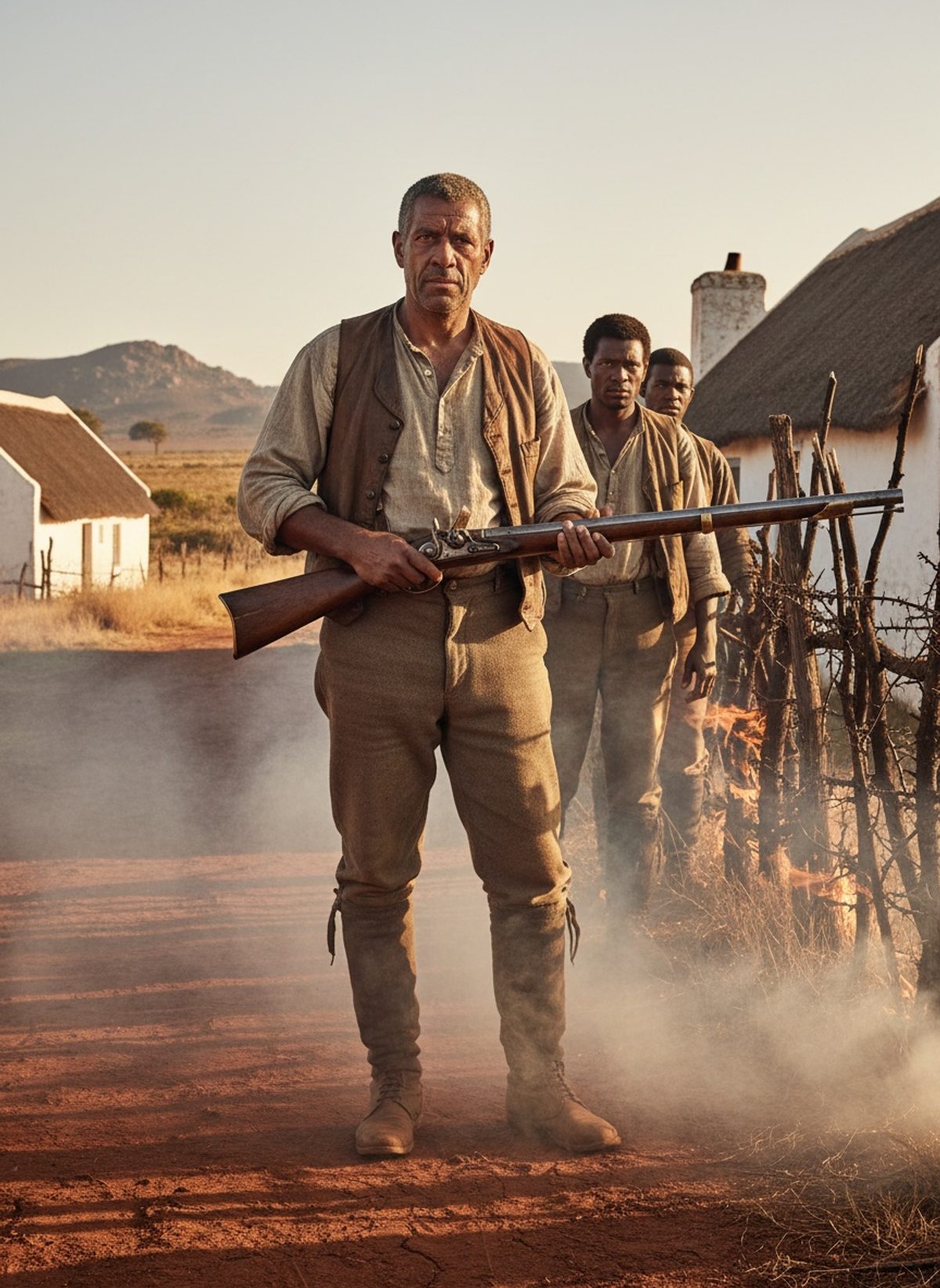
In the early 19th century, the Kat River Settlement in what is now South Africa was seen as a grand experiment. Established by the British, it was a place where the displaced Khoikhoi, who had lost their ancestral lands, were given a semblance of stability and opportunity. The Khoikhoi, a deeply rooted indigenous group with a rich cultural tapestry, had long suffered under colonial expansion. Yet here, it seemed, was a chance for redemption. They fought valiantly alongside British troops as frontiersmen, their skills in tracking and combat indispensable. Many were promised not just a role but a rightful piece of the land they had long protected.
The setting was picturesque, with fertile soil and a river that snaked through untouched lands. Yet beneath this façade of opportunity, dissatisfaction quietly simmered. The promises of land and prosperity, held out like a glimmer of hope, were proving elusive. Conflicted interests, bureaucratic mismanagement, and underlying prejudice began to strip the community of what they had been promised. For every plot of land promised, injustices multiplied. It became clear that while the British had recognized the valor of the Khoikhoi in wartime, it had little interest in honoring those promises once war gave way to peace.
From Loyalty to Rebellion
The seam of loyalty was a thin one, and by 1851 it had worn through. The Khoikhoi, once allies to the Crown, found their patience exhausted. For decades, they had faced the elements and hostile forces on behalf of the very Empire that now turned an unseeing eye to their plight. The betrayal was felt keenly among the warriors who had fought for the British cause across multiple campaigns, only to return to find encroachments on their land and way of life.
Read next: When Bhikaji Cama Tore the Union Jack in Half, 1907
Amidst this growing tension, the voice of rebellion began to grow louder. The Kat River Settlement, meant to be a beacon of British generosity, had instead kindled a fierce resistance. With remarkable resolve, the Khoikhoi turned to armed resistance in an act that many in Cape Town believed was beyond them. Defying their past allegiance, these warriors took up arms—not against an external invader, but against those who had betrayed them from within. They sought not just their own redemption but also a rebalancing of justice that had long been denied.
The Flames of Defiance
The year 1851 marked a turning point. The embers of discontent burst into flames as the Khoikhoi launched their campaign. They set ablaze settlements and outposts up and down the Cape, a fiery defiance of colonial disparities. Smoke rose above the horizon, curling into the sky as if to mark the turning of a page. What had once been their land now bore witness to their struggle for dignity and rights long neglected.
Read next: When Cetshwayo's Messengers Walked Into the Lion's Den
Yet, the British response was neither swift nor sure-footed. Imperial forces, rife with the arrogance of assumed superiority, suddenly faced a determined foe with an intimate knowledge of the terrain and a personal cause that spurred them on. The resolve of the Khoikhoi caught the colonial establishment off guard—a people underestimated had shown what rising hope could ignite. Echoing through the settlements was not just the crackle of burning wood but a distinct message: freedom and justice could not be contained forever.
The Echo of Unheard Legends
In the wake of the burning settlements, stories of the Kat River Rebellion gradually faded from the mainstream narrative of British imperial history. Yet, the legacy of the Khoikhoi warriors’ resistance remains potent. They remind us of the oft-overlooked truths hidden beneath dominant historical accounts. Despite the eventual quelling of the rebellion, the actions taken during those months of 1851 were not in vain but rather a testament to the unwavering spirit of people sidelined by power dynamics.
The story of the Kat River Settlement challenges perceptions and shatters the illusion of a smooth, unchallenged colonial expansion. It compels us to acknowledge and reflect on those who defied the boundaries of empire for the possibility of a more just society. Today, as we seek to tell fuller stories of the past, let us not forget the Khoikhoi who dared to rise, who refused to be written off the pages of history simply because the chronicles of Empire did not have space for them. They, too, are architects of a world that could have been—where promises once broken must find their way back to being fulfilled.