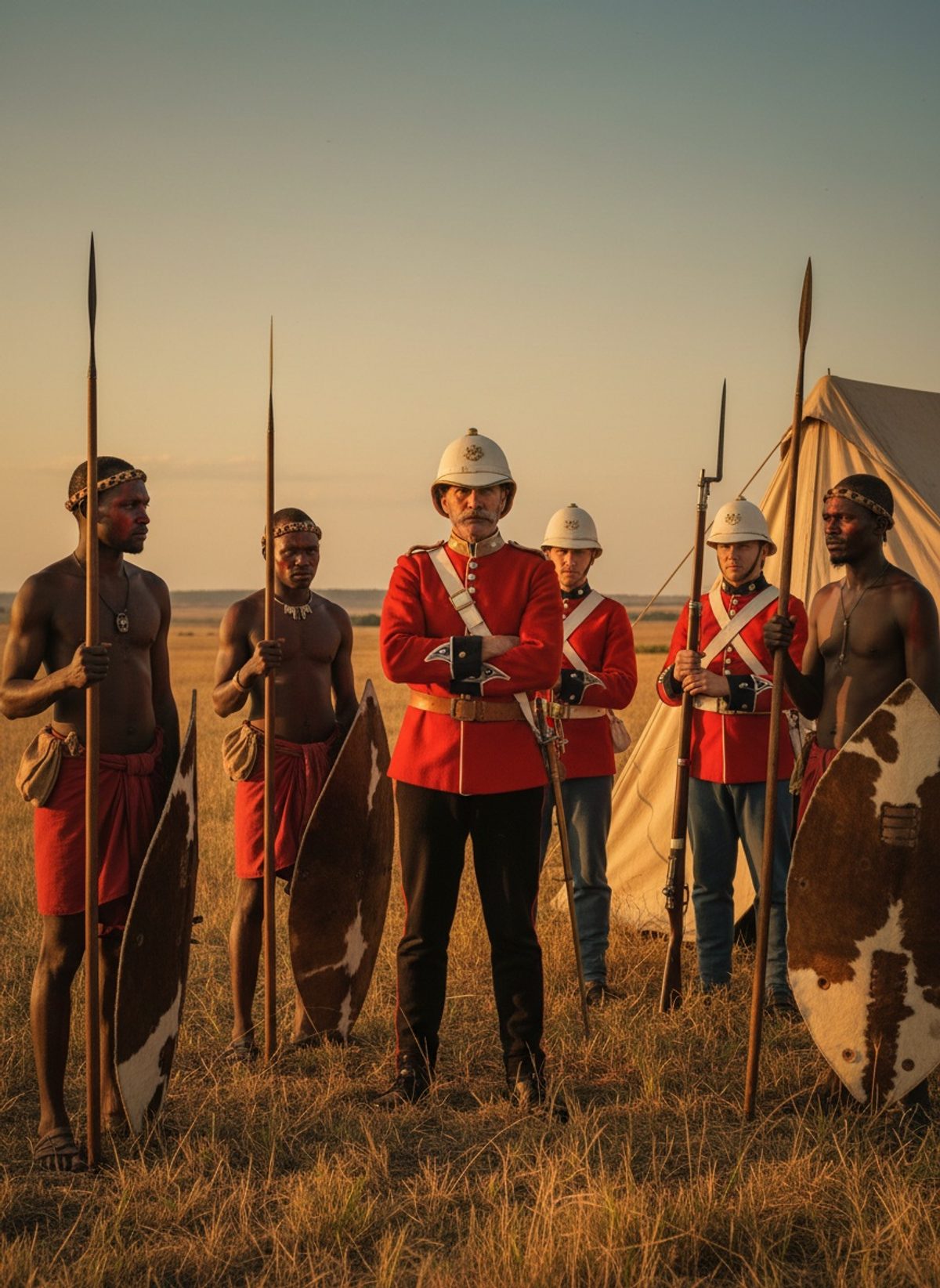
The rhythmic stomp of marching feet contrasted sharply with the arid earth beneath, dust pluming with each step. The messengers of King Cetshwayo, clad in traditional Zulu garb, approached the distant British encampment. The sun beat down mercilessly, casting long shadows and shimmering illusions over the landscape. These messengers carried not only the weight of wooden shields and assegais, but also the heavy burden of their king’s words, words that offered peace but were fated to echo unheard.
A Mission of Peace Amidst Rising Tensions
As the messengers trudged onwards, hope mingled with anxiety in their hearts. War loomed ominously over the lush rolling hills of KwaZulu-Natal. King Cetshwayo kaMpande had watched with increasing dread as British troops amassed along the borders of his kingdom. He knew the intentions of British High Commissioner Sir Bartle Frere and of the colonial ambitions underlining their demands. Yet Cetshwayo yearned to avoid bloodshed. He sent his envoys bearing terms, hoping to bridge the chasm widened by misunderstandings and territorial greed.
This was no ordinary errand. The Zulu messengers were entering what was, in essence, a lion's den—the British who expanded their empire with little regard for those they displaced. Despite the fraught diplomatic landscape, Cetshwayo’s motivation was clear: he sought to engage the British without exchanging weapon blows. The king’s messengers came willingly, choosing the path of dialogue over more destructive alternatives.
The Stalwart Refusal
The arrival of the Zulu emissaries at the British camp should have been a momentous occasion. They stood tall and resolute, framed against the endless veldt. Yet their reception was cold, the determined but impassive faces of the British officers betraying no hint of compromise. Lord Chelmsford, the British commander of operations in the region, had a singular focus—quashing the Zulu impudence that dared to challenge British dominance in Southern Africa.
Read next: When Bhambatha Rode Into the Valley and Defied the Crown
Despite their earnest intentions, the messengers were turned back. Lord Chelmsford’s dismissive rebuff was tragic, a grave underestimation of the situation’s gravity. The British Empire, at that moment, was operating under the presumption of superiority, discounting the Zulu’s strategic prowess and potential for mobilization. Chelmsford’s decision was more than just a curt dismissal; it was a calculated risk that spiraled into one of British imperial history’s most notorious blunders.
When the River Ran Red
Following the failed diplomatic mission, the stage was set for confrontation. Just days later, Zulu warriors, their resolve steeled by the failure of diplomacy, surged across the Buffalo River in a formidable display of unity and strategic brilliance. Twenty thousand strong, their movements echoed with the collective heartbeat of the Zulu nation, reverberating through the earth—a sound that would soon drown the clangor of British drums.
The Zulu War that ensued was unrelenting. Despite their technological disadvantages, the Zulus wielded a superior understanding of the terrain and possessed an indomitable spirit. Their warriors moved swiftly and decisively, turning the war into a fierce and costly battle for the British—a humbling lesson in the risks of imperial hubris. The Zulu’s military acumen soon became painfully apparent at the Battle of Isandlwana, where British forces suffered one of their most ignominious defeats.
Read next: When Birsa Munda Shook an Empire From a Jungle Village
Lessons from Forgotten Voices
The brief but intense conflicts that followed were indelibly marked by that initial refusal to listen, digressions of reckless assurance that a mere show of Western arms would suffice. The Zulu warriors did not merely cross a river; they crossed into history, etching vivid lessons into the annals of Resistance and Rebellion. Their story punctuates the often-unheard narratives of indigenous peoples challenging imperial dominance.
In retrospect, Cetshwayo’s equanimity and preference for peace provide a stark contrast to the relentless encroachment of empire. The refusal of diplomacy underscores a recurrent theme in colonial conflicts: a failure to respect and understand indigenous systems of governance and societal values. It is a reminder that might alone does not make right, and that disregarding the olive branches offered by those deemed adversaries can lead to unforeseen and costly consequences.
As we reflect on this crossroads of history, a new understanding can emerge—one where the value of words and peaceful negotiation stands equally potent alongside the terrible power of armed conflict. The Zulu messengers, though walking into what seemed to be the inevitable jaws of war, carried hopes and intentions that resonate through time with compelling clarity—a narrative we must not allow to fade into obscurity.