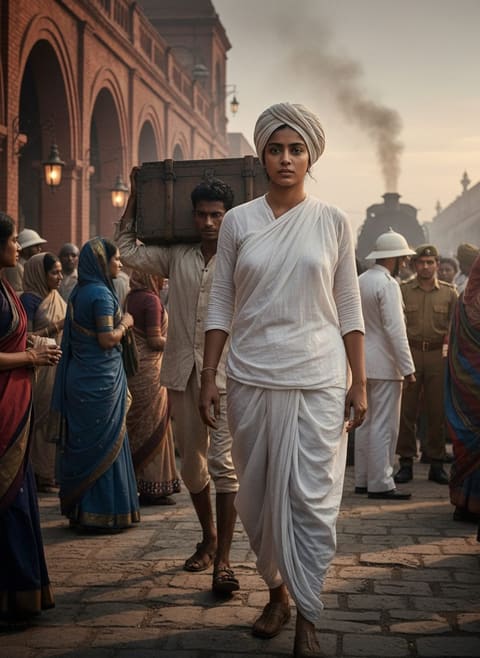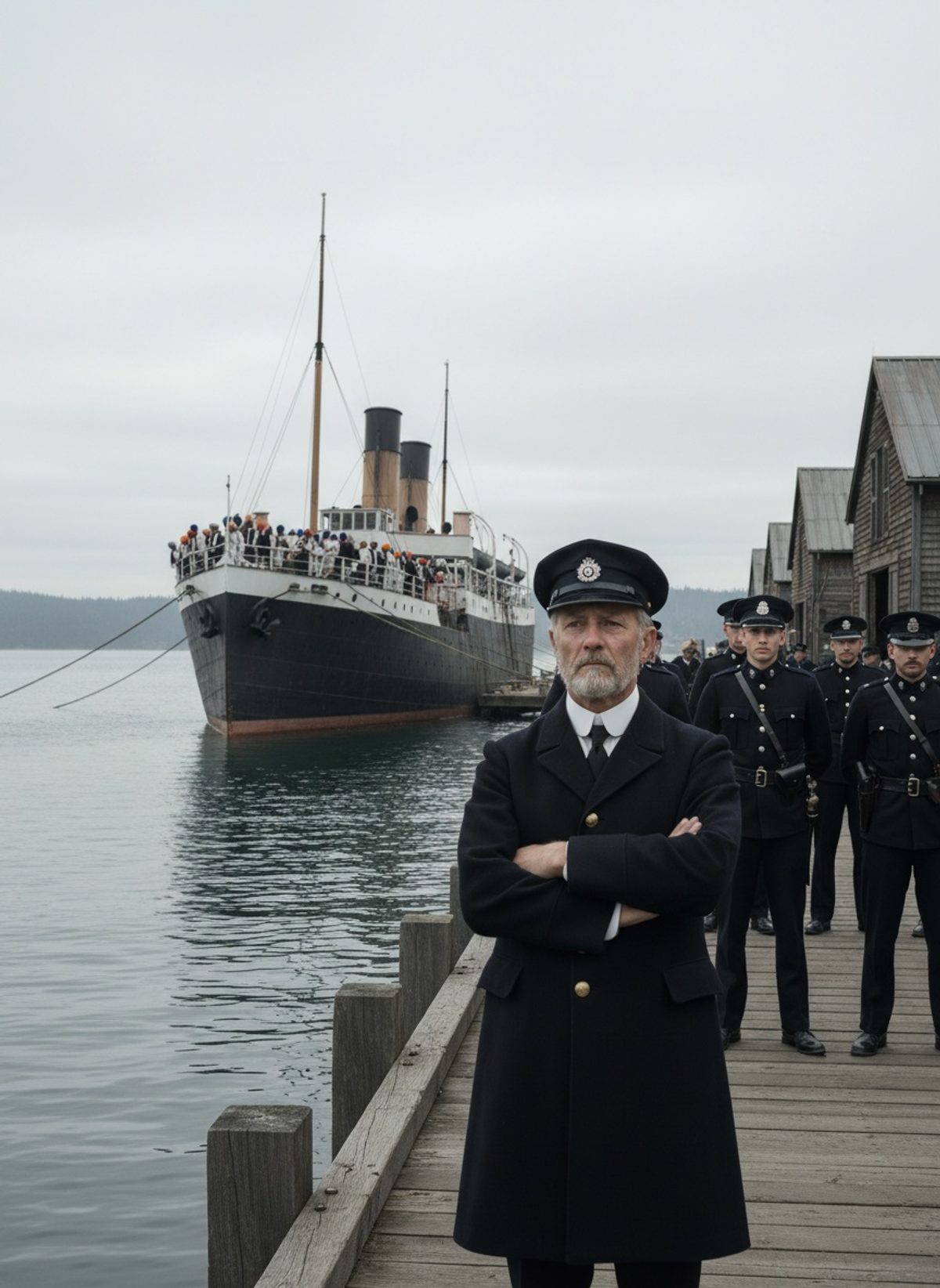
A cold, heavy mist hung over Vancouver Harbour, shrouding the steamship in a veil of ambiguity. On board, the passengers huddled on deck, their eyes locked on a foreign shore that promised refuge, yet remained steadfastly out of reach. The salt-laden air, a biting reminder of the sea, mingled with the palpable tension. Below deck, anxious whispers punctuated the rhythmic creak of the ocean liner, a vessel caught between worlds — a floating microcosm of hope and despair.
Under the Royal Flag, Yet Denied
In May 1914, as the world teetered on the brink of the Great War, the Komagata Maru arrived in Vancouver. This Japanese-built and Canadian-chartered steamship bore 376 hopeful passengers, predominantly Sikhs, who shared a singular goal: to claim their place in the sun under the expansive canopy of the British Empire. Despite bearing the passport of common imperial citizenship, they would soon learn that the reach of this citizenship was not as universal as they'd been led to believe.
Their journey was more than a mere voyage. It was a defiant stand against the Canadian government's exclusionary immigration laws, particularly the continuous journey regulation, a policy thinly veiled to restrict Asian immigration. The law required that immigrants must arrive by a continuous journey on a ticket purchased at the country of origin. An impractical mandate for Indians given the lack of direct routes from India to Canada. Yet, the passengers clung to the promise of rights inscribed within the British Empire — the same rights that Canadians and Britons celebrated as their own.
Days of Apathy, Nights of *Negotiation*
For nearly two months, the standoff continued. Day after day, the passengers watched as their new beginning ebbed away, and each sunset marked another day of frustration and uncertainty. On the shores of Vancouver, sympathizers and detractors alike wrestled with the implications — could a nation built on immigration deny entry to its own imperial kin?
Read next: When Cetshwayo's Messengers Walked Into the Lion's Den
Among the passengers and their advocates, a palpable resilience fortified their resolve. This was not the first time that Indians, particularly those aligned with the burgeoning Ghadar Party, had challenged imperial shackles. The political movement sought armed rebellion and self-rule for India and saw this moment as an opportunity to expose the racial discrepancies simmering within the imperial system.
Soon, lawyers, political figures, and community leaders stood in solidarity with the passengers, engaging in fervent legal and diplomatic wrangling. The Canadian government, meanwhile, maintained its stance, citing legal grounds and public interest — all while the specter of racial tensions churned beneath the surface of public discourse.
The Empire Takes Notice
While the Komagata Maru stood anchored, the ripples of its predicament reached across the oceans. In London, the British government faced an inconvenient truth: the promises of inclusivity and global citizenship within the empire were met with stark regional disparities. For Britain, balancing colonial allegiance and the growing demand for autonomy among its subjects was a complex, delicate dance.
Strikingly, this was not an isolated incident. Waves of Indian migration to other parts of the empire had already raised questions about the integrity of Britain's claims to equal treatment. News of the Vancouver standoff emanated throughout the empire, igniting passions and stirring debates from Calcutta to Cape Town. For many, it became a rallying cry for further resistance against imperial authority.
Read next: When the Rani of Jhansi Rode Out and Refused to Kneel
Simultaneously, the British press began scrutinizing the actions of its dominion. Newspapers painted vivid portrayals of the incident, often sensationalizing the struggle while inadvertently shedding light on broader systemic prejudices that existed within the empire. The empire's hand was thus forced into introspection, even as it struggled to maintain a global facade of unity.
The Return Journey: A Symbolic Departure
In late July, the oppressive stalemate reached its inexorable conclusion. The Canadian government, persistent in its resolve, deployed a show of force to escort the ship away. The resonating thrum of the ship's engines stirred the somber spirits of those aboard as the Vancouver skyline receded into obscurity. Their dreams were postponed, yet not extinguished; the perseverance and courage they displayed left an indelible mark on history's pages.
The Komagata Maru sailed back to a tumultuous India. Though it had been turned away, the ship had served its purpose as a poignant symbol of the growing cracks within an empire that claimed to cradle myriad cultures under its wing. For its passengers and those who witnessed their journey, the incident underscored the urgent need for equality and self-determination — a cause that would reverberate throughout the corridors of the empire in the years leading to India's independence.
This chapter of history reminds us of the inherent contradictions in imperial power and the enduring human spirit to challenge and transcend boundaries. The tale of the Komagata Maru is more than a maritime misadventure; it is a testament to the relentless pursuit of justice — a voyage of dignity that transcended the physical journey and carved a path forward in the collective consciousness of a changing world.