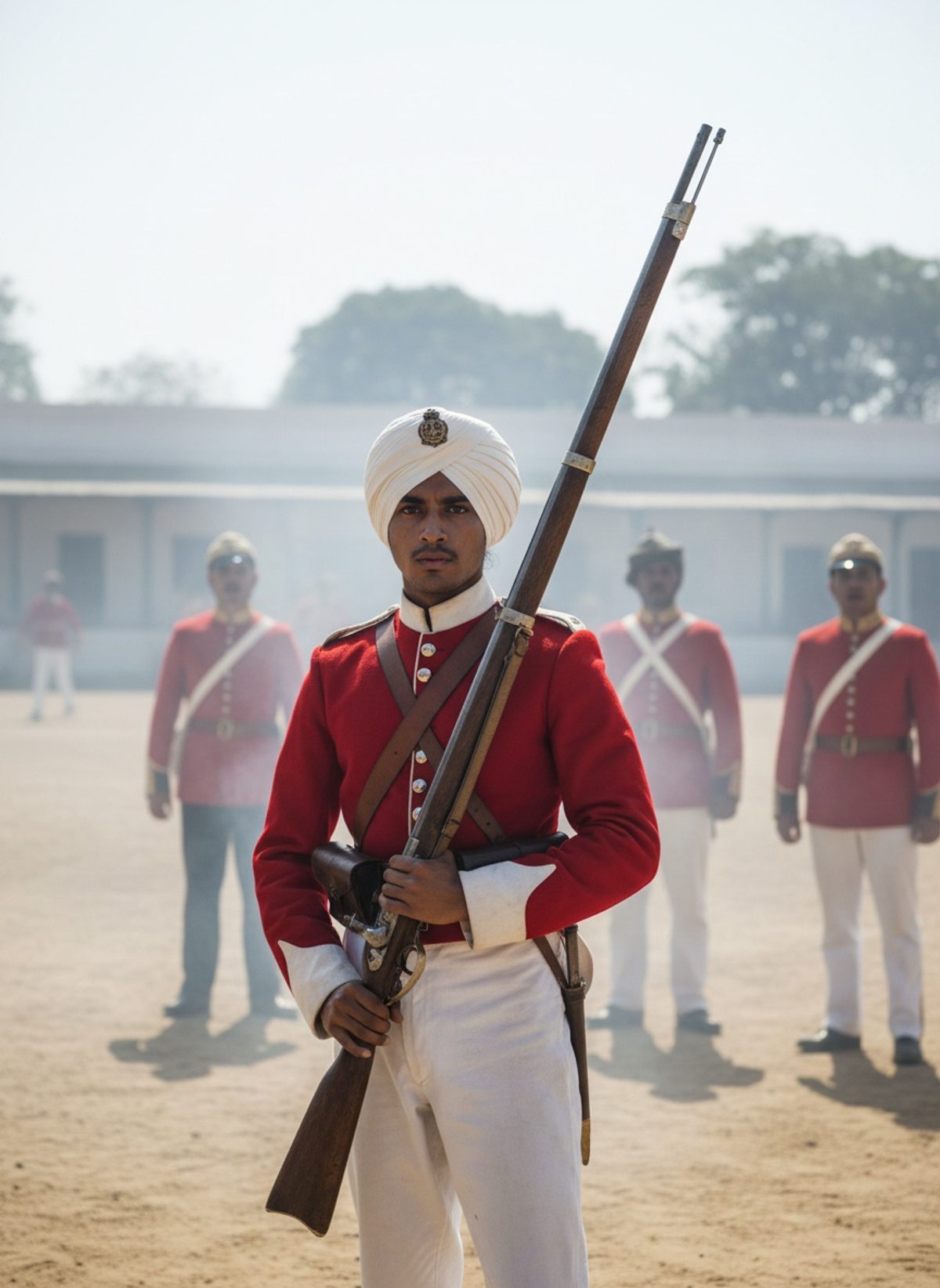
The musket's recoil jolted Mangal Pandey, sending a shiver through the midday heat that hung thick over Barrackpore. As the acrid tang of gunpowder lingered in the air, a chill crept into the spines of his British officers, standing frozen beneath the tropical sun. This was not an ordinary training day at the 34th Bengal Native Infantry. Pandey was not an ordinary sepoy.
The Seeds of Rebellion
Mangal Pandey wasn't simply a rebellious soldier. Until that fateful day, he was esteemed as a model sepoy in his regiment, known for his unwavering discipline and dedication. But the air was charged with more than just the oppressive humidity of late March. Rumors had been swirling across the ranks — whispers of new rifle cartridges, rumored to be greased with cow and pig fat, anathema to both Hindu and Muslim soldiers. This affront to religious sensibilities simmered with discontent, simmering beneath the surface of a regiment seemingly loyal yet ready to boil over at any transgression.
Pandey, like many of his comrades, likely felt the weight of injustice pressing down like the sweltering Indian sun. These cartridges symbolized not just religious desecration, but the galling disregard and underlying contempt the colonial rulers held for the native troops. Beneath the polished veneer of Queen Victoria’s empire, cracks were widening, seeping distrust and anger. And in this volatile mix, Pandey found himself poised at history’s crossroads.
The Shot Heard Across India
The dusty parade ground at Barrackpore transformed into a theater of unprecedented defiance. Pandey, fuelled by a cocktail of righteous indignation and frustration, raised his weapon against British lieutenant, Captain William Wheeler, and Adjutant Lieutenant Baugh — a bold stand that echoed far beyond the barracks. His fellow sepoys watched, caught between fear and inspiration, as he fired his musket, a shot that would ripple through the subcontinent.
Read next: When Wat Bhambatha Ambushed the Column at Mome Gorge, 1906
Though Pandey’s initial shot missed, it pointedly declared war against an endless series of grievances — not just against the cartridges, but against the very notion of subjugation. His bold gesture shattered the silence of reluctant compliance and spoke directly to the hearts of thousands who had quietly endured indignities for too long under British rule.
The Domino Effect
The reverberations of Pandey’s act spread quickly throughout the Bengal Army and beyond. His defiance was a spark igniting the dry tinder of discontent, flaring into a widespread conflagration referred to by the British as the "Sepoy Mutiny" and by Indians as the "First War of Independence." The mutiny would rage across northern India, engulfing regions with insurrections that shook the very foundation of British dominion.
Read next: When Khoikhoi Warriors Burned the Cape and Defied the Crown
The uprising would last more than a year, characterized by brutal engagements and sieges that saw erstwhile peaceful cities become embattled outposts — Delhi, Cawnpore, Jhansi, and Lucknow among others witnessed acts of heroism and horror alike. Civilians and soldiers were caught in a tempest of rebellion and retribution, where the lines between victor and vanquished blurred against the canvas of righteous upheaval struggling for freedom.
Echos of Courage
Mangal Pandey stood facing the gallows only ten days after his bold act — a swift reckoning from an Empire unaccustomed to open defiance. His execution silenced one voice but amplified countless others. Historiography may treat him as the lone sepoy in an ocean of soldiers, but his courage cast a long shadow over future generations, inspiring emancipatory struggles against oppressive forces across the globe.
His story, often overshadowed by the grand machinations of empires, offers a lens into the personal cost of resistance — a man's leap into martyrdom for principles that timelessly resonate: identity, respect, and freedom. In a world profoundly shaped by colonial legacies, the echo of Pandey’s musket shot continues to remind us: individual acts of courage can ignite movements that resonate across continents and eras, challenging imperial powers and enfolding the stories of those who won't be written out of history. As the dust settled over Barrackpore in the aftermath, the embers of rebellion he'd sparked were far from extinguished, forever altering the trajectory of the Indian subcontinent.