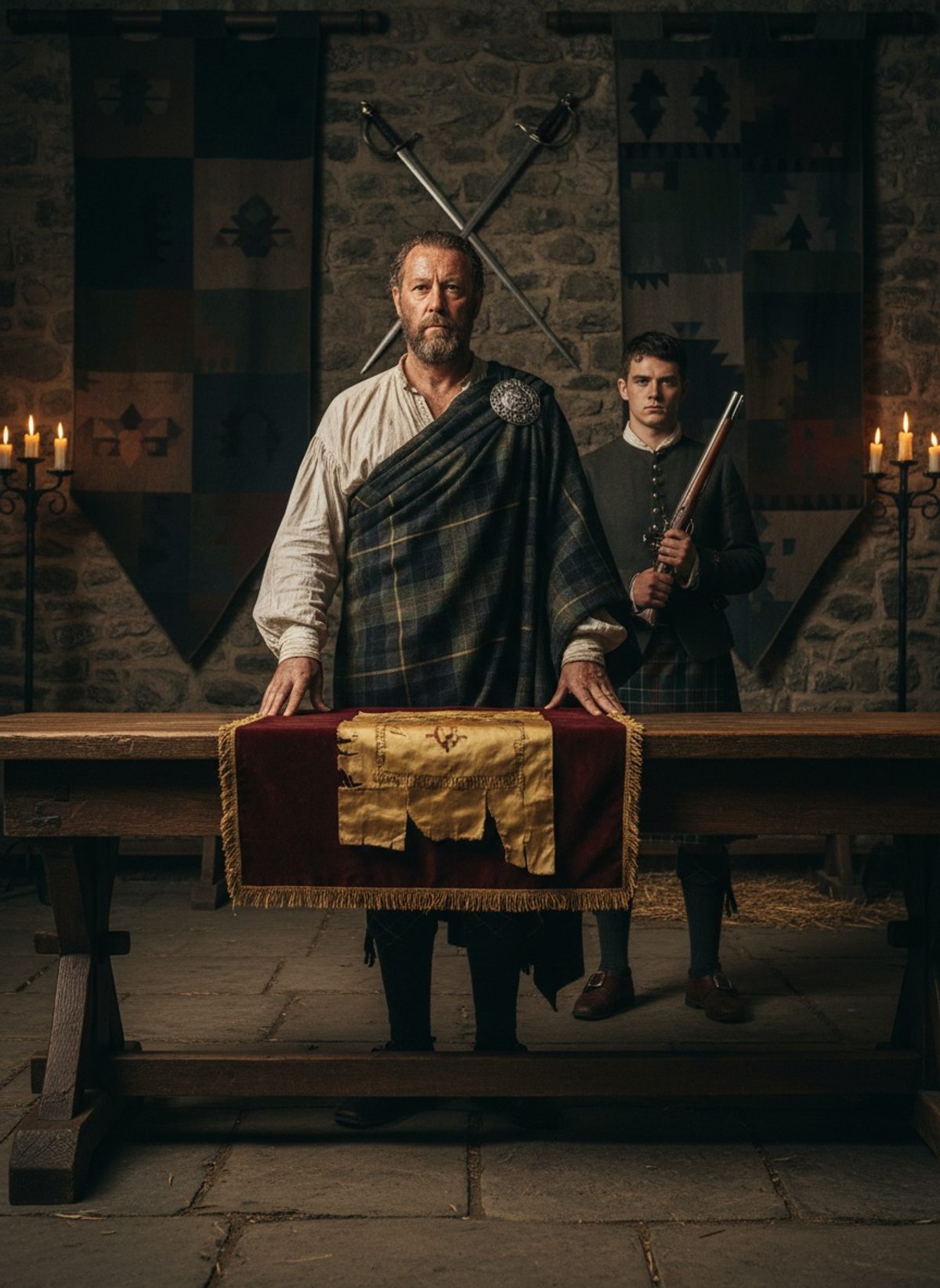
March 19, 1799. On the rugged coast of the Isle of Skye, the wind howled like a restless spirit over Dunvegan Castle.
The Enigma of the Fairy Flag
For generations, the MacLeods of Dunvegan have guarded their most sacred relic with a tenacity that bordered on the mystical. A tattered piece of silk, known as the Fairy Flag of Dunvegan, is said to possess otherworldly powers. Legend holds that it was bestowed upon an early chieftain by a fairy lover, its origin enshrouded in whispers of enchantment. Conservatively, the flag is believed to herald from the Middle East, a relic of the Crusades that found its home in the misty Scottish Highlands.
The flag is only to be unfurled in moments of extreme peril, and once raised, tales say, it grants the clan unimaginable fortune. The lore attached to its ancient fabric is deep and mysterious: battles turned, harvests saved, and storms subdued. Sheltered within the walls of a castle that boasts over 800 years of unbroken MacLeod stewardship, the Fairy Flag is less a mere artifact than a symbol of ancestral continuity and resilience.
Winds of War
The late Georgian period saw empires embroiled in relentless wars, and like many clans, the MacLeods were not isolated from these global conflicts. By early 1799, the skirl of the bagpipes once again called the clan to arms. Britain was engrossed in the Napoleonic Wars, seeking allies in the far-flung reaches of its empire. For the MacLeods, it was a time to prove their mettle on battlefields far from their highland home.
Read next: When John Nicholson Stormed the Breach at Delhi, 1857
As the clan rallied under their chieftain, the call to deploy the Fairy Flag was debated with solemn reverence. Clan lore dictated that the flag could only be unfurled three times. Two instances had reportedly already exhausted its mystical aid; the imminent campaign would perhaps be its final unfurling. The decision was laden with high stakes, balancing the tangible threat of war against the vaunted promises of the ancient silk.
Warriors of Tradition
In the harsh climates of war, the men of the Isle carried not only muskets and dirks but the weight of expectations from centuries past. The MacLeods were seasoned fighters, known for their fierce loyalty and martial skill, but the thought of entering battle alongside the Fairy Flag added a dimension of supernatural expectation.
The raising of the flag was not merely a pragmatic decision but a declaration of enduring belief in its power. Witnesses from that era describe the moment as electrifying—the flag, though threadbare, seemed to emit an aura that compelled even the most jaded soldiers to straighten their spines and steady their resolve. Once raised, the clansmen stepped forward with heightened confidence, convinced of victory by virtue of their ancestor's pact with the fey.
The Specter of Victory
Did the men who followed the flag into battle truly believe in its power? While the casualty records and victors' boasts don't capture supernatural causality, there is no denying that the stories have persisted for centuries. As the tales go, dead ancestors seemed to march alongside the living, bolstering the ranks with otherworldly warriors. Such stories speak less of literal truth and more of the power of symbols. The Fairy Flag, with its so-called magic, wielded the power to galvanize and to inspire—often the critical ingredient in the chaos of combat.
Ultimately, the MacLeods fought not only for king and country but for the very essence of what it meant to be MacLeod. This intangible might have been the true magic of the flag—it was a reminder of identity and purpose in a world rife with uncertainty and change.
Legacy Cast in Silk
Today, as tourists gaze upon the Fairy Flag in its glass case within Dunvegan Castle, it is easy to dismiss as mere legend the tales of its power. But to anyone who has delved into the annals of Clan MacLeod history, it remains a powerful symbol of identity, resilience, and hope. The flag's true power might reside not in resurrecting the dead or swaying battles but in the way it encapsulates the spirit of a people and their unyielding place in history.
Amidst the sweeping changes of empires and eras, the story of Dunvegan’s flag provides a poignant reminder of the power of belief and tradition. It is these threads, not unlike those of the fragile flag itself, that weave the tapestry of a clan's enduring saga. As times change and landscapes evolve, the static permanence of such stories anchors a people to their past, giving strength to face whatever may come on the morrow's horizon.