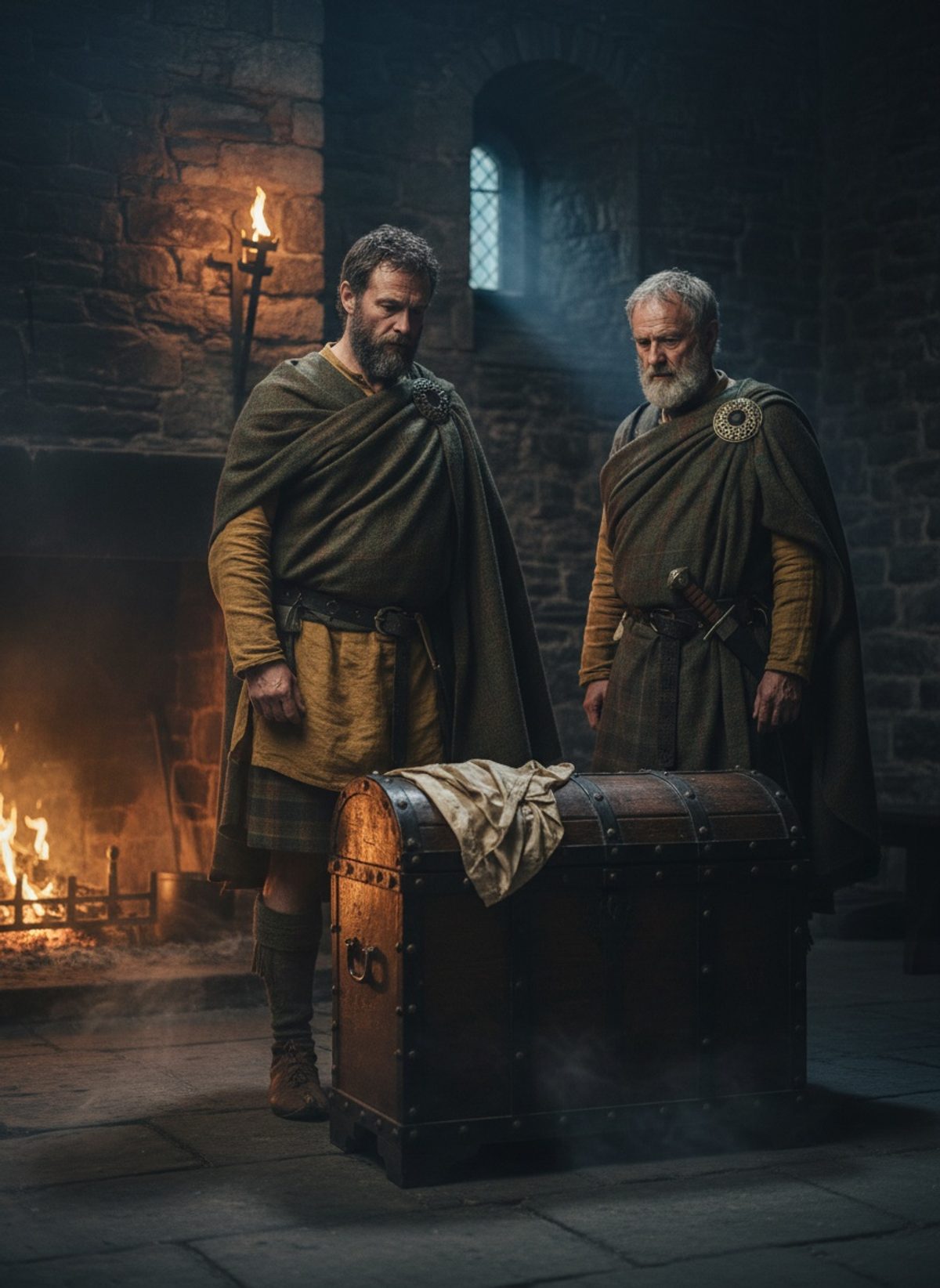
It was said to be no larger than a scarf. Yet the silk banner inside Dunvegan Castle was purported to command enough power to change the fate of a clan. The MacLeods believed it could be unfolded only three times before their family would be swept into ruin.
The Enchantment of Am Bratach Sith
Deep in the stout halls of Dunvegan Castle on the Isle of Skye, the past whispers through the stone walls. Among its secrets is the legendary Fairy Flag, known in Gaelic as Am Bratach Sith. This delicate fragment is bound up in myth, shrouded in mystery, and worn by the passage of time. Our story begins in medieval Scotland, during an era when allegiances were sworn on the glint of blades and whispers of ancient magic hung in the air like the mist of the Scottish moors.
The Fairy Flag's origins are as enigmatic as the power it was believed to wield. Some legends claimed that a fairy maiden fell in love with a MacLeod chieftain and gifted the enchanted cloth as a talisman for protection. Others suggested it was a relic from the Crusades, infused with holy magic. Despite varying accounts, one detail remained constant: the flag could turn the tide of battle. Its invocation was as much about faith as it was about fabric, a tangible link between the MacLeods and the supernatural world they believed governed their fate.
The tale of the Fairy Flag came to prominence at the Battle of Glendale in 1490. The MacLeods under siege, outnumbered and facing destruction, called upon the flag's power. They unfurled it for the first time, and against all odds, the tide turned. Legends tell of how the warriors fought with a fervor unmatched, believing that they had the otherworldly advantage. It was as if the flag summoned a spectral host to rally alongside them. Such was the nature of belief that it tipped the scales and secured their triumph.
Read next: The Day a Scots Weaver's Son Freed the Kirk From a King
This miraculous performance reverberated through the annals of Highland history, cementing the Fairy Flag as a talisman of last resort. The odds of victory had seemed insurmountable until the flag fluttered in the breeze. For the MacLeods, it transformed from silk into a symbol of hope.
The Second Unfurling: A Desperate Defense
As time flowed forward like the streams of Skye, the memory of Glendale became legend, a testament to the flag's formidable bounty. Centuries can erode the truth, leaving stories to flourish in wild and wondrous directions. Yet one indisputable fact persisted: the flag had been unfurled only twice. The second instance is steeped in both mystery and lore, with tales anchoring it to another critical juncture for the clan.
The event may have taken place during a skirmish near Waternish, another testing ground for the MacLeod mettle. Faced again with overwhelming aggression from their long-time rivals, the flag was brought out once more. It was a moment heavy with expectation. Accounts describe how the clan chiefs deliberated as war clouds gathered, knowing that one use of the flag's magic still lay dormant.
The decision to trust in its power was not taken lightly; this time, the circumstances were dire enough to call upon it. The air must have crackled with tension as the MacLeods prepared to watch a piece of silk turn the tide again, their hopes woven into its very fabric. As before, its unwrapping inspired a ferocious vigor amongst the clansmen, reinvigorated by the fairy-touched talisman leading them on. Driven by belief and desperation, unity prevailed.
Whether the assistance came from the ethereal places the flag called upon or the psychological boost it provided remains a matter of debate. Whatever the truth, a second miraculous victory was claimed. The flag was tucked away once more, and the whispers of its potency grew with each retelling.
Read next: The Day a Highland Clan Turned a Massacre Into a Legend
The Third and Final Secret
The third unfurling of the Fairy Flag, however, never happened. Unlike an item displayed with pride, the flag rests folded, hidden from curious eyes and winter winds. To understand why the MacLeods chose not to risk its final gift is to delve into the very heart of human experience: the balance of power, risk, and legacy.
The MacLeods realized that the flag embodied more than mere superstition — it anchored their identity. Using it a third time could indeed bring about an outcome too grave to bear. Hence, it was safeguarded, its presence a reminder of the potential inside a scrap of silk no larger than a scarf. The choice the MacLeods made was a strategy born from wisdom: to preserve the legend rather than risk the ruinous reality of failure.
In the strategic walls of Dunvegan Castle, the flag today hides its story well. With each century that passes, the lines between what is known and what is believed become more faint. It's a tale that survives in a world where stories hold power. The MacLeods kept their secrets wisely, understanding that sometimes the most potent weapon lies in what might be, rather than what is.
In a Scotland burgeoning out of feudal harshness and cradling modernity, the Fairy Flag remains, a testament to the power of belief. Its magic reflects less on what it did and more about what it meant: a convergence of faith, fortune, and a family's indomitable spirit. Its mystery still pulses through the Highland mist, an enduring enigma woven into the very fabric of the MacLeod name. There it sits, perhaps waiting. For some, it whispers of power yet unspent, its storylines singing through the wind across Skye's rugged hills and hidden glens.