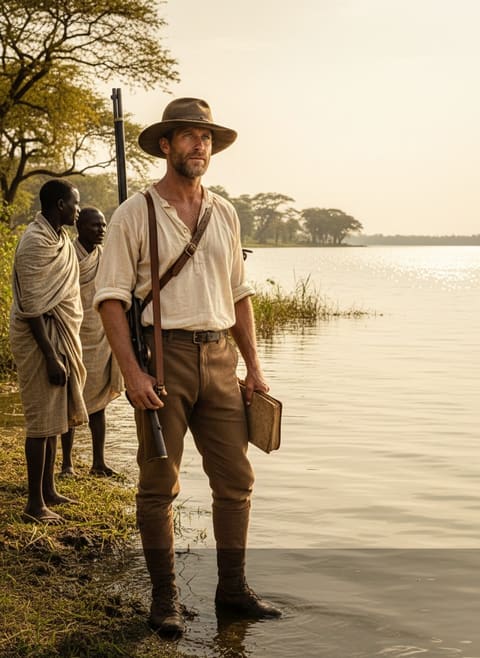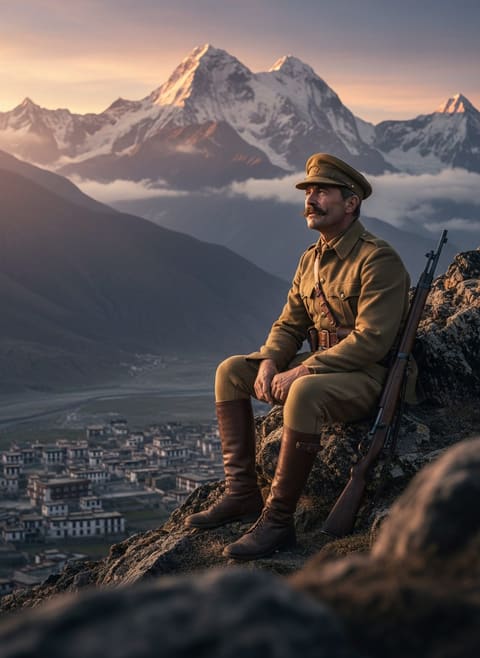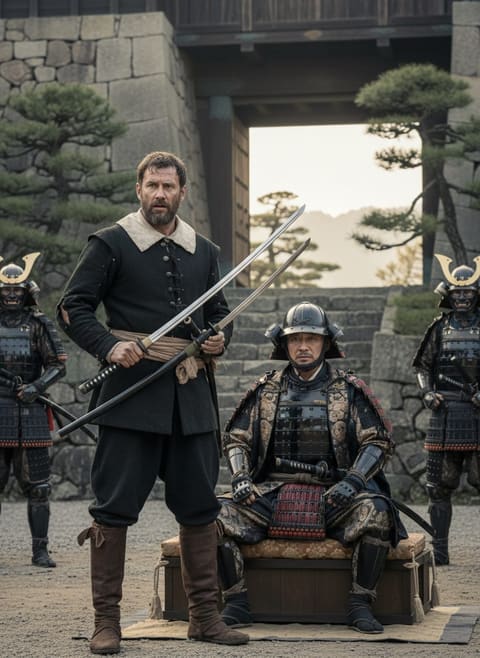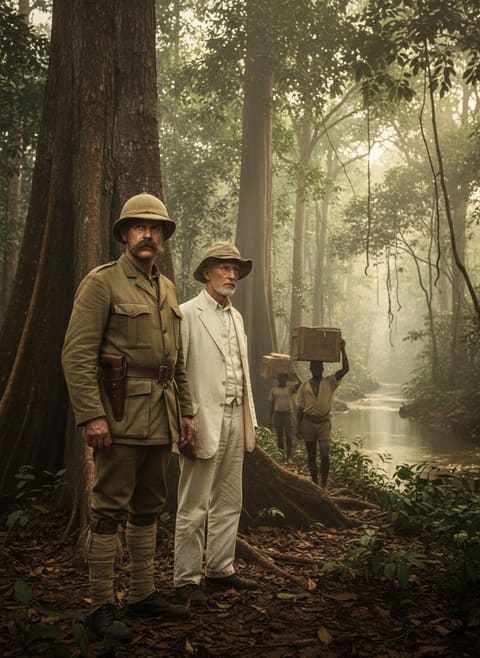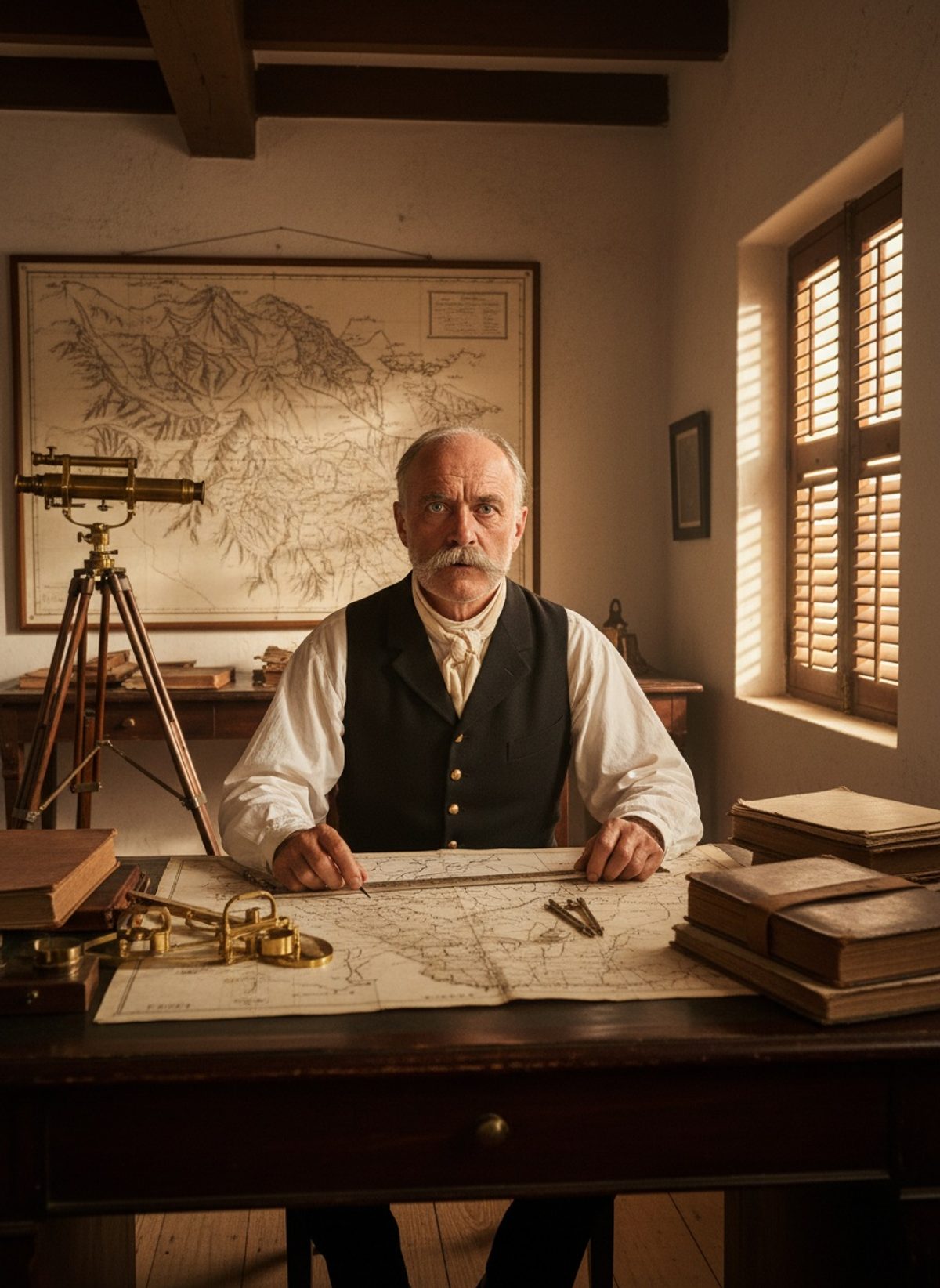
George Everest is famous for "climbing" the tallest mountain on earth. Yet, he never set foot on it.
Charting the Unknown
In the early years of the Victorian era, the mighty British Empire set its eyes on the formidable and exotic landscapes of India. The sheer diversity of this subcontinent—dotted with vast deserts, dense jungles, and towering mountains—offered a daunting challenge to anyone daring to measure it. But undeterred by the subcontinent's treacherous terrains, Wales-born surveyor George Everest charged with the task to do just that.
For nearly thirty years, beginning in the early 1800s, Everest led the Great Trigonometrical Survey of India. With little more than iron will, brass theodolites, and prodigious mathematical skills, he methodically mapped the land, traveling from the tropical heat of the southern plains to the haunting shadows of the northern Himalayas.
As his team navigated uncharted territories, they endured relentless heat, monsoon rains, and disease. It was a grueling campaign in which a single miscalculation could mean the difference between imperial clarity and cartographic chaos.
Read next: When Stamford Raffles Stood Alone in a Dying Jungle, 1824
The survey, unprecedented in its scope and ambition, was not a mere imperial exercise of mapping dominion. It was about understanding the earth on its own terms. Led by Everest, his team meticulously triangulated a vast expanse, often battling against nature's unyielding elements.
They carried cumbersome brass instruments over rugged terrains, taking readings at precise angles to stitch together the expanse of India's diverse geography. More than a display of colonial ambition, the survey spoke to the era’s inexhaustible thirst for knowledge and the mastery of numbers over nature.
A Mountain Revealed
As Everest’s survey drew its meticulous arcs over the northern reaches of India, they encountered whispers of a great peak hidden amongst the undulating ranges that stretched into the Tibetan Plateau. No one in his expedition had seen this towering giant, shrouded as it was in myths and mists. Yet, there it was: just numbers on paper, a pinnacle eclipsing everything known before.
Enter Welsh surveyor Andrew Waugh, Everest's successor. Though Everest laid the groundwork, it was during Waugh's tenure that calculations revealed the extraordinary height of a far-off Himalayan peak. From where they stood, it loomed unseen, though its presence was confirmed by the instruments' silent readings off the arcane charts. Waugh, who had taken up Everest’s mantle, recognized the significance of this monumental discovery. It was a mountain without a name, known only to those who lived in its perpetual shadow.
Read next: When Caroline Herschel Swept the Sky and Found Comets
And so, in 1856, the numbers spoke: this peak was singularly majestic, towering over any other mountain on Earth, its summit touching the sky at an altitude no human had measured before. To the British Empire, such a discovery demanded an echoing acknowledgment. Waugh chose to honor his predecessor in the only way fitting: he christened the mountain "Everest," etching George's name onto the roof of the world.
The Legacy of a Name
Though George Everest never laid eyes upon the magnificent peak that bore his name, his efforts endured. By placing a name on one of Earth's most breathtaking features, the Empire had, in its own way, asserted its presence across every meridian it surveyed. Yet, what resounds louder through history is how Everest's obsession with precision and progress exemplified the Victorian intrepid spirit.
Everest's legacy lies not simply in a christening, but in the way his name soared on a summit no one had yet set foot upon. In an era defined by exploration driven by imperial ambition and scientific wonder, it was a fitting tribute. The Everest expedition symbolizes a paradoxical quest; where imperial acclaim and pioneering science meet at a confluence defined not by visible triumphs, but by invisible lines drawn painstakingly, across untamed lands.
This tale of George Everest teaches us about human tenacity, thirst for knowledge, and the ambition to map the unseeable. Today, as climbers challenge its arduous slopes, the memory of those who measured silently beneath it endures. The mountain, an imperial marker by definition, now stands as a universal testament to human resolve, transcending eras and empires alike.