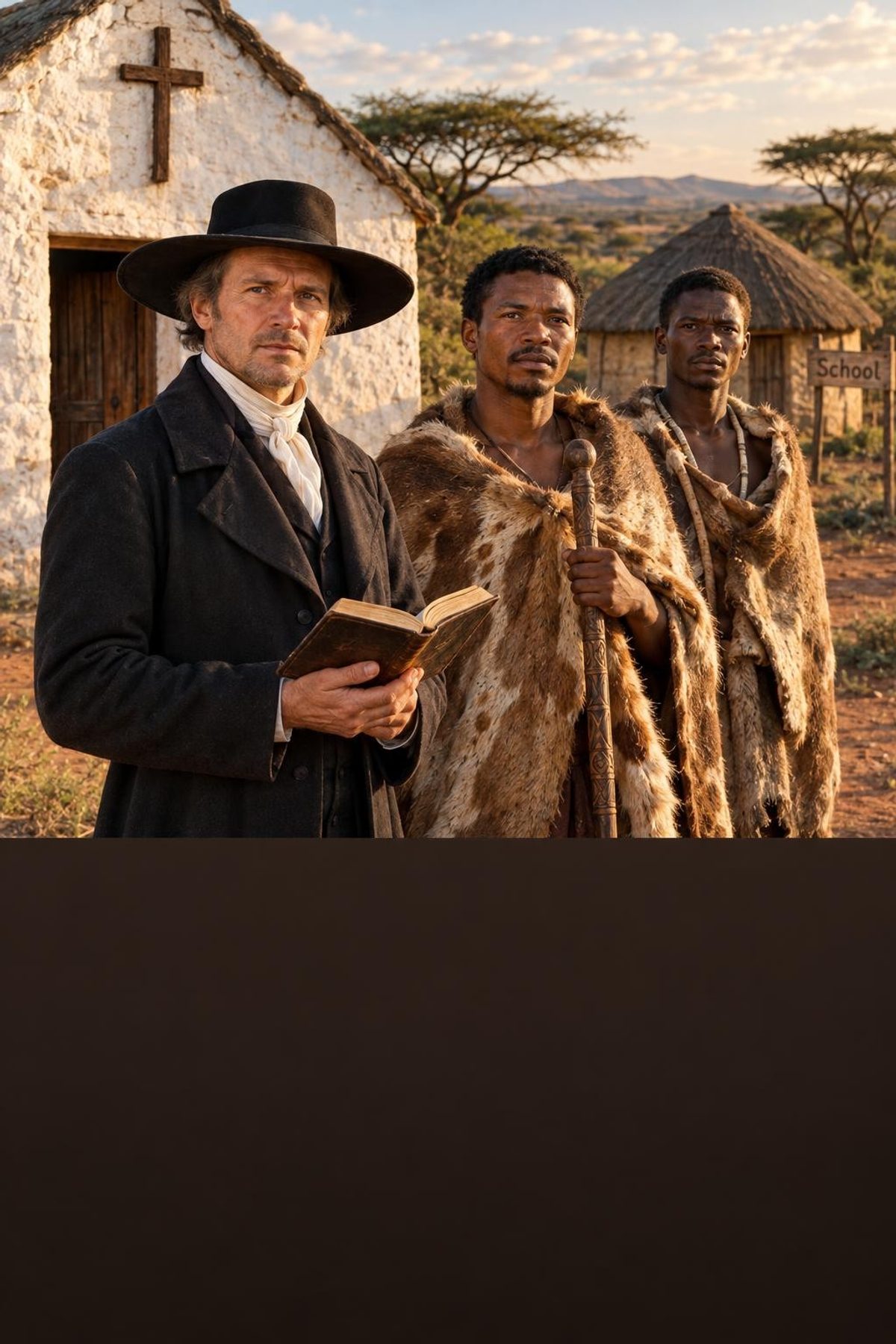
April 12, 1799. The Atlantic waves shimmered as the sun rose over the horizon, casting a golden path towards the rugged shores of Southern Africa.
The Unlikely Voyagers
The journey of the London Missionary Society's men to Africa was unlike any other ventures of conquest. Rather than soldiers clad in armor or explorers driven by the treasure, these travelers were motley souls bound by unwavering faith. Comprising blacksmiths, shoemakers, and carpenters, their hands were calloused from labor, not warfare. They carried no weapons, only Bibles, their sails filled with the winds of conviction.
This unusual band, fueled by evangelical fervor, set sail to lands unseen, convinced that their mission was ordained by a higher power. As their ship anchored at the southern tip of Africa, the air was thick with expectation. Each step they took on African soil echoed with the promise of fervent religious salvation.
A New World, A New Language
But reality proved far more complex than anticipated. The intricate tapestry of Southern African tribal societies both fascinated and bewildered these European emissaries. Accustomed to cities brimming with the industrial hum, they found themselves amidst vibrant cultures where the rhythm of life was dictated by the land itself. The first task was both monumental and mundane—communication.
Read next: When the Monsoon Broke Over Plassey and Changed Everything
Learning the local languages became paramount. Unlike any European tongues, the clicks and tonal shifts morphed into a symphony that needed to be understood. The missionaries set about documenting what no European had before, painstakingly recording the languages with pen and paper. Navigating through complex sounds, they slowly unlocked the cultural doors that had been closed to outsiders for centuries.
Through sheer tenacity, they managed not only to translate Biblical texts but also to spark a linguistic appreciation that honored the rich oral traditions of these tribes. Amidst challenges, this cross-cultural exchange opened new vistas of understanding, altering perceptions on both sides.
Enlightenment in Education
With language no longer a barrier, the missionaries turned towards education. Schools sprouted where none had been before, serving as bastions of new knowledge. These became centers of learning that upheld European ideals, yet, paradoxically, brought literacy to many for the first time. The chalkboard became a powerful symbol, on which lessons of arithmetic and scripture were imparted together.
Education empowered individuals, seeding ideas of change and self-determination. Students who participated in these humble classrooms emerged not solely as converts but as thinkers, who would question long-held traditions and engage with new global ideas. Yet, this cultural shift was a double-edged sword. It stirred the pot of tradition and change, creating ripples that would reverberate for generations.
Read next: When Stamford Raffles Stood Alone in a Dying Jungle, 1824
Politics in the Pulpit
As they gained influence, the missionaries found themselves immersed in local politics. Dialects of diplomacy replaced holy rhetoric as they mediated between warring factions, seeking peaceful resolutions. Their position often granted them a level of moral authority that rivaled tribal leaders. This, however, placed them at unpredictable junctures between indigenous interests and colonial ambition.
In some instances, their efforts at peacemaking were hailed as profound successes. In others, it brought unintended consequences, aligning disputed territories with colonial rule and reshaping the region’s political landscape. The missionaries' interference harkened both goodwill and controversy, crafting a legacy as white custodians of change whose intentions, however noble, came laced with complexities.
Legacy of Faith and Fragility
By the mid-19th century, the influence of the London Missionary Society was inextricable from Southern Africa's evolving narrative. Their mission had planted seeds of Western Christianity that took deep root. Yet, their legacy remains enmeshed with ambivalence. The stories of salvation intertwined with those of cultural disruption and difficult reconciliations.
For better or worse, they carved lasting imprints: in language, education, and politics. Indigenous cultures had been transformed inexorably, leading to both empowerment and fragmentation. The missionary presence posed questions that reverberate today, inviting a reevaluation of legacy and reminding us how conviction might both illuminate and shadow the past. In such stories lie reminders of humanity’s capacity for influence, and the cautionary tales of unintended consequence.