John Hanning Speke was one of the great explorers of the Victorian Age. Yet few remember the audacity that secured his legacy.
Alone Against a Kingdom
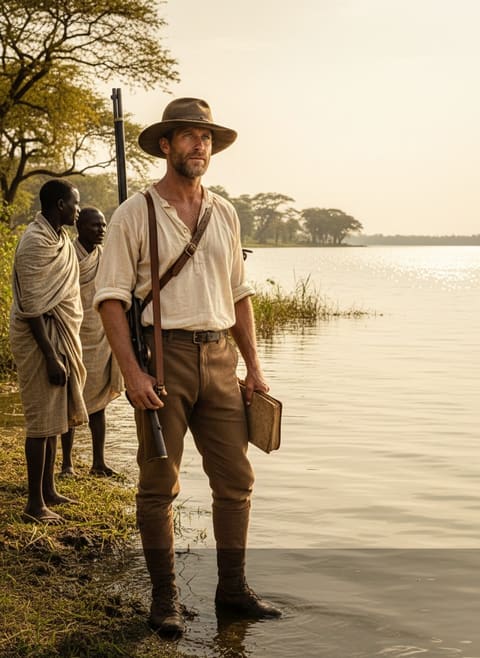
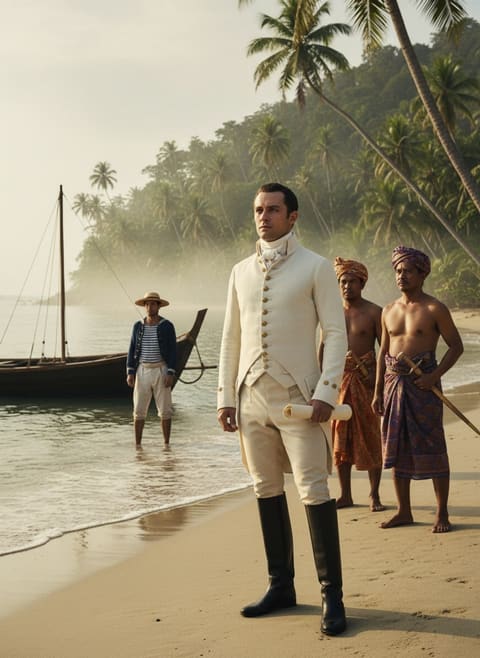
In 1862, John Hanning Speke found himself standing at the threshold of the unknown, peering into a kingdom no European had dared to challenge. He had trekked across arduous terrains to reach the kingdom of Buganda, driven by the allure of one of the greatest mysteries of his time: the source of the Nile River.
With his companion Richard Burton sidelined by illness, Speke pressed on alone, each step weighted with the grandiosity of discovery and the perils of going beyond the edge of the known world.
Buganda, at that time, was a powerful kingdom ruled by Kabaka Mutesa I. Its court was a fortress of political intrigue and militaristic might, with thousands of warriors who had known no conqueror but were intimately familiar with conquest.
Read next: When George Everest Put His Name on the Roof of the World
As Speke approached, the chilling reality of his situation set in. He stood alone, an outsider encroaching upon a world where traditions were observed with unyielding rigidity—a place where foreign interpreters of deference would either bow in respect or face the dire consequences of arrogance.
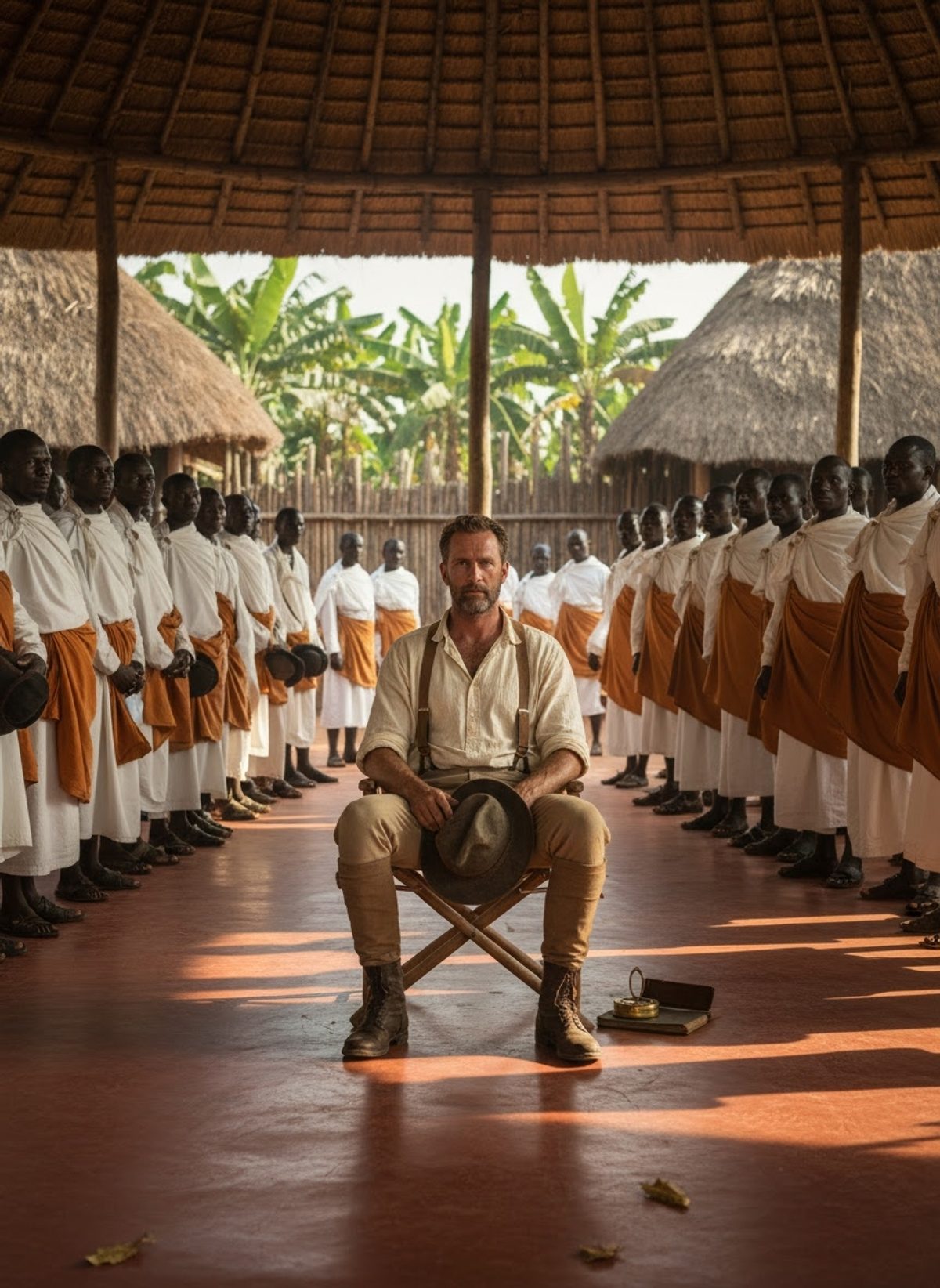
Upon entering the court, custom demanded that all who stood before the Kabaka prostrate themselves as a sign of submission. Speke, however, opted for a different narrative; he chose instead to sit, an act of defiance masked in respectful audacity. In this instant, Speke was not merely a Victorian officer seeking geographic knowledge; he became a diplomat and a storyteller, crafting a tale of equals rather than subjugator and subjugated.
The Kabaka's court was a marvel of human activity, with courtiers bustling to and fro amid the spirited undertones of African drumming, a constant reminder of the kingdom's heart beating rhythmically within the lush landscape of present-day Uganda. Despite the risk, Speke's bold refusal to bow was not met with hostility. Instead, it intrigued Mutesa, who saw in Speke a curiosity not born of arrogance, but of a genuine pursuit of mutual recognition and cultural respect.
The Chess of Words and Maps
In Kabaka Mutesa's presence, Speke found himself ensnared in a game of words—an intricate dance of diplomacy. Whereas dance was typically a pair's endeavor, this was chess, both parties shuffling for advantage with every move, every word, every nod. Through interpreters, they exchanged ideas, sketched interests, and scribbled aspirations on the air that would later ink the pages of history.
Kabaka Mutesa, a shrewd leader and intellectually curious, listened as Speke spoke of rivers and lakes, of white men's maps with their lines and borders still languishing in a state of mystery. Mutesa's eyes, like those of a tactician, weighed the external threats against the allure of trade and new alliances. Buganda stood at a crossroads, a majestic kingdom wary of colonization, yet intrigued by the novelties brought forth from distant lands.
The discussions spoke not only to the practical implications—such as the prospects of trade with the West—but also unlocked the nascent dialogue of cultural exchange. This was more than Speke simply gathering information for his charts; it paved the way for the first nuanced understanding between European explorers and the African nations that stood as guardians of local knowledge.
Mutesa, seeing the potential web of benefits, ultimately allowed Speke the freedom to travel through the kingdom, and more critically, north to the great lakes, specifically Lake Victoria.
Read next: When the Monsoon Broke Over Plassey and Changed Everything
Lake Victoria, the vast inland sea Speke and Burton had previously reached, was tethered to ancient rumors and new hopes alike. It was here, Speke believed, that the northern waters flowed into the Nile, the culmination point of his long quest. He left Buganda with information that would lead him toward confirming his hypothesis: that this was the true source of the Nile, that he had touched upon the pulse of Africa's longest river.
The World's Canvas Redrawn
Returning from Buganda, Speke's reports were variously met with both doubt and acclaim. His claims that Lake Victoria was indeed the fabled source of the Nile sparked debates that echoed not just in scholarly halls but throughout the corridors of imperial ambition. The implications of his discovery sent ripples through the grand British Empire and the missions it would undertake on the African continent.
While his explorations led to mapping transformations, perhaps his most profound contribution was on the canvas of human consciousness itself. Speke had turned a page that had been dog-eared for millennia, and with it, he had stretched the boundaries of the collective European imagination. In their minds, the Nile had become not just a river, but a real and tangible connection to Africa's heartland.
Though Speke died under mysterious circumstances two years later, the path he carved altered the face of African exploration and, subsequently, colonial encounters. In the later scramble for Africa, these feats of discovery would segue into a lust for dominance, but Speke's initial exchange with Kabaka Mutesa hinted at the inherent possibilities of mutual recognition and coexistence.
As Speke exited the shadow of Mutesa’s throne room, he left behind a whisper of what could be—a recognition that the boundaries erected by race and reinvention were not immutable. His meeting with Kabaka Mutesa was a momentary halt in history's relentless advance, a snapshot where pride, curiosity, and mutual respect feigned towards timelessness. For better or worse, it wasn't simply a tale unspoken in dusty classrooms; it was a chapter in humanity's ongoing narrative with itself.