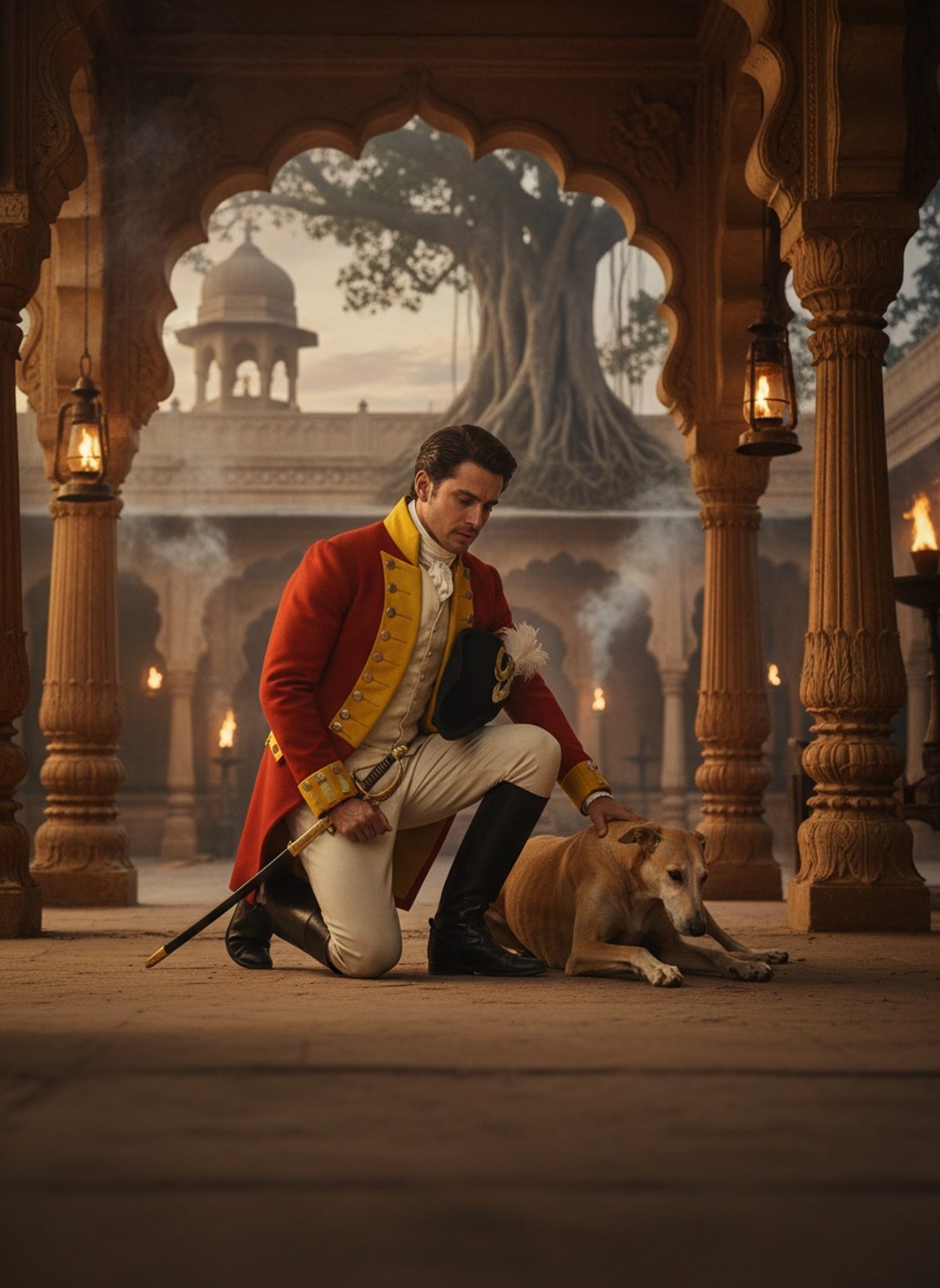
The dust of Seringapatam hung thick in the air, swirling with the acrid smoke of gunpowder and the cries of victory echoing through the ruined fortress. Amidst the chaos of surrendered soldiers and jubilant British troops, Arthur Wellesley walked with deliberate steps across the blood-streaked courtyard, his eyes scanning for a glimpse of the enigmatic leader who had eluded capture. It was here, amidst the cacophony of conquest, that a small movement caught his attention—an image both humble and heartrending. A dog, thin and trembling, paced back and forth with single-minded devotion along a pathway worn into the dusty ground, waiting for a master who would never return.
The Battle-Worn General
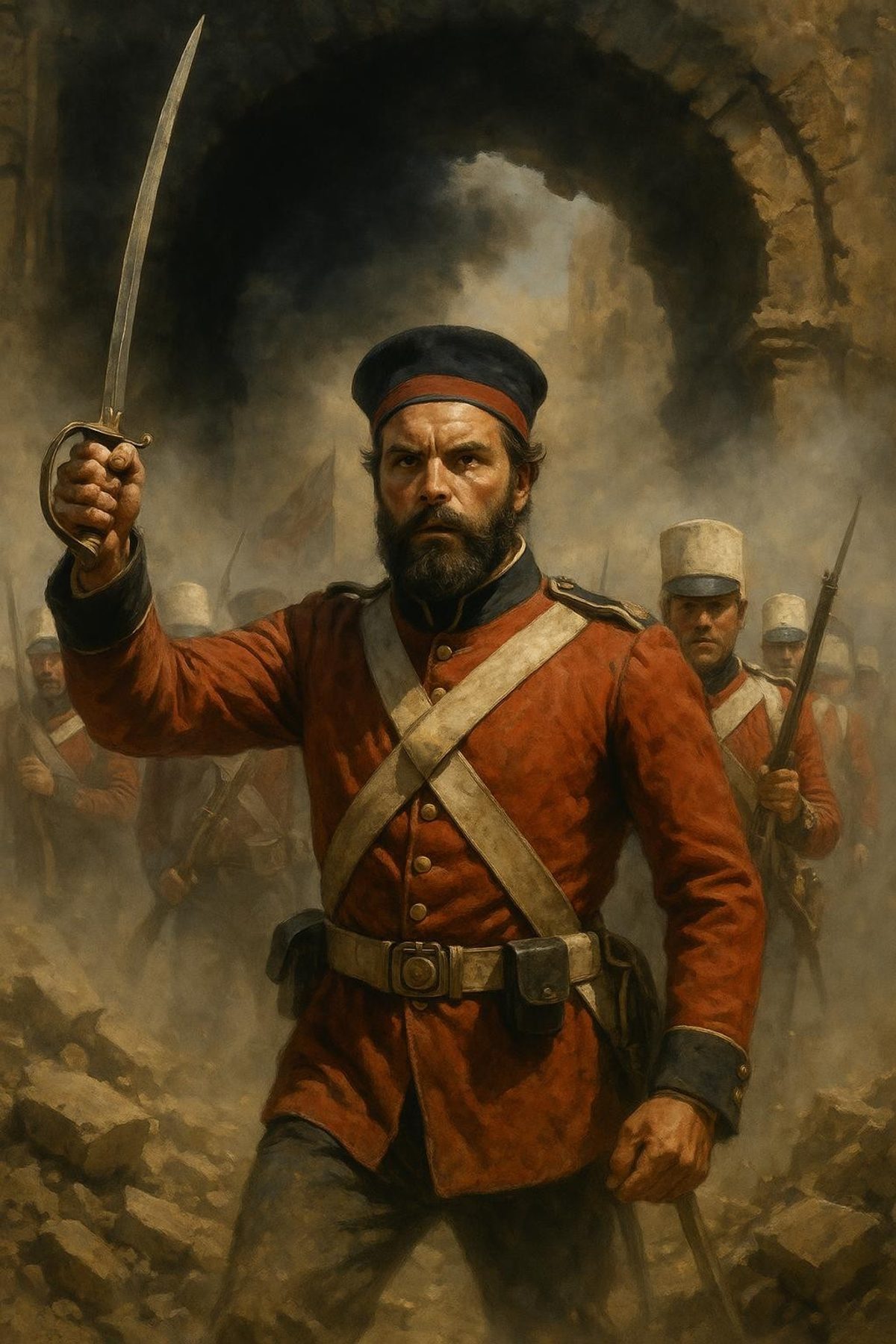
Arthur Wellesley was no stranger to the trials of war. At thirty years old, he had carved his reputation among the ranks of the British Army as a leader of both courage and strategic brilliance. The siege of Seringapatam in 1799 was a colossal undertaking, the culmination of the Fourth Anglo-Mysore War. Tipu Sultan, known as the 'Tiger of Mysore,' was entrenched within the fortress walls that had repelled British forces time and again, and his defeat was both a military and symbolic victory for the British Empire in India.
Under an unforgiving sun, Wellesley had rallied his troops through the jungles and across the treacherous currents of the Kaveri River. Each step toward the fortress had been a step shrouded in uncertainty, as the booming of cannons cut through the steamy air and night offered little solace from the din. Despite the overwhelming odds, Wellesley's determination was ironclad—a drive fueled by his sense of destiny and duty, by his place in the annals of Great Britain’s imperial history.
Yet, as he stood on the newly sanctioned ground of his victory, it was not the triumph over Tipu that held his gaze. Instead, it was this tiny testament of loyalty and devotion—this dog who had nothing left to offer but his quiet waiting.
Read next: When George Goldie Outmanoeuvred France on the Niger, 1884
The Dog and the Duke
What was it about the dog that stirred something inside the future Duke of Wellington? The answer lies not only in this solitary canine vigil beneath the Indian sun but also within the complex tapestry of Wellesley's character. Known for his steely resolve, the general seldom displayed emotion when on campaign. Yet, there was an empathy toward the underdog—a silent kinship with the solitude that soldiers understood, stripped bare amid the chaos of war. It was an understanding that transcended human words, connecting man to beast across the chasms wrought by power and ambition.
Witnesses at Seringapatam later recounted how Wellesley paused, mid-stride, beside the forlorn creature. In a place defined by the clamour for dominion, the future Duke of Wellington was momentarily just Arthur—a man touched by the simplicity of devotion that war had fractured. Might it have been a reflection of Wellesley's own loyalty to his brother, Richard Wellesley, whose ambition had indirectly tethered him to this eastern theater of empire? Or was it simply that amidst the enormity of his achievement, the uncomplicated loyalty of a dog shone stark against the backdrop of human betrayal and ambition?
The fortress itself lay in ruins around them, the skeletal remains of Tipu Sultan a macabre trophy for those whose victories were otherwise tainted with the blood of men who would never see their homeland again. But there, in that ephemeral instant, the unwavering fidelity of the dog bridged the disparate worlds of conqueror and conquered. It was a pause in the relentless march of history, a moment captured in the folds of time, tucked away out of sight as narratives of war and glory filled textbooks.
A Lesson Untaught
In the grand sweep of imperial tales, the forgotten faithful at Seringapatam offers a quietly subversive footnote—one that openly defies the conventional script of military conquest as the singular measure of greatness. It is here, in these overlooked acts of tenderness, where history finds its most genuine expression, where the sweaty, soot-streaked pages of human endeavor wrinkle with the wrinkles of a wagging tail and a silent, soulful gaze.
Perhaps, for Arthur Wellesley, it was the realization that true legacy withstands the vicissitudes of time not through grand displays of power, but through moments of profound connection that reveal the very essence of humanity. How easy it is to forget that within the cold calculus of warfare, there are spaces—tiny yet infinite—where the echoes of distant gunfire lie silenced by the gentle, unyielding presence of enduring love and loyalty.
Empathy, as exemplified by the bond shared between man and dog, can elevate our understanding beyond the dichotomy of victors and vanquished, providing perspective into the inner lives that texts so frequently gloss over. In the corridors of history, when Arthur Wellesley wept for a dog, he illuminated an enduring truth: that behind every storied hero is an untold chapter of simple humanity, waiting patiently, faithfully—just like a dog—for its voice to be heard.