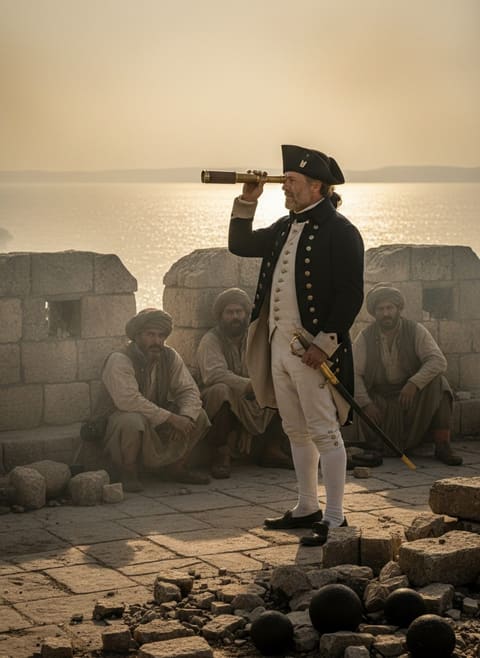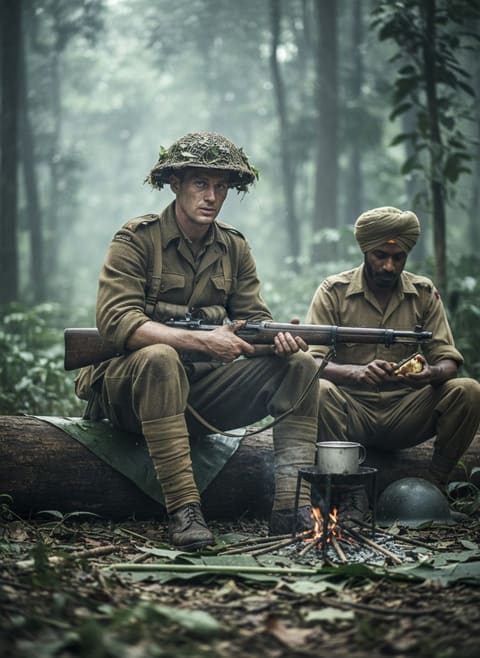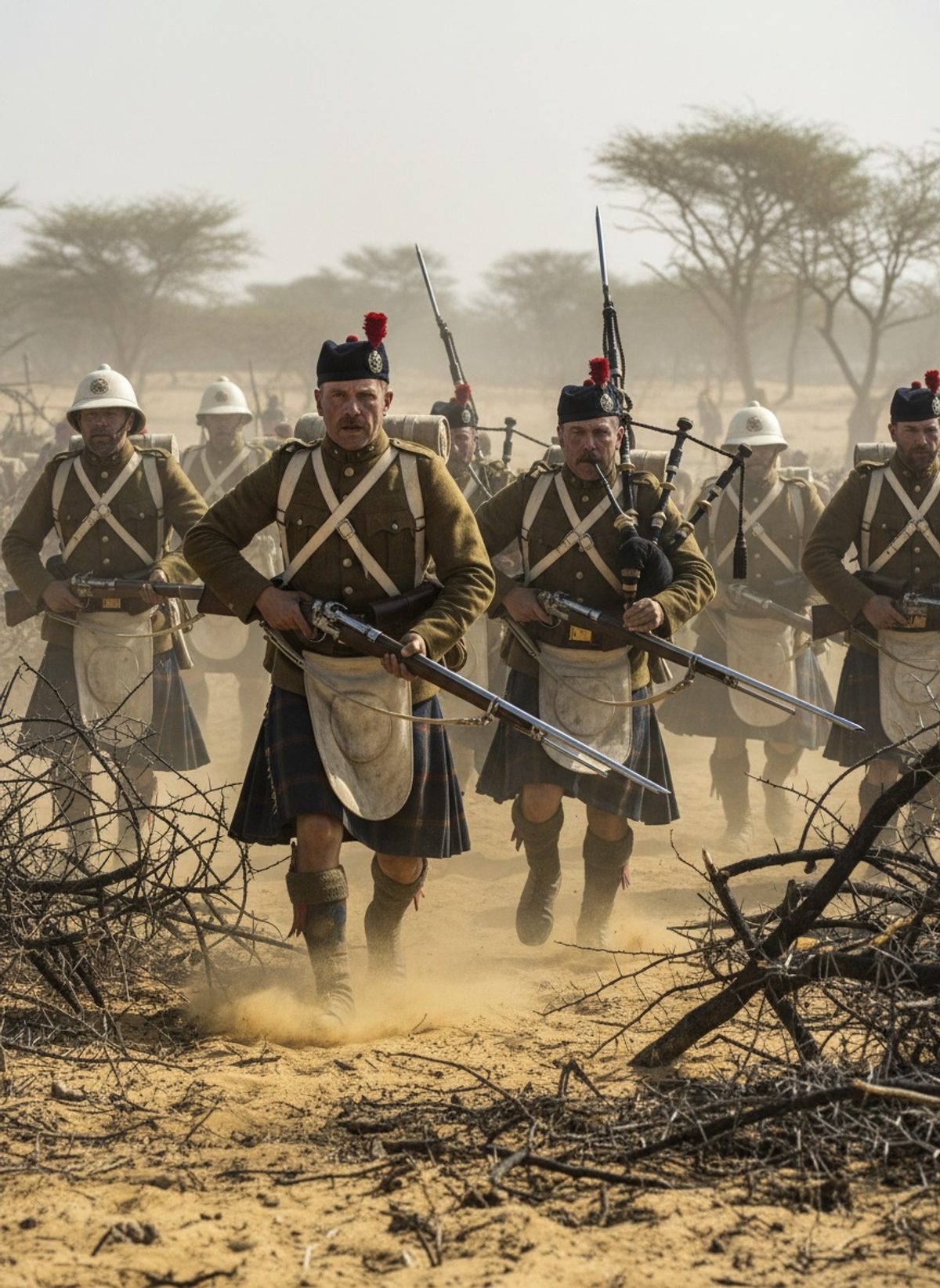
They wore kilts as they charged into battle. The searing desert heat, unfamiliar to the Highlanders, couldn't wilt their resolve.
Sounding the Charge: A March to Remember
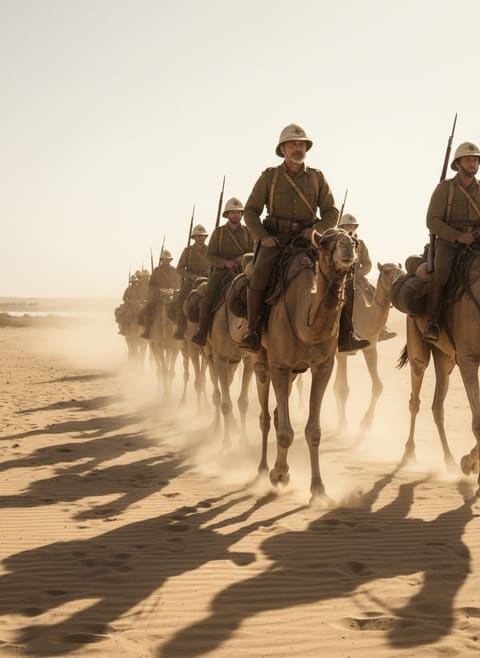
On April 8, 1898, an unusual spectacle unfolded on the sands of Sudan: the Black Watch, pipes in full chorus, marched with determined vigor into Atbara. Their approach was heralded not by the usual ominous silence preceding a battle, but by the shrill and soul-stirring skirl of Scottish pipes — a sound alien yet profoundly intimidating to the Mahdist defenders entrenched behind the zariba. As the sun broke the horizon, its rays striking off the polished steel and vibrant tartans, the scene was one of audacious theater, calculated to unnerve and breach the psyche of their adversaries as much as their defensive lines.
The music, often a prelude to such battles, was not simply for show. It was a war cry that put spring into the step of every soldier, reinforcing their shared heritage and fierce martial pride. The pipes' harsh wails reverberated across the dunes, signaling not just the presence of the Black Watch, but also their imminent impact. This was psychological warfare in its rawest form, manifesting the might and unity of Kitchener’s forces before a shot was even fired.
Chosen for the First Assault
The debate amongst Kitchener’s men had been contentious about who would lead the assault. In the end, honor fell to the Highland Brigade, with the Black Watch at the forefront. Their selection was both strategic and symbolic, a testament to their fearsome reputation and proven mettle. The Black Watch embodied the disciplined aggression that could turn the tide of a battle, making them the natural spearhead for such an audacious maneuver.
Read next: When Phélippeaux's British Ally Saved Acre and Broke Napoleon
For the Mahdist warriors within the zariba—a formidable barricade of thorny branches—this was an assault unlike any they had faced. Hardened by years of conflict, they witnessed the Black Watch advance, not with the quiet resolution of cavalry, but in a cacophony of Scottish defiance. The psychological impact of the skirling pipes was not underestimated. It was a sound that transcended mere noise, echoing the ferocity and determination woven into the very fabric of the Scottish fighting spirit.
As they moved, the sun blazed down fiercely, intensifying the challenge. Yet the Black Watch pressed forward, kilts draped around perspiring torsos, determined to reunite the empire’s divided interests with their history of indomitable resolve.
The Fierce Clash at Dawn
The engagement at Atbara was fierce, as the morning light morphed from the soft glow into stark, unforgiving daylight. The Highanders, preceded by the tumult of their pipes, struck the zariba’s barriers with unwavering zeal. Bayonets fixed, they drove the charge home, executing their attack under conditions that defied their Northern blood — heat and terrain alien and oppressive.
The clash that ensued was brutal and came with all the horrifying reality of close-quarters combat. The Black Watch, disciplined and relentless, cut through defensive ranks, shrugging off the initial fury of the Dervishes' resistance. With every yard gained, the element of surprise which their dramatic entry had bought them dwindled, yet the advantage it had poised remained decisive.
Read next: When the Gurkhas Advanced on Mount William and Found It Empty, 1982
As the melee raged on, this small yet pivotal section of Kitchener's command demonstrated why tradition and innovation are mighty allies. The sound of the pipes, a guiding lifeline through the chaos, injected their courage with new adrenaline, propelling them deeper into the incensed heart of battle.
A Battle That Echoes Through Time
The victory on that burning day in April was comprehensive, etching Atbara into the annals of military folklore as a moment of valor and innovative strategy. When the dust finally settled, it was not just the physical barriers of the zariba that lay breached but the psychological defenses of the Mahdists, irreparably fractured by a tactic unanticipated — the raw blend of tradition and audacity embodied by the Black Watch.
This episode in Sudan carries enduring significance beyond its immediate military objectives. It is a testament to the power of psychological tactics in warfare, and a sobering reflection on the courage required to harness one’s heritage as a weapon in battle. The Highlanders' charge serves as a dramatic reminder of how critical cultural identity is in shaping martial prowess and the course of history. Such stories, often left at the margins, offer profound insights into the forces that have forged the modern world, revealing the complex interplays of warfare, culture, and imperial ambition.
Today, the echo of the pipes and the resolve of the men who followed them remind us that the strength of an army is as much a measure of its spirit as its armor. The tale of the Black Watch at Atbara is not just an event in history—it is a narrative of human endurance, showcasing the unyielding embodiment of courage under fire.