The war to end all wars was over. Yet for Britain's war horses, the battle had only just begun.
The Silent Soldiers of the Great War
In the cacophony of World War I, amidst the harrowing sounds of artillery fire and the cries of soldiers on the battlefield, there was another voice—unheard and often overlooked. That of the war horse. These majestic creatures endured unimaginable horrors as they trudged through the blood-soaked battlefields of Europe. Over 160,000 British horses were pressed into service on the Western Front. They hauled artillery, transported supplies, and carried the wounded to safety. Each neigh and snort resonated with the echoes of a soldier's toil.
Their journey began long before they reached the front lines. Selected for their strength and stamina, these horses were shipped from Britain to France, where their lives would be irrevocably changed. Once on the front lines, they faced perilous conditions. Mud, barbed wire, and shell craters became the landscapes they navigated daily. The horses, like their human counterparts, endured gas attacks, machine gun fire, and relentless bombardment. Caregivers, often soldiers themselves, formed bonds with these animals as they fought side by side. They understood the horses' vital role in the war effort and treated them not just as beasts of burden, but as comrades in arms.
Despite their efforts, these horses were not immune to the horrors of the battlefield. Thousands fell in the line of duty; their bodies lying alongside the fallen soldiers in silent testimony to the brutalities of war. Those who survived were battle-scarred and weary, their hearts as shattered as the land they traversed. Yet, through their unwavering loyalty and courage, they exemplified the spirit of sacrifice, leaving a indelible mark on the pages of history.
Read next: When the Scots Guards Fixed Bayonets on Tumbledown, 1982
A Price Paid in Pounds and Francs
When the war finally drew to a close with the signing of the Armistice on November 11, 1918, a new dilemma arose. The logistics of returning the myriad war horses to Britain were a daunting task, financially and practically. The answer, cold as it was pragmatic, lay in a calculation of cost versus value. Shipping the horses home was deemed too expensive by the British authorities. Instead, they were sold in France after the war.
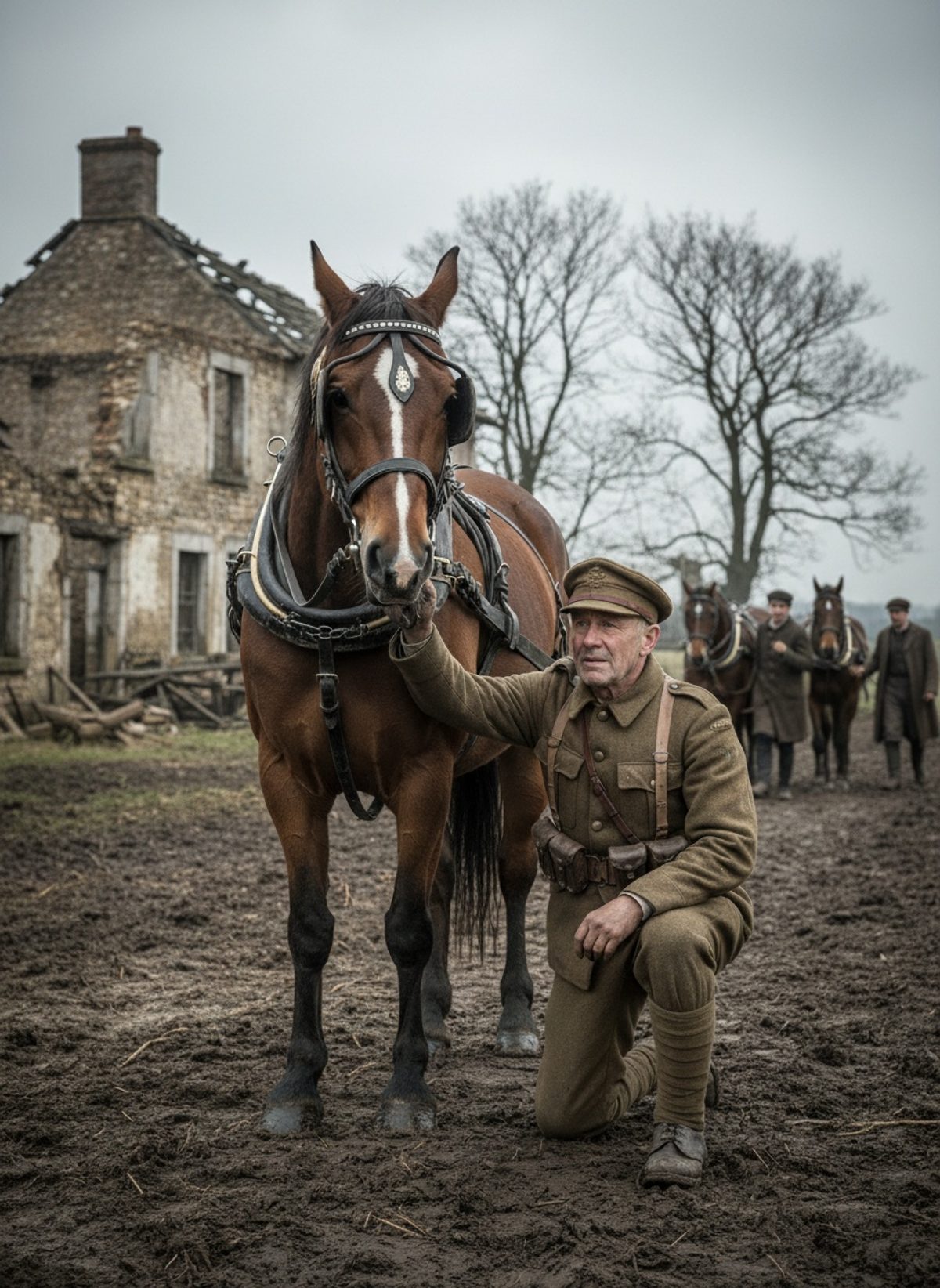
A decision was made, and the men who had survived the hellish Western Front were forced to leave their equine brothers behind. Instead of returning to their native pastures, many horses were sold to French farmers, who used them to revive agriculture ravaged by years of trench warfare. The once proud war horses exchanged the sounds of war for the plough's yoke. Though a peaceful fate awaited some, many others weren't as fortunate. A significant number of these noble beasts ended up in slaughterhouses, their sacrifices reduced to mere financial transactions.
The sale of British war horses to foreign lands was a hard pill to swallow. For the soldiers who had cared for them, it was an emotional blow. Many felt they had betrayed their trusted companions, having forged bonds through shared hardship. Letters and diaries from the time recount the heavy hearts and tearful goodbyes as soldiers watched their horses be led away, a farewell with no hope of reunion. These silent soldiers, who had once charged with unyielding spirit, were now left in a land foreign to them, a sad testament to the often unceremonious end of military service.
Read next: When Phélippeaux's British Ally Saved Acre and Broke Napoleon
The Story That Won't Be Forgotten
The tale of Britain's war horses is one often left out of history textbooks. Yet, it remains a poignant chapter of the Great War. It highlights the complexities and harsh realities faced in the aftermath of conflict. With the passing of soldiers into the civilian world, many returned to lives irrevocably changed, while their equine companions faced a different fate. So, why tell this story? Because it speaks to the nature of loyalty, sacrifice, and the bonds that transcend species.
The final chapter of the war horses serves as a stark reminder of the cost of war—one that is not only paid in human terms. It prompts us to reflect on the promises we make and the ones we break when priorities shift, and illuminates the often unseen allegiance between man and beast in times of great peril. In sharing this narrative, we honor those who served, regardless of the number of legs upon which they stood.
In fields across the English countryside, memorials stand not just for the men who fought, but also their equine companions. For they remind us of the unknown soldiers, the silent trudgers, and the stories left untold. It's a history worth remembering—the legend unfit for textbooks, yet indispensable to our understanding of the past.